Residents of Khartoum long referred to the Sunut Forest as the city’s lungs and its heartbeat. The six square-kilometre expanse of acacia trees sat near the confluence of the Blue and White Niles, a sea of green amid the apartment buildings, office towers and factories of Sudan’s bustling capital.
Older photographs show the Sunut’s towering acacias, then a sanctuary for dozens of bird species, standing against the backdrop of a curved glass skyscraper belonging to the Greater Nile Petroleum Operating Company.
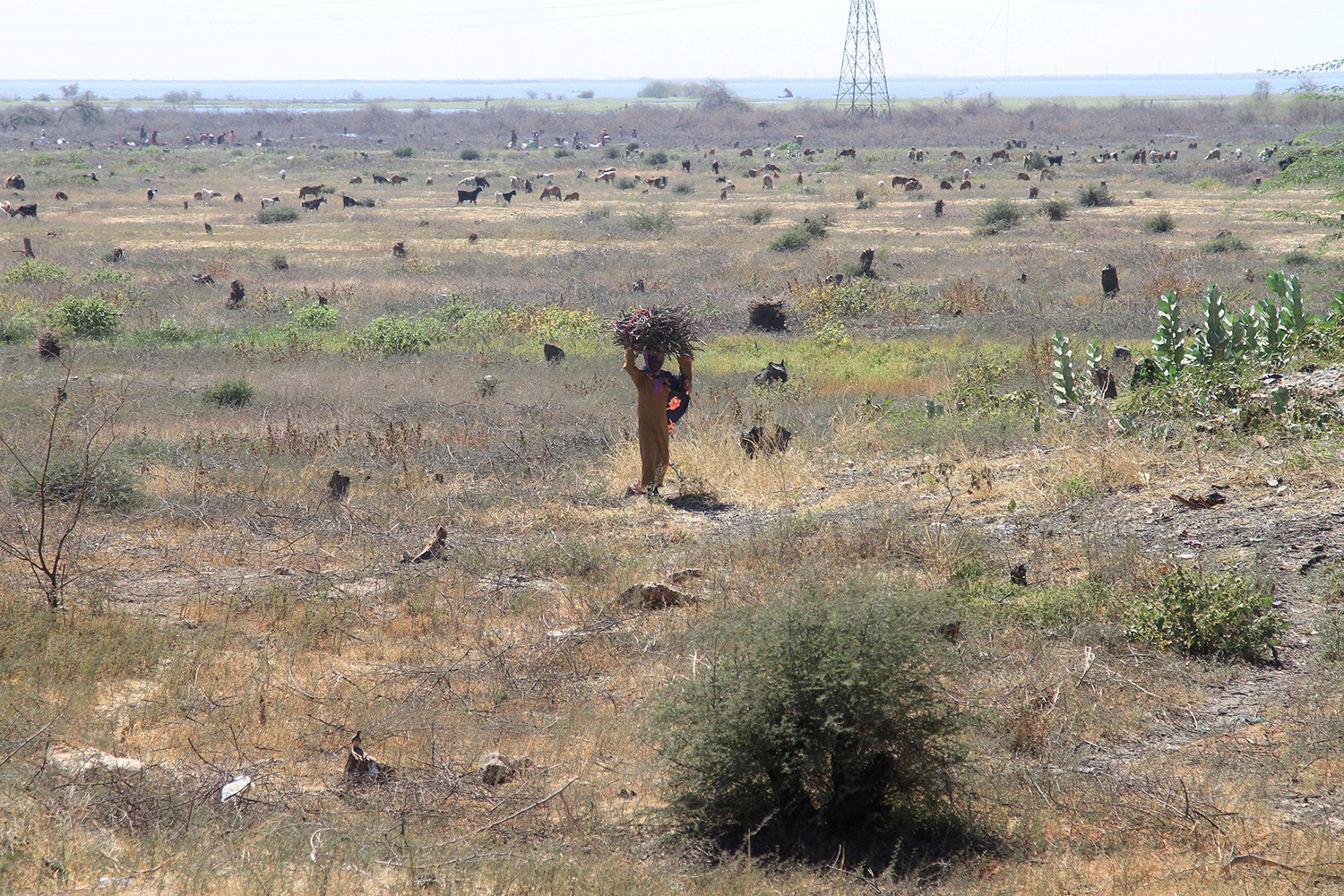
Today the trees are gone. They have been replaced by a barren landscape scattered with piles of logs loomed over by the charred remnants of the famous tower.
Once a symbol of growth and prosperity, observers say the felling of the Sunut Forest is a stark illustration of the environmental damage caused by Sudan’s civil war, which marks its third anniversary today (April 15).
“The disappearance of the Sunut Forest is not only an environmental crisis. It is a climate crisis, a livelihood crisis and a major security challenge,” says Mouna Zein, the Deputy Head of the United Nations Environment Programme (UNEP) office in Sudan.
“This is where we start seeing environmental degradation and conflict reinforce each other in an increasingly dangerous cycle.”
Her comments came just ahead of a major international conference in Berlin, Germany, where diplomatic and humanitarian officials are expected to discuss how to bolster aid to Sudan and further the peace process.
Effects of war
Sudan’s civil war erupted on April 15th, 2023, when heavy fighting overtook Khartoum. The hostilities, which would spread to other regions displacing millions, destroyed power stations, sewer systems and factories, causing widespread pollution and depriving Khartoum of electricity.

It also deepened poverty and weakened government oversight of protected areas, a devastating combination for the Sunut Forest.
In recent months over 1 million people have returned to Sudan’s capital to find their homes destroyed and services shattered. Many impoverished Khartoum residents have turned to the Sunut Forest for firewood.
“What else can I do? We don’t have fuel. We don’t have money,” says one middle-aged man who was recently collecting firewood from the forest. He wished to remain anonymous. “Selling these trees is the only thing I can do to survive.”
Key flyway
Sudan sits on one of the world’s most-important corridors for migratory birds. Each year millions of winged flyers cross the country en route from Europe and Asia to Africa.
“Al-Sunut Forest is not just a green area. It is a natural reserve that hosts a rich and integrated ecosystem,” says Awad Mohamed Siddeg, founder of the Sudanese Bird Watching Project. The group is pushing for the protection of the forest.
Awad and other activists have been sounding the alarm about the harmful impact of rampant deforestation on migratory birds. He says the destruction of the forest has led to a sharp rise in the hunting and killing of rare and endangered species.

As advocates push for the restoration of the forest, many Khartoum residents have questioned the value of replanting trees when 21 million Sudanese – 41 per cent of the population – are facing acute food insecurity.
But the Sunut Forest is more than just a wildlife sanctuary. Before it was destroyed, it sopped up the floodwaters of the White Nile River. As the rainy season approaches – downpours normally start in June – there are worries the deforestation could leave Khartoum exposed to rising waters. And some scientists predict climate change could lead to more flooding across the country in the years to come.
A widespread problem
Deforestation isn’t restricted to Khartoum; it is a problem in many parts of Sudan. Experts say rapid tree loss has fragmented complex ecosystems, displaced wildlife, eroded soils and fed desertification. The loss of productive soils, experts say, has compounded hunger in a country
where an estimated 3 million children under five already suffer from malnutrition.
While the vast majority of Sunut Forest is gone, saving the green space remains possible, say observers.
“Addressing this challenge begins with understanding its root causes and responding through an integrated lens,” Zein believes.
To return to its former glory, the forest needs to be protected from further logging and its native vegetation must be restored, Zein says. Khartoum’s people also need to be provided with other ways of making a living so that they don’t turn to logging. Finally, to sustain recovery over the long term, the rules and policies that govern the forest must be re-enforced.

Experts say there is little time to waste.
“Even today, people continue to cut trees,” says Suliman Alboni, Secretary General of the Sudan Higher Council for Environment and Natural Resources. “But we have observed that the forest is regenerating, with new trees beginning to grow. What we need to do is protect them.”
In years past, Khartoum residents rich and poor would flock to the Sunut Forest on weekends to have tea under the shelter of the reserve’s acacias, which take 10-20 years to mature.
“It will take a long time to bring back the Sunut Forest that so many know and love,” says Zein. “But for the welfare Khartoum’s people, we need to start the process of restoring this remarkable place.”
Written by Alyona Synenko
Technically reviewed by Sara Eltagni Ahmed, Fabien Monteils and Cecilia Aipira
Residents of Khartoum long referred to the Sunut Forest as the city’s lungs and its heartbeat. The six square-kilometre expanse of acacia trees sat…