

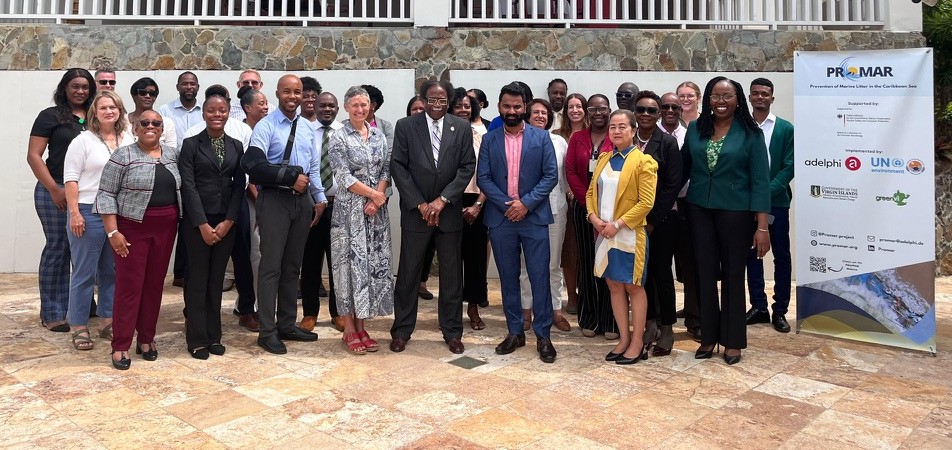
National Policy Dialogue on Marine Litter Prevention & Capacity Building Workshops on Circular Economy and Extended Producer Responsibility (EPR) - The British Virgin Islands
Driving Change Together: Circular Economy and Extended Producer Responsibility (EPR) Workshops Ignites Action in the British Virgin Islands
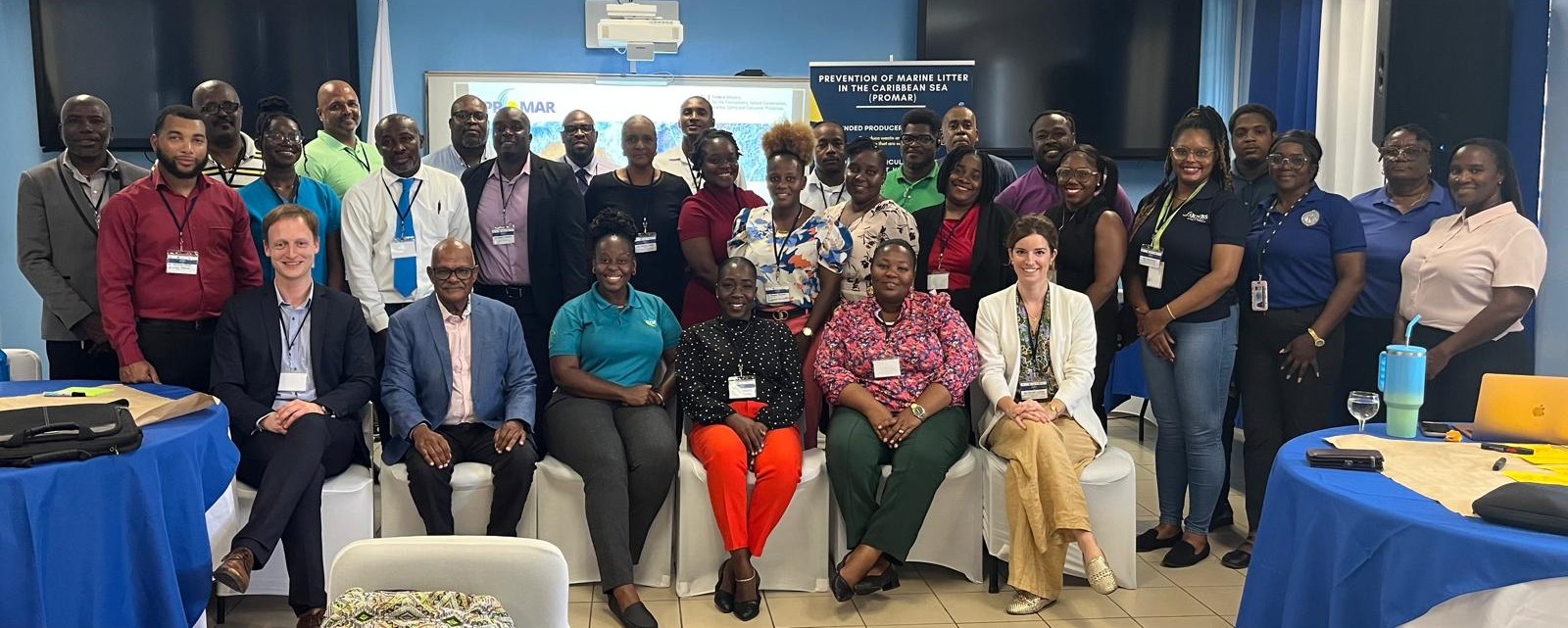
Recently in the British Virgin Islands, a major step was taken toward a cleaner, more sustainable future. Our partner, Green VI, in collaboration with adelphi, hosted a transformative National Policy Dialogue & Capacity Building Workshops on Circular Economy and Extended Producer Responsibility (EPR) —a two-day event that brought together government officials, private sector stakeholders, and passionate community advocates.
The goal? To confront the pressing issue of marine litter and to collectively shape a future free from the burden of single-use plastics.
Held in the spirit of collaboration and shared responsibility, the workshop created a space for participants to engage in honest, forward-thinking discussions. Together, they identified the most urgent challenges facing the territory and co-created innovative strategies to tackle them—starting at the source by reducing single-use plastics.
This convening represents more than just a dialogue. It marks a pivotal move toward a circular economy in the BVI—one where sustainability is not just a policy add-on, but a core principle driving decision-making across all sectors.
From brainstorming bold policy reforms to discussing local business incentives and grassroots engagement, the workshop demonstrated the power of partnership in addressing environmental threats and building resilient island ecosystems.
As the BVI charts its course toward sustainability, this workshop stands as a shining example of how multi-stakeholder collaboration can inspire meaningful, lasting change.
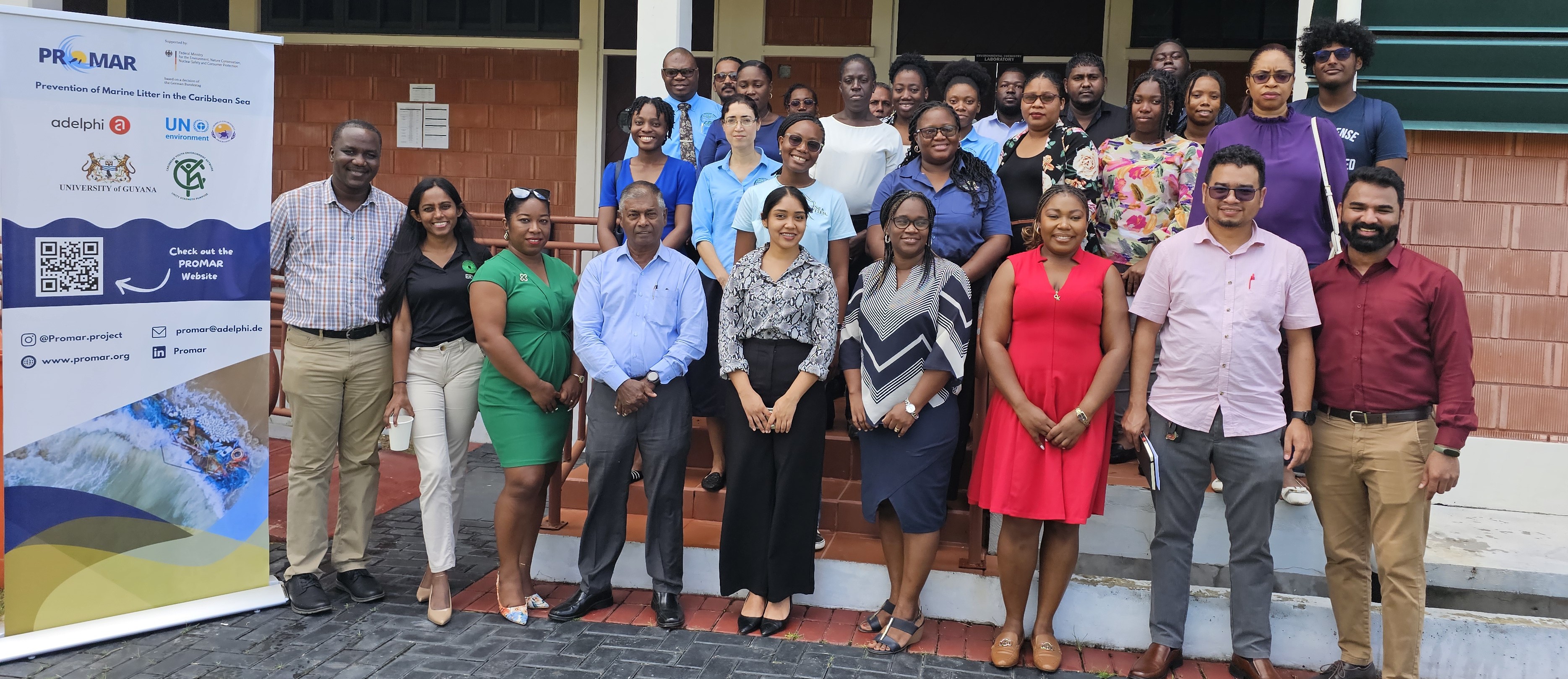
National Dialogue on Marine Litter Prevention and Plastic Waste Management in Guyana
Guyana Hosts National Dialogue on Marine Litter and Plastic Waste Management
The University of Guyana (UG) hosted a pivotal National Dialogue on Marine Litter Prevention and Plastic Waste Management, drawing together over 40 stakeholders from across Guyana and beyond. This high-level event, part of the Prevention of Marine Litter in the Caribbean Sea (PROMAR) project, was organized in collaboration with Germany’s Adelphi and the Cartagena Convention Secretariat of the United Nations Environment Programme (UNEP).
Held at UG’s Turkeyen Campus, the dialogue welcomed voices from government agencies, academia, civil society, private industry, youth organizations, and international development partners, all united by a shared commitment to addressing plastic pollution in the Caribbean.
Strengthening National Commitment
The event opened with inspiring remarks from Ms. Linda Johnson-Bhola, Dean of UG’s Faculty of Earth and Environmental Sciences (FEES), and Professor Temitope Oyedotun, PROMAR Project Lead for Guyana. Both highlighted Guyana’s critical role in the region’s collective response to marine litter.
Vice Chancellor Professor Paloma Mohamed delivered an address, reaffirming UG’s dedication to environmental leadership. She challenged FEES to drive internal reforms through waste segregation, enhanced recycling practices, and the promotion of sustainability across campus. Her address acknowledged the dedicated efforts of the PROMAR team and applauded the university’s international partners.
Addressing Urgent Environmental Challenges
The keynote speaker, Mr. Kemraj Parsram, Executive Director of the Environmental Protection Agency (EPA), spotlighted the urgent need to improve public awareness and modernize waste management systems in Guyana. He called for stronger public-private partnerships and noted that despite commendable efforts, systemic weaknesses persist.
A sobering statistic emerged during the session: Guyana ranks sixth globally in per capita plastic waste leakage into the ocean, with an average of 1.59 kg per person annually—a clear call to action for all stakeholders.
Global Perspectives and Practical Solutions
Mr. Amarnath Munnolimath, Head of Green and Circular Economy at Adelphi, shared global approaches to reducing marine litter, including innovative models from Europe and Latin America. These examples laid the groundwork for a panel discussion led by Dean Johnson-Bhola. The panel featured Mr. Parsram, Mr. Munnolimath, and Mr. Singh, who explored obstacles such as illegal dumping, underdeveloped recycling infrastructure, and delays in enforcing Guyana’s National Waste Management Strategy (2013–2024).
A Collaborative Path Forward
The afternoon’s interactive sessions, led by Mr. Munnolimath and Professor Oyedotun, encouraged hands-on collaboration. Drawing from international frameworks like the EU Marine Strategy Framework Directive and Circular Economy Action Plan, participants identified policy gaps and co-designed practical interventions.
Key proposals included:
- Establishing Producer Responsibility Organisations (PROs)
- Piloting Extended Producer Responsibility (EPR) schemes
- Expanding the use of citizen science tools like Litta-Report
- Enhancing coordination between municipal authorities and the EPA
The dialogue underscored a shared ambition to transition Guyana towards a circular economy, one that values reuse, reduces waste at the source, and ensures producers are held accountable.
Following this event was a Capacity Building Workshop on Extended Producer Responsibility (EPR) and the Circular Economy and a Discussion on Setting Up a Circular Economy Lab. These events were held from May 21st to May 23rd, 2025.
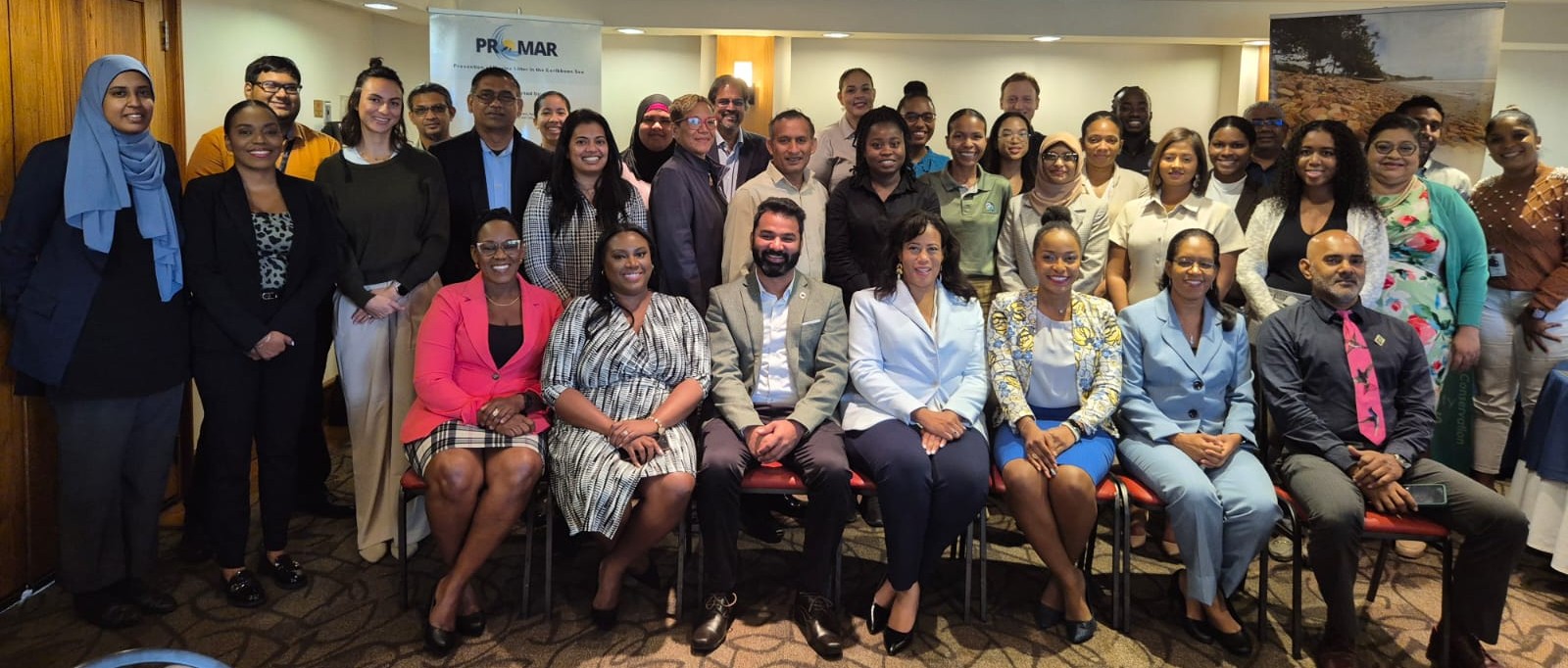
National Policy Dialogue on Marine Litter Prevention & Capacity Building Workshop on Extended Producer Responsibility (EPR)- Trinidad & Tobago
Trinidad and Tobago Advances Marine Litter Prevention Through National Policy Dialogue and EPR Workshop
In aid of strengthening national strategies to combat marine plastic pollution, the Institute of Marine Affairs (IMA), in partnership with the Ministry of Planning, Economic Affairs and Development and key international stakeholders, hosted a two-day National Policy Dialogue and Workshop under the Prevention of Marine Litter in the Caribbean Sea (PROMAR) Project. The event took place on June 3–4, 2025, at the Kapok Hotel, St. Clair.
During her opening address, Dr. Ava Maxam, Director of the IMA, emphasized the urgency of the issue, stating, “Plastic pollution is one of the most serious threats affecting our planet, and the solution to this global problem is within reach.”
Day One: National Policy Dialogue
The first day of the event convened nearly 50 stakeholders from across Trinidad and Tobago’s public and private sectors. Participants included policymakers, academics, NGOs, and waste management professionals. Utilizing adelphi’s internationally recognized co-creation and prototyping methodology, the session fostered collaboration and creative problem-solving.
Interactive group sessions focused on:
- Identifying current policy gaps
- Discussing enforcement challenges
- Highlighting successful interventions and opportunities
The dialogue resulted in the creation of a strategic roadmap for continued stakeholder engagement, as well as the development of practical policy prototypes that can be refined and integrated into national frameworks.
Day Two: Capacity Building Workshop on EPR and Circular Economy
The second day featured a hands-on training workshop dedicated to building capacity in Extended Producer Responsibility (EPR) and Circular Economy Business Models. The session introduced participants to a global EPR toolkit and showcased international best practices—including mechanisms for engaging the informal sector and effective regulatory approaches.
Using real-world case studies and group exercises, attendees explored how EPR systems can be adapted to Trinidad and Tobago’s local context. The workshop concluded with the preliminary mapping of stakeholder roles and responsibilities essential for implementing a national EPR framework.
Moving Forward
The IMA remains steadfast in its mission to advance sustainable waste management, encourage cross-sector collaboration, and drive policy innovation. Events like this not only contribute to national environmental resilience but also reinforce Trinidad and Tobago’s commitment to protecting the marine ecosystems that are vital to the nation’s identity, economy, and future.
As PROMAR continues to roll out region-wide, the outcomes of this policy dialogue and workshop will serve as a foundation for informed action and strategic reform in the fight against marine litter.
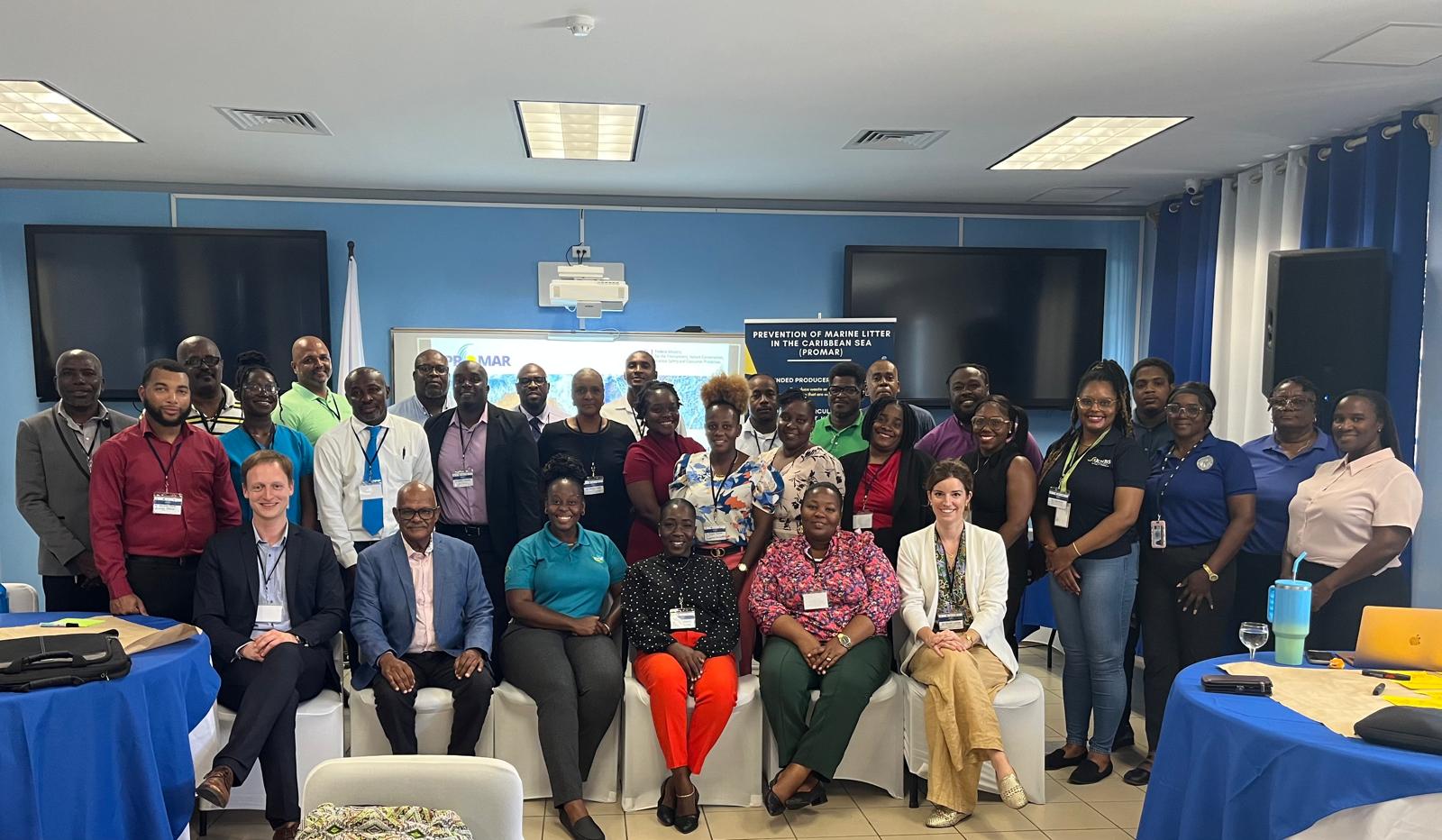
Opening Ceremony & National Dialogue on Marine Litter Prevention and Plastic Waste Management | Capacity Building Workshop on Extended Producer Responsibility (EPR)- St. Kitts & Nevis
St. Kitts and Nevis Ramps Up Action Against Marine Litter with Launch of PROMAR Project
Basseterre, St. Kitts – June 13, 2025 – In a significant move to address the growing challenge of plastic pollution, stakeholders across government, civil society, academia, and the private sector gathered at the Clarence Fitzroy Bryant College (CFBC) on June 11 for the official launch of the Prevention of Marine Litter in the Caribbean Sea (PROMAR) project in St. Kitts and Nevis. The launch was followed by a two-day national workshop focused on exploring practical strategies for marine litter prevention, promoting circular economy solutions, and strengthening national waste management systems.
The workshop, which concluded on June 12, is a major component of the PROMAR initiative—a regional effort spearheaded by the United Nations Environment Programme (UNEP) Cartagena Convention Secretariat. The initiative aims to curb marine litter, particularly plastic waste, in the Caribbean through research, education, and coordinated policy action.
Alarm Bells from the Data
During the opening ceremony, Dr. Leighton Naraine, Research Manager at CFBC and PROMAR Project Lead for St. Kitts and Nevis, underscored the urgency of coordinated national action. Citing figures from a 2020 report by the Japan International Cooperation Agency (JICA), he revealed that 23% of all waste generated in the twin-island nation is plastic—amounting to approximately 20 tons per day. Alarmingly, an estimated 3,675 tons of this waste enters the marine environment each year, placing St. Kitts and Nevis among the highest per capita waste producers globally.
“The challenge is significant, but not insurmountable,” Dr. Naraine emphasized. “CFBC is committed to supporting research, education, and policy development as a technical partner in the PROMAR initiative.”
Government Reaffirms Environmental Commitment
Mr. Eavin Parry, Senior Environment Officer in the Ministry of Environment, highlighted the long journey of the PROMAR project—from early conceptualization in 2021 to full-scale implementation in 2025. He praised CFBC’s role as the national implementing partner and reaffirmed the government’s commitment to strengthening environmental policy frameworks, regulatory mechanisms, and waste management systems.
“This journey has reflected the very essence of partnerships, persistence, and vision,” Parry said. “It’s heartening to see local institutions, regional experts, and international donors come together to address marine litter and plastic pollution.”
Community, Collaboration, and Cross-Border Solutions
Speaking on behalf of Nevis, Senior Environmental Officer Ms. Thema Ward stressed the importance of community involvement in tackling marine litter. She noted the harmful effects of plastic waste on marine species such as sea turtles and called attention to the issue of transboundary pollution.
“Ocean currents don’t respect borders,” she said. “Some of the waste we’re finding on our shores didn’t originate here. We need regional conversations and cooperation to address this shared problem.”
Academic and Regional Leadership
Dr. Moyia Rowtham, Interim President of CFBC, reflected on the College’s deep connection to the nation’s environmental wellbeing. “Our waters have long shaped the soul of this federation,” she said. “But today, they are under threat from land-based pollution. As a national implementing partner, CFBC brings academic credibility, institutional networks, and the capacity to translate policy into action.”
Echoing these sentiments, Ms. Taylor Clayton, Regional Project Manager for PROMAR at the UNEP Cartagena Convention Secretariat, spoke about the initiative’s broader strategic goals. She emphasized regional collaboration, capacity building, and the transition toward a circular economy—one that minimizes reliance on single-use plastics and encourages sustainable alternatives.
“The PROMAR project supports Caribbean nations with technical assistance, policy guidance, and institutional strengthening,” Clayton explained. “Our collective efforts help countries fulfill their environmental commitments under both regional and global agreements.”
Taiwan ICDF’s Recycling Partnership
A unique highlight of the workshop was a presentation by Ms. Joyce Chang from the Taiwan International Cooperation Development Fund (ICDF). She introduced participants to the ICDF’s recycling initiative in St. Kitts and Nevis, which complements PROMAR’s goals. The project has already achieved key milestones, including designing recycling bin types, mapping public recycling points, and delivering educational outreach.
Ms. Chang also showcased an innovative example of circular economy in action: t-shirts made from recycled plastics.