

Photo|UNEPCCS
Virtual Event
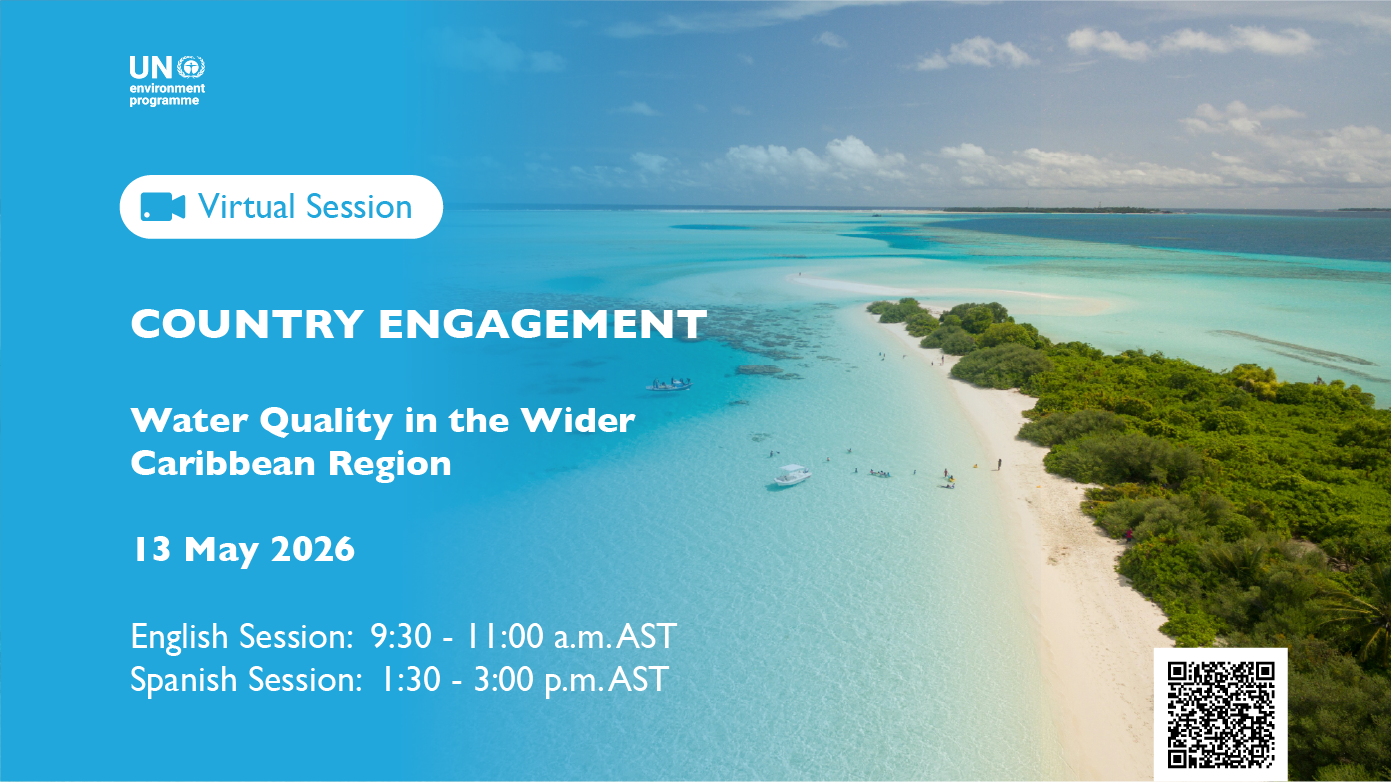
Capacity Development Project on Water Quality in the Wider Caribbean Region: Project Update and Country Engagement Session
13 May 2026
- Vista general
The Cartagena Convention Secretariat and the UNEP Source-to-Sea Pollution Unit will convene a Country Engagement Session under the Capacity Development Project on Water Quality in the Wider Caribbean Region on 13 May 2026. The session will provide LBS Focal Points and relevant technical staff with an update on project progress, the regional baseline and SOCAR context, the capacity development framework, and opportunities for country engagement.
The Cartagena Convention Secretariat and the UNEP Source-to-Sea Pollution Unit are pleased to invite LBS Focal Points and relevant technical staff to participate in a Country Engagement Session under the Capacity Development Project on Water Quality in the Wider Caribbean Region.
The session will provide an update on project implementation and will support dialogue with countries and institutions on priorities for strengthening coastal water quality monitoring, laboratory analysis, data management, and policy or regulatory functions. It will also provide an opportunity to discuss how national monitoring systems can support improved reporting under regional and global frameworks, including the LBS Protocol and the State of the Cartagena Convention Area Report (SOCAR).
The programme will include an overview of the regional baseline and SOCAR context, a project progress update, and an introduction to the capacity development framework. Participants will also learn about REMARCO as a model for regional collaboration and will be invited to share feedback on engagement pathways, training priorities, and next steps for implementation.
Two sessions will be held on Wednesday, 13 May 2026:
English session: 9:30 a.m. – 11:00 a.m. AST Register in advance:
https://un-org.zoom.us/meeting/register/BPp0ZWhsQ5K8iJPxVz8MAw#/registration
Spanish session: 1:30 p.m. – 3:00 p.m. AST Register in advance:
https://un-org.zoom.us/meeting/register/dx7fWXz-QteyAX-aJT6tdQ#/registration
Participation from LBS Focal Points and relevant technical staff will help shape the next phase of implementation and contribute to strengthening coastal water quality monitoring and management across the Wider Caribbean Region.

CEP was established in 1981 as part of the Regional Seas Programme in recognition of the importance and value of the Wider Caribbean Region’s fragile and vulnerable coastal and marine ecosystems including endemic plants and animals.