

Eighteenth Meeting of the Cartagena Convention to Address Mounting Pressures of Marine Pollution, and Biodiversity Loss
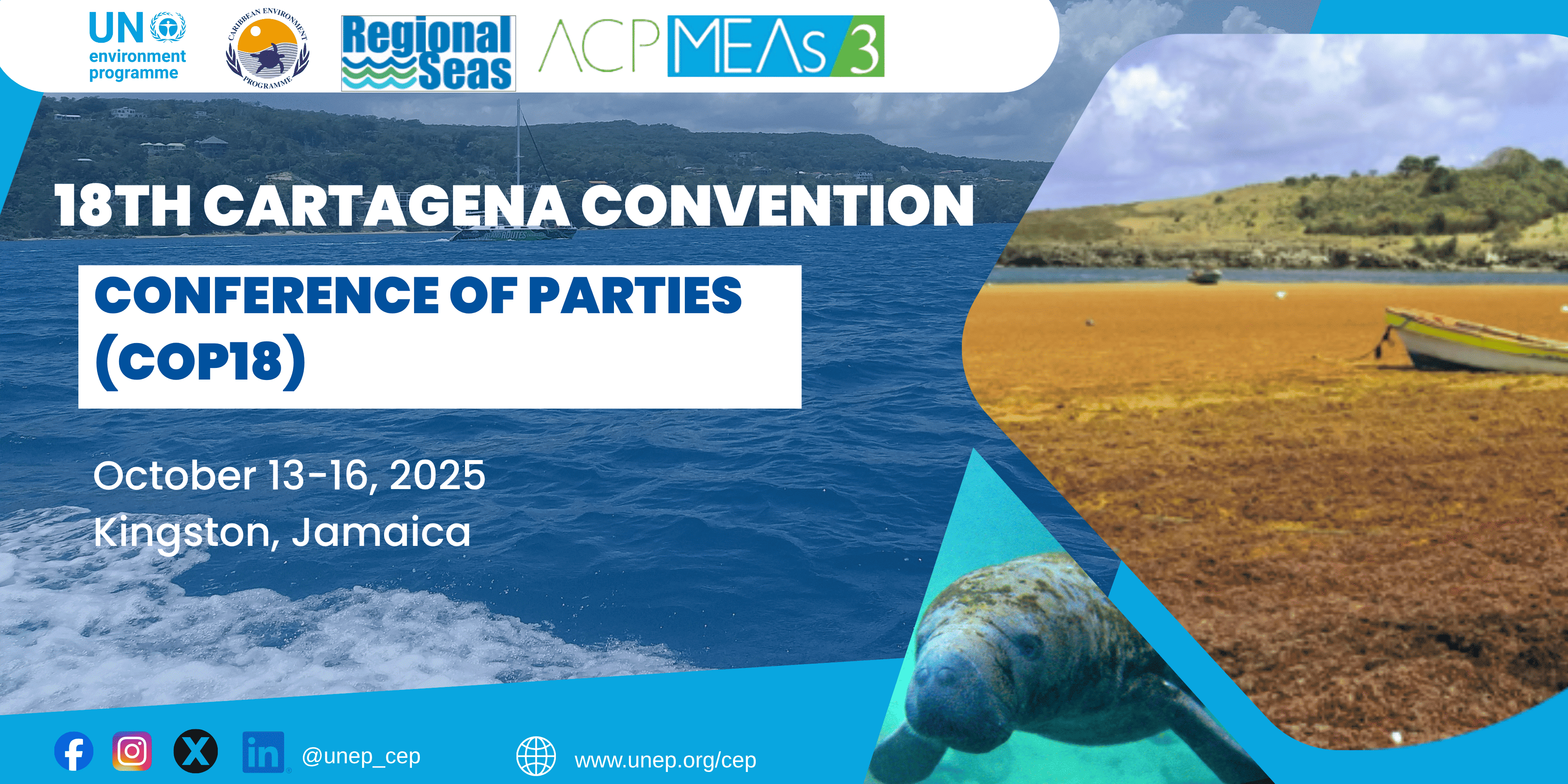
Kingston, Jamaica October 1, 2025- High Level Government Officials and technical experts from across the Wider Caribbean Region will gather in Kingston, Jamaica from October 13-16, 2025, for the Eighteenth Meeting of the Contracting Parties (COP18) to the Cartagena Convention. This pivotal biennial conference hosted by the United Nations Environment Programme (UNEP) will include the Conference of Parties for the Land-Based Sources of Marine Pollution (LBS) and Specially Protected Areas and Wildlife (SPAW) Protocols. These meetings will set the strategic direction for regional efforts to tackle the escalating threats facing the Caribbean Sea.
According to Christopher Corbin, Coordinator of UNEP’S Cartagena Convention Secretariat, The Wider Caribbean Region, an area renowned for its rich marine biodiversity and economic reliance on coastal resources, is at a critical juncture. "The marine environment is facing unprecedented pressures from land-based pollution, the ever-increasing challenge of plastic waste, massive influxes of sargassum, the intensifying impact of warming seas and coral reef bleaching, sea level and coastal erosion, ocean acidification, habitat and species loss. COP18 will serve as a crucial platform for the Convention Contracting Parties to reaffirm their commitment and forge a coordinated path forward to further safeguard these vital ecosystems."
COP18’s main objectives are to review the implementation of the 2023-2024 work plan, approve a new strategic programme and budget for the 2026-2027 biennium, and make decisive resolutions on emerging environmental issues. Delegates will discuss proposals to advance the regional action plan for marine litter, strengthen measures to control pollution from land-based sources, enhance the network of specially protected areas and wildlife, and improve ocean governance frameworks to build a more resilient and sustainable blue economy.
Highlighting the urgency of the upcoming discussions Corbin added, "this COP is a critical call to action. We have the science and frameworks, but now we must accelerate implementation. Our focus will be on translating regional commitments into more tangible national actions that protect our shared marine resources for future generations. Collaboration is our greatest strength and by uniting our efforts we can build a more resilient and prosperous Wider Caribbean."
COP18 is expected to deliver a robust and adequately financed work plan for 2025-26, the potential adoption of new guidelines and action plans, particularly concerning sargassum management and plastic pollution and renewed political commitment to the Convention and its three Protocols on Oil Spills, Specially Protected Areas and Wildlife (SPAW) and Pollution from (Land -Based Sources).
"These outcomes will have far-reaching implications for the sustainable development of the region, directly impacting key sectors such as tourism, fisheries and shipping and contributing to the global agenda for the achievement of Sustainable Development Goal 14: Life Below Water, "stated Corbin.
Links to the UNEP Cartagena Convention Secretariat series of Intergovernmental Meetings between 13th and 16th October in Kingston Jamaica are as follows:
- Thirteenth Conference of Parties to the Protocol Concerning Specially Protected Areas and Wildlife (SPAW) of the Wider Caribbean Region
- The Seventh Conference of Parties to the Protocol Concerning Pollution from Land-Based Sources and Activities (LBS) of the Wider Caribbean Region
- Eighteenth Conference of Parties to the Convention for the Protection and Development of the Marine Environment of the Wider Caribbean Region (COP18)