

An initiative promoted and implemented by the United Nations Environment
Programme (UNEP), executed by the Secretariat of the Cartagena Convention, and financed by the Global Environment Facility (GEF).
Cartagena and Barranquilla are becoming pioneers in Colombia in the implementation of the international project “Circular Cities: Beyond Plastic.” The initiative aims to reduce plastic waste pollution by promoting circular economy models that transform waste into new opportunities for employment, innovation, and sustainability.
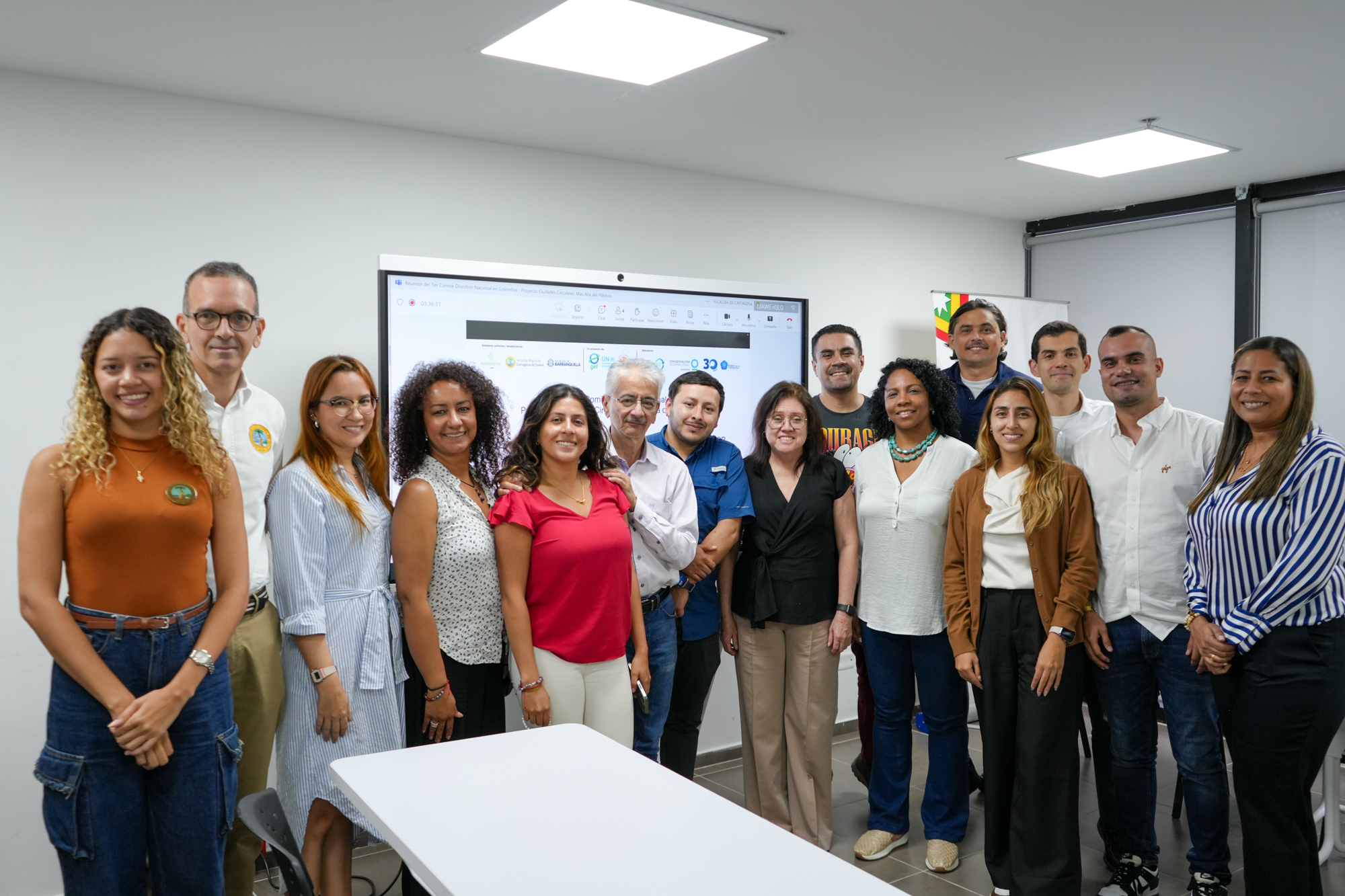
In Colombia, the project is executed by a consortium made up of CEMPRE, Conservation International, and INVEMAR, in partnership with the mayors’ offices of Barranquilla and Cartagena, and with the support of the Ministry of Environment and
Sustainable Development.
During the kick-off meetings held on October 15 and 16, the main challenges and opportunities for each city were presented. In Cartagena, according to the project’s baseline study previously developed by INVEMAR, around 56,000 tons of plastic
waste were generated in 2019, 84% of which ended up in landfills, only 8% was recycled, and 7.5% leaked into the environment. The city accounts for approximately 10% of Colombia’s total plastic production.
Meanwhile, in Barranquilla, based on the baseline study developed by INVEMAR, approximately 58,000 tons of plastic waste were generated in 2018, 92% went to landfills, 5% was recycled, and 3.2% leaked into the environment. The city represents around 6% of national plastic production.
The project includes political action plans in each city, business pilots to improve collection and recycling, capacity-building for stakeholders across the plastic value chain, and the promotion of intercity networks. All these components aim for less
plastic leakage and pollution, and more circularity through stronger collaboration.
“This is a collective effort that not only seeks to reduce plastic waste but also to create spaces for inclusion for recyclers, women, and youth — generating real change toward cleaner and more circular cities,” said Jesús Garay, Acting Director
General of INVEMAR.