

Inside Cuba's community-led coral restoration network — and what it means for the Caribbean's climate future
A Reef Worth Fighting For
Off the western tip of Cuba, where the Caribbean Sea meets the Gulf of Mexico, lies one of the region's most significant marine protected areas. Guanahacabibes National Park stretches across more than 100,000 hectares of land and sea — a UNESCO Biosphere Reserve where dense forest meets turquoise shallows and, beneath the surface, coral reefs that have sustained fishing communities and coastal ecosystems for generations.
Those reefs face a compounding series of threats. Ocean warming triggers bleaching events that can kill coral tissue in weeks. Hurricane seasons grow more intense. Coral disease spreads faster across weakened, fragmented colonies. The structural complexity that makes a reef a habitat — the arches, cavities, and branching forms that fish depend on and coastlines shelter behind — takes decades to build and can collapse in a season.
The broader picture is stark. Caribbean reef cover has declined significantly over recent decades, threatening the estimated USD 6.9 billion in annual benefits that healthy reefs contribute through fisheries, tourism, and coastal protection across the region. For the communities that live and work along Caribbean coastlines, this is not an abstract ecological statistic. It is a shrinking foundation.
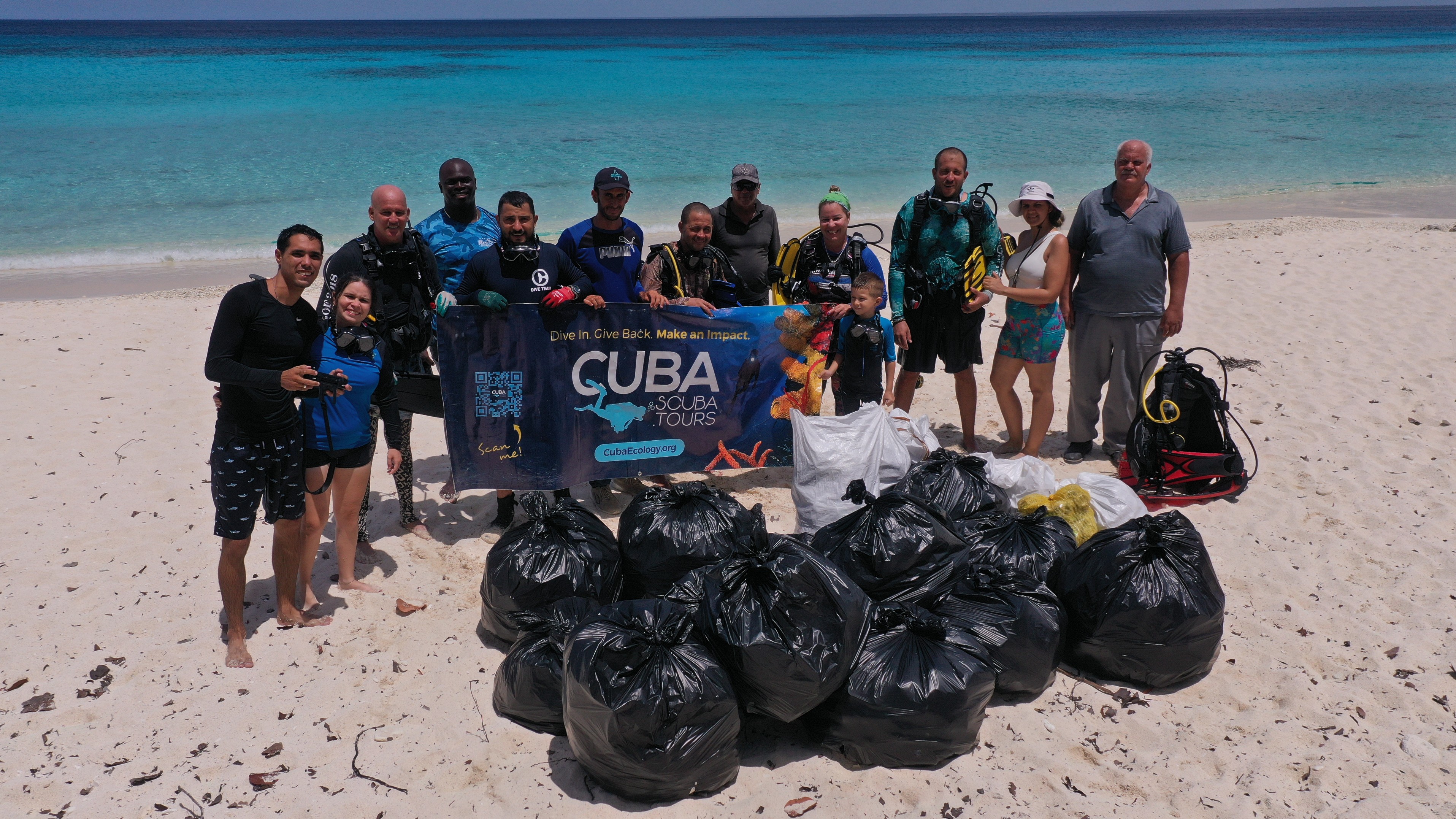
In 2022, a small team of marine biologists, trained community divers, and local residents inside Guanahacabibes decided that waiting was not an option. Working within the protected area, they established the "Laberinto" coral nursery: a carefully managed network of underwater growing frames where reef-building coral fragments are cultivated, monitored, and eventually returned to the sea floor. What began as a restoration project has grown into something larger — a community conservation network with the skills, knowledge, and commitment to support long-term reef recovery in one of Cuba's most important marine areas.
THREE SPECIES AT THE HEART OF CARIBBEAN REEF RECOVERY
Acropora cervicornis
Staghorn Coral
One of the fastest-growing Caribbean corals, staghorn provides critical fish habitat through its dense, branching structure. Highly sensitive to bleaching — its rapid growth makes it a priority for restoration programmes, but warming waters remain a constant threat.
Orbicella faveolata
Mountainous Star Coral
A slow-growing, structurally massive species that forms the backbone of many Caribbean reef frameworks. Historically dominant across the region, its decline from disease and bleaching has dramatically reduced the three-dimensional complexity reefs depend on.
Diploria labyrinthiformis
Grooved Brain Coral
Recognised by its distinctive maze-like surface, brain coral is among the more resilient Caribbean reef builders — but slow to recover from physical damage. Its presence in restoration outplanting signals a long-term investment in reef structural diversity.
Three coral species have been prioritised for cultivation in the Laberinto nursery, each chosen for its role in Caribbean reef recovery and structural complexity.
How the Nursery Works
Coral restoration takes two principal forms, and the Guanahacabibes programme employs both.
Asexual propagation — the more common approach — involves collecting small fragments of living coral, attaching them to nursery frames suspended in the water column, and monitoring their growth over several months. Once fragments reach a sufficient size, they are transplanted by hand onto degraded reef sites. The technique is practical, scalable, and produces corals that are genetically identical to the parent colony.
Sexual reproduction is more complex but genetically critical. It involves collecting coral spawn during annual mass spawning events, fertilising eggs, and rearing larvae through early life stages before settling them onto reef substrate. The resulting corals introduce new genetic diversity into the population — important for long-term resilience as the region faces rising temperatures and new disease pressures.
Training delivered through the Guanahacabibes National Park has equipped divers, marine biologists, and community members with practical skills in both approaches. Monitoring data from nursery and outplanting areas is collected systematically, informing management decisions within the protected area and contributing to a broader evidence base for reef restoration across the Caribbean.
The Regional Framework Behind the Work
The work in Guanahacabibes did not happen in isolation. It is part of a regional effort to build the practical conservation capacity that Caribbean protected areas need to respond to accelerating climate impacts — supported by the SPAW-RAC Small Grants Programme and underpinned by the legal framework of the Cartagena Convention.
Cuba is a Contracting Party to the Cartagena Convention and its Protocol Concerning Specially Protected Areas and Wildlife (SPAW Protocol), which provides the regional framework for protecting marine habitats and species of ecological significance across the Wider Caribbean. Guanahacabibes sits within that framework as a SPAW designated protected area, making the restoration work there a direct expression of the Protocol's mandate to conserve and restore degraded Caribbean marine ecosystems.
Working alongside the Guanahacabibes National Park, the SPAW-RAC team through the SPAW-RAC Small Grants Programme channelled support into training — covering both sexual and asexual coral restoration techniques and equipping participants with a broader, more durable base of practical skills. Awareness campaigns through social media and partner platforms extended the reach of the work beyond Guanahacabibes, strengthening public understanding of reef conservation and climate resilience across the region.
The UNEP Cartagena Convention Secretariat supports this kind of capacity-building as a core element of regional marine conservation. Healthy, well-managed MPAs are not just biodiversity assets — they are a nature-based infrastructure that protects coastlines, sustains fisheries, and buffers communities against the growing impacts of climate change.
"Coral restoration is not simply about growing corals; it is about helping reefs recover their ecological functions and resilience. In Guanahacabibes, every fragment we maintain and outplant represents an investment in the future health of our reefs, the biodiversity they support, and the communities that depend on them."
Dr. Dorka Cobian Rojas, Head of research and monitoring, Guanahacabibes National Park
What Has Been Achieved
Since 2022, the Laberinto nursery has grown and outplanted fragments of three key reef-building species across degraded reef sites within Guanahacabibes. Restoration teams track coral fragments in both nursery and outplanting areas, assessing progress and informing management decisions within the protected area.
What Was Achieved
Figure
Note
Coral fragments cultivated
More than 3000
Across all three species in Laberinto nursery
Reef sites outplanted
Five
Within Guanahacabibes protected area
Reef area treated
3000 ha/m²
Confirm unit with programme team
People trained
30
Divers, biologists, community members
Programme duration
2022–present
Ongoing with initial support from the SPAW-RAC Small Grants
Protected area size
100,000+ ha
Land and marine area, UNESCO Biosphere Reserve, SPAW MPA
What This Means for the Region
The lesson from Guanahacabibes extends beyond a single protected area. It demonstrates that reef recovery is not solely a scientific or financial challenge — it is a community challenge. And communities, given the right training, the right institutional support, and the right regional framework, are capable of rising to meet it.
The model is directly relevant to the broader ambitions of the Global Biodiversity Framework, which calls for 30 per cent of the world's land and oceans to be effectively conserved and managed by 2030. Across the Wider Caribbean, the SPAW Protocol's 38 designated protected areas represent an existing foundation for that goal — but nomination pipelines remain underutilised. The Guanahacabibes experience shows what is possible when protected area status is paired with real capacity on the ground.
Other Contracting Parties working to strengthen marine protection in their national waters can explore pathways to regional support through the SPAW-RAC Small Grants Programme, the SPAW protected area nominations process, and the broader network of Caribbean MPA practitioners connected through CaMPAM and the SPAW listed MPA Network of practitioners.
One coral fragment at a time, the future of these reefs is being written — and the communities writing it are not working alone.