

Panama City, September 5, 2025. With the recovery of 2.2 tons of post-consumer plastic, the
National Association for the Conservation of Nature (ANCON), together with the Ministry of
Environment (MiAMBIENTE) and the municipalities of Panama and Colon, concluded Blue
Revolution Week, an event that marked the launch of the Circular Cities: Beyond Plastic
project in Panama. The closing events took place at David Crespo Park in Betania and at
Colón 2000, with the participation of local authorities, students, community members, and
private companies.
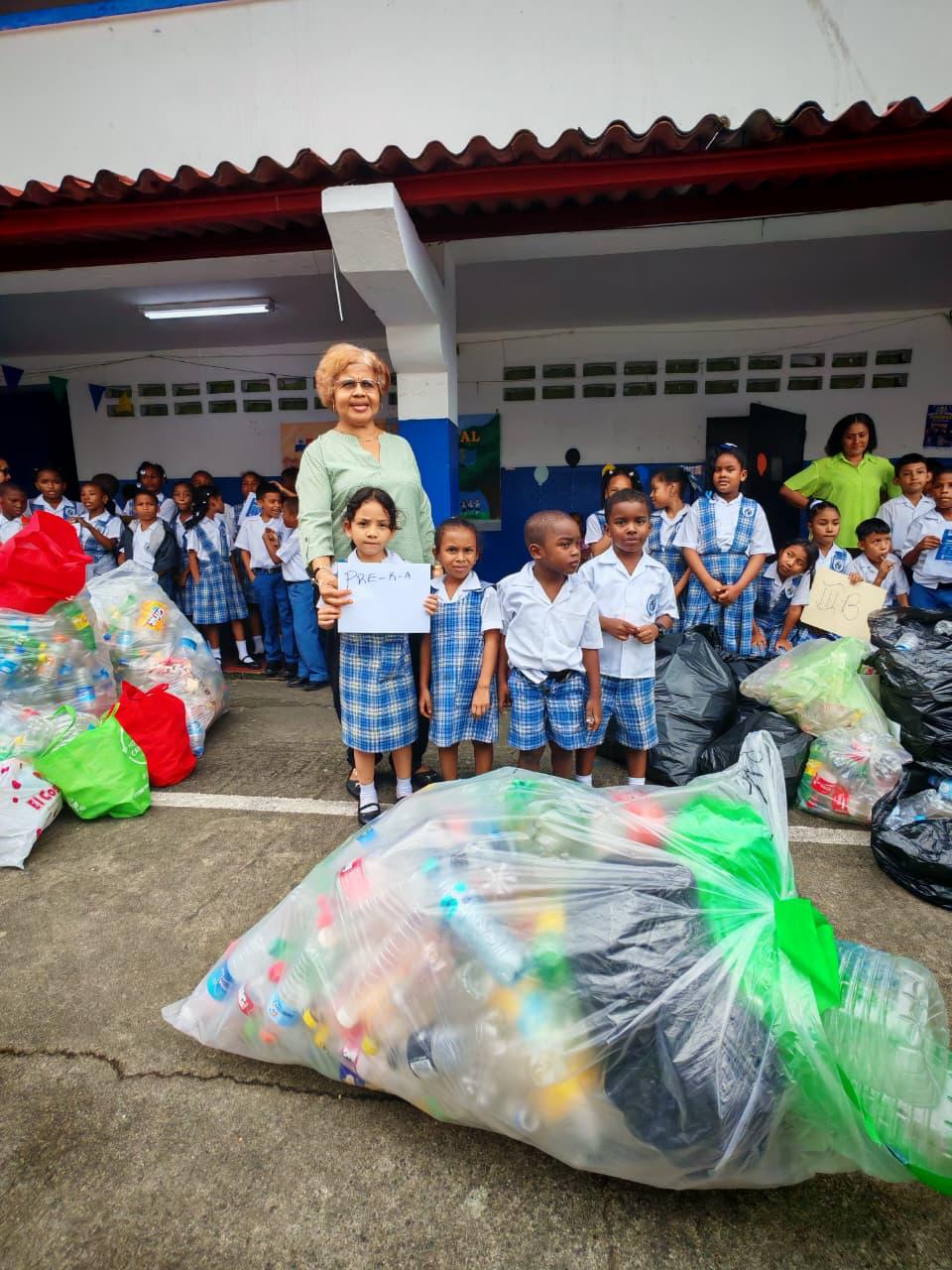
From September 1 to 5, thirteen collection points were set up to receive different types of
plastics, including PET, HDPE, LDPE, and PP. Among the main locations were the Community
Boards of Pueblo Nuevo, Juan Díaz, and Betania in Panama City, and the Community Board
of Sabanitas in Colon. The initiative successfully mobilized residents, organizations, schools,
and companies to contribute to the collection goal.
Adrián Benedetti, Executive Director of ANCON, stated: “With Blue Revolution, we marked a
milestone, not only celebrating the start of Ocean Month but also taking the first step in a
transformative project that unites Panama and Colon in a real commitment against plastic
pollution. Recovering 2.2 tons of plastic in just one week shows what we can achieve when
local governments, communities, the private sector, and civil society work together. This is just
the beginning: over the next 36 months, through the Circular Cities: Beyond Plastic project,
we will move toward cleaner and more resilient cities, where the circular economy becomes a
daily practice that inspires sustainable change in our country and across the region.”
Meanwhile, the Minister of Environment, Juan Carlos Navarro, added: “Recovering 2.2 tons
of plastic in just one week reflects the enormous potential we have as a country when we work
together. At MiAMBIENTE, we support these initiatives because we firmly believe that
reducing plastic pollution is not only an environmental goal but also a priority for public health
and the well-being of our communities. Panama and Colon are setting a regional example of
how to move toward a cleaner and more sustainable future.”
This activity was made possible thanks to the participation of 3,021 students and more than
400 individuals who delivered recyclable materials at the collection points, resulting in a total
of 2.2 tons of plastic recovered. Of the total, 79% corresponded to type #1 (PET), commonly
found in ready-to-eat food and beverage containers; 15.5% was type #2 (HDPE), used in
household cleaning and personal care products; 4.8% was type #5 (PP), often used in dairy
and food packaging; 0.3% was type #4 (LDPE), present in flexible packaging and some caps;
and 0.4% was type #6 (PS), used in disposable cups, plates, foam food trays, and plastic
cutlery.
According to the Plastic Action Roadmap, more than 88% of plastic waste in Panama —
equivalent to 336,000 tons — is improperly managed. Of the waste collected, less than 12%
is sent to facilities that comply with environmental and technical standards, meaning that
around 246,000 tons of plastic waste, although collected, are still poorly handled.
In response, the Circular Cities: Beyond Plastic project seeks to reduce marine plastics and
plastic pollution in cities across Latin America and the Caribbean. The 36-month initiative will
be implemented in Panama, Colombia, and Jamaica, with the municipalities of Panama and
Colon leading the effort. Through its four components, the project will influence local policies,
promote solutions to reduce plastic consumption, and foster innovation in circular plastic
systems. Follow ANCON, MiAMBIENTE, and the municipalities of Panama and Colon on their
platforms for updates on the project’s progress