

The law students who struck a seismic blow for climate justice
In the Pacific Islands, a group of students turned their frustration into legal firepower, demanding justice for their vulnerable nations and challenging the biggest polluters in court.
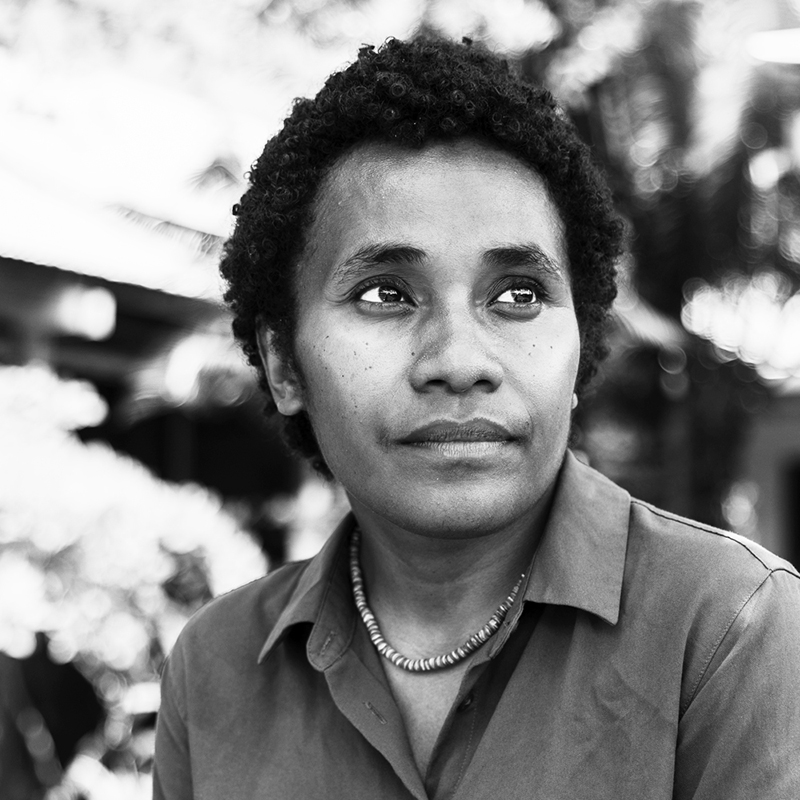
When Cynthia Houniuhi stepped up to a podium at the International Court of Justice in the Hague one year ago, her message to the judges sitting in front of her was simple.
Climate change was ravaging island nations across the Pacific, like her home, the Solomon Islands. That, she said, was a fundamental injustice because those countries had produced only a fraction of the greenhouse gas emissions driving the climate crisis.
"My people's land… is nearing a critical point, on the verge of being completely engulfed by rising seas,” said Houniuhi. “Without our land, our bodies and memories are severed from the fundamental relationships that define who we are."
The address was part of a landmark case in which the world’s highest court had been asked to determine how much responsibility the planet’s biggest greenhouse gas emitters bore for a deepening climate crisis.
For Houniuhi it marked a moment of triumph. Six years earlier, she and 26 other law students had come together to form Pacific Islands Students Fighting Climate Change, or PISFCC. The students had come of age watching their neighbours lose their lives, homes and livelihoods to rising sea levels, coral bleaching and erratic weather.
Frustrated with what they saw as large emitters dragging their heels, the students saw no other choice but to mount a case destined for the International Court of Justice.
So Houniuhi, the PISFFC president, started drumming up support for the idea among her peers. Vishal Prasad, now PISFCC’s campaign director, was one of the earliest to join the effort.
"When I heard about this campaign, it struck me how precise it was and the potential it had," he says. "It became our lives for the next five years."
Prasad spent his days preparing government briefs and generating public support for the case. Since seafaring was embedded in the history of Pacific nations, the students framed their initiative as another voyage for the region’s people.
The governments of the Pacific Island Forum, a grouping of 18 countries and territories, soon embraced the legal challenge, declaring that the climate crisis represented the greatest threat to the region's security.
The island nation of Vanuatu led the charge, taking the issue to the United Nations General Assembly. After several months of intense campaigning, the assembly voted unanimously in March 2023 to request an advisory opinion from the International Court of Justice on the legal obligations of states regarding climate change.
The UN resolution asked judges to answer two main questions. First, what are the obligations of states under international law to protect the climate and the environment from greenhouse gas emissions? And second, what are the legal consequences for states that have caused significant harm to the climate and the environment?
"This is when the campaign became truly international," Prasad says.
For both Houniuhi and Prasad, the start of oral arguments in late 2024 was an emotionally charged experience. In the damp winter weather of The Hague people gathered outside the court’s seat in the neo-Renaissance Peace Palace, with banners calling for urgent climate action.
Lawyers for pacific Island nations argued high-emitting countries, by precipitating the climate crisis, had violated the human rights of low-lying islanders and that those countries had an obligation under international law to drastically cut emissions. While PISFCC members didn’t argue the case, they collected the testimonies of frontline communities and young people affected by the climate crisis, which were part of the submissions to the court.
The proceedings lasted for two weeks, with hopes and anxieties running high inside and outside the court building. Prasad found it very difficult to listen to some of the world's most powerful nations argue that human rights law should not be relevant to the countries' obligation to protect the environment.
On July 23, 2025, the judges issued a landmark ruling, confirming that states have a legal obligation to protect the climate system from the harmful effects of greenhouse gas emissions. The advisory opinion is not legally binding but experts say it is consequential because affected nations will be able to take big climate offenders to court.
The verdict was so definitive that it exceeded the boldest expectations of PISFCC.
The organization recently received the prestigious Champions of the Earth 2025 Award from the United Nations Environment Programme, celebrating their breakthrough in seeking climate justice for their communities and the world.
For the group, which today counts more than 100 members, the court win was a moment of vindication. But the students understand the fight for climate justice is far from over – and that pursuit could determine the fate of all countries, not just small island states.
“The world is an island,” she says.”We’re in this together.”