
The Champions of the Earth award honours individuals and organizations whose actions have a transformative impact on the environment. In 2024, UNEP honours six outstanding individuals and organizations working on innovative and sustainable solutions to restore land, enhance drought resilience, and combat desertification.

In one of India’s most heat-vulnerable regions, Supriya Sahu is leading a powerful transformation to protect communities from extreme heat. As temperatures in Tamil Nadu reach dangerous highs, Sahu Additional Chief Secretary for Environment, Climate Change and Forest has championed cooling solutions, nature-based adaptation, and climate-resilient policies that put vulnerable families first.
Under her leadership, Tamil Nadu became the first Indian state to officially recognize heat as a state-specific disaster. Her work blends simple, low-cost cooling methods with large-scale environmental restoration: from painting school roofs white under the Cool Roof Project, expanding mangroves and wetlands, establishing 65 new reserve forests, to launching projects that reduce cooling energy demand and protect biodiversity.

Italian engineer Manfredi Caltagirone leaves behind a powerful legacy in the global fight against methane emissions. His vision began under a tree at the UNEP campus in Nairobi in 2019, where he and two colleagues imagined a new framework that could rapidly cut methane emissions by 2030. That idea grew into the Oil and Gas Methane Partnership 2.0 and the International Methane Emissions Observatory (IMEO), launched with support from governments, scientists, and industry leaders.
Until his passing at age 46, Caltagirone dedicated his career to harnessing the world’s most effective short-term climate solution: reducing methane, a gas that warms the planet far faster than carbon dioxide. Under his leadership, IMEO transformed global methane action by pushing companies to measure real emissions instead of estimates, improving transparency, and ensuring leaks could be fixed quickly on the ground. His work inspired major programmes such as the Methane Alert and Response System, new scientific studies, and partnerships across oil, gas, steel, waste, livestock, and rice sectors.

A group of Pacific Island law students turned their fear and frustration into a historic global fight for climate justice. For Cynthia Houniuhi from the Solomon Islands, rising seas were not an abstract threat they were swallowing the land her people depend on for identity, memory and survival. Together with 26 other students, she formed Pacific Islands Students Fighting Climate Change (PISFCC), determined to hold major polluters accountable.
Their campaign grew from a student movement into an international effort embraced by Pacific governments. In 2023, the UN General Assembly unanimously asked the International Court of Justice to clarify countries’ legal obligations on climate change. By late 2024, the world watched as arguments unfolded in The Hague, with testimonies from frontline communities gathered by PISFCC.

In the heart of the Amazon, scientists at Imazon are using artificial intelligence to predict where the next wave of deforestation will strike before a single tree falls. Their digital map, dotted with yellow, orange and red indicators, reveals the forest areas most at risk. And the impact has been remarkable: in its first year, the model identified 15,000 square kilometres of high-risk areas, helping save 71 per cent of them and uncover nearly all illegal deforestation. For Associate Researcher Carlos Souza and the team at Imazon, the mission is clear.
Brazil cannot thrive without the Amazon, and the world cannot survive without it. Using decades of satellite data and new AI tools, the institute has created one of the most accurate forest-loss prediction systems in existence, with 73 per cent of deforestation alerts occurring within four kilometres of the predicted location.

Mariam Issoufou is turning traditional Sahelian architecture into powerful climate solutions that protect communities from extreme heat. Her award-winning projects—from rural schools to community centres—use earth, clay, and time-tested construction techniques to create buildings that stay naturally cool, reduce energy use, and lower carbon emissions. By blending heritage with innovation, Issoufou revives local craftsmanship, supports sustainable livelihoods, and provides safe, comfortable spaces for communities in Niger and across Africa. From compact, heat-resistant homes to community hubs and schools, her designs show how climate-smart architecture can address the urgent challenges of a warming world while preserving cultural identity. For her pioneering work, UNEP named her a Champion of the Earth, celebrating her vision for resilient, low-carbon, and inspiring architecture.

Lu Qi, a Chinese scientist honoured in the Science and Innovation category, has worked in science and policy sectors for three decades helping China reverse degradation and shrink its deserts. As Chief Scientist of the Chinese Academy of Forestry and founding President of the Institute of Great Green Wall, Lu has played a key role in implementing the world’s largest afforestation project, establishing expert research networks and partnerships, and boosting multilateral cooperation to stem desertification, land degradation and drought.

Gabriel Paun, a Romanian environmental defender honoured in the Inspiration and Action category, is the founder of NGO Agent Green, which has been helping save thousands of hectares of precious biodiversity in the Carpathians since 2009 by exposing the destruction and illegal logging of Europe’s last old growth forest. Paun has received death threats and been physically attacked for his work in documenting deforestation in an area that is vital for the ecosystem and supports unique biodiversity such as lynx and wolves.

SEKEM, a sustainable agriculture initiative honoured in the Entrepreneurial Vision category, will help more than 40,000 farmers in Egypt transition to more sustainable agriculture by 2025. Its promotion of biodynamic agriculture plus afforestation and reforestation work has been transforming large swathes of desert into thriving agricultural business, advancing sustainable development across the country.

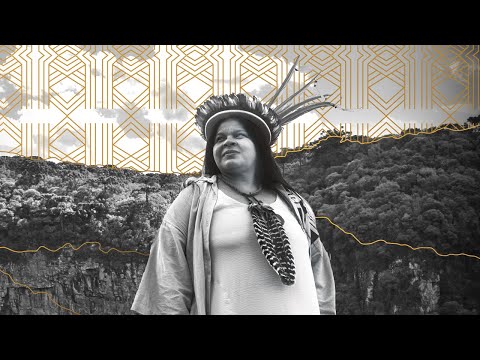
Sonia Guajajara, Brazil’s Minister of Indigenous Peoples honoured in the Policy Leadership category, has been advocating for Indigenous rights for more than two decades. Guajajara became Brazil’s first Minister of Indigenous Peoples and the country’s first female Indigenous minister in 2023. Under her leadership, 10 territories have been recognized as Indigenous land to ward off deforestation, illegal logging, and drug traffickers.