


Webinar
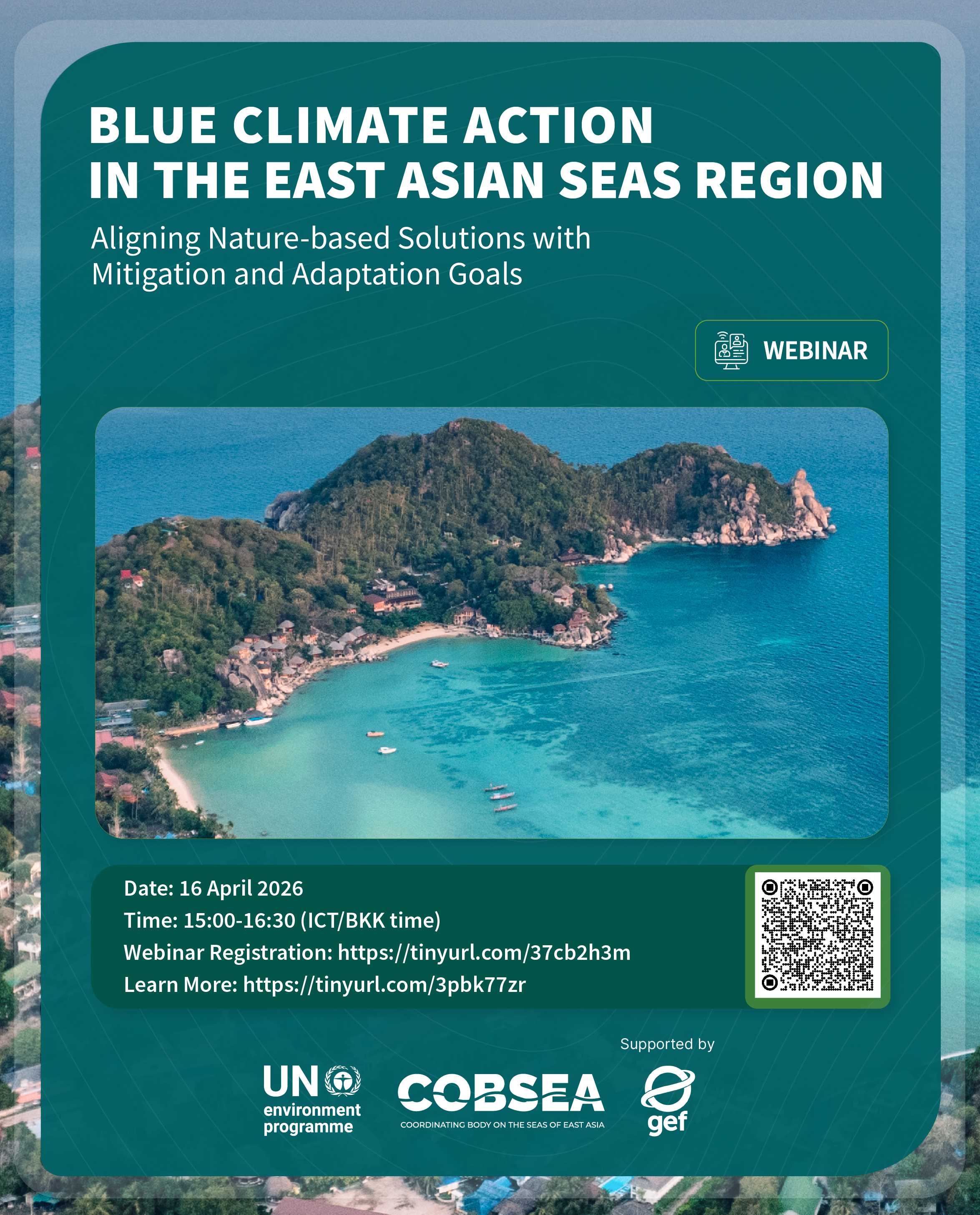
Blue Climate Action in the East Asian Seas Region: Aligning Nature-based solutions with Mitigation and Adaptation Goals
16 April 2026
- Overview
- Documents
Join us 16 April 2026 (15.00 BKK time)
Please register using this link: WEBINAR REGISTRATION: Blue Climate Action in the East Asian Seas Region
Background:
The East Asian Seas region hosts some of the world’s most important blue carbon ecosystems—including mangroves, seagrasses, and tidal marshes—which play a vital role in climate mitigation through blue carbon storage and adaptation and coastal resilience. However, these ecosystems face increasing threats from climate change and unsustainable coastal development.
With support from UNEP HQs, the Coordinating Body on the Seas of East Asia (UNEP-COBSEA) has developed a preliminary policy paper which aims to align mitigation and adaptation measures with Nature-based solutions (NbS) and global climate and biodiversity goals in the region, in support of COBSEA’s Strategic Directions 2023-27.
Outcome:
The objective with this webinar is to share the policy paper with the 9 COBSEA participating countries and relevant experts to support harmonization and policy development in the East Asian Seas region on Blue Climate Action. The session also serves as a forum to provide feedback to and improve the draft policy paper.
*(if you are unable to use the link to register, please email ana.kumarasamy@un.org).
____________________________________________________________________________
The policy paper was developed with funding from the Umbrella Programme to Support NBSAP Update and the 7th National Reports
The GEF 8 Umbrella Programme to support NBSAP update and Seventh National Reports is funded by the Global Environment Facility (GEF) to continue the process of updating NBSAPs and undertake reporting on implementation of the KMGBF. This programme provides financial and technical support to 139 Parties to the CBD that are developing countries, Small Island Developing States, and economies in transition towards updating NBSAPs in alignment with the KMGBF and preparing and submitting 7NRs. Joint implementation support is provided by UNEP and UNDP, in partnership with the CBD Secretariat and the GEF Secretariat.



The Coordinating Body on the Seas of East Asia (COBSEA) oversees the implementation of the East Asian Seas Action Plan.