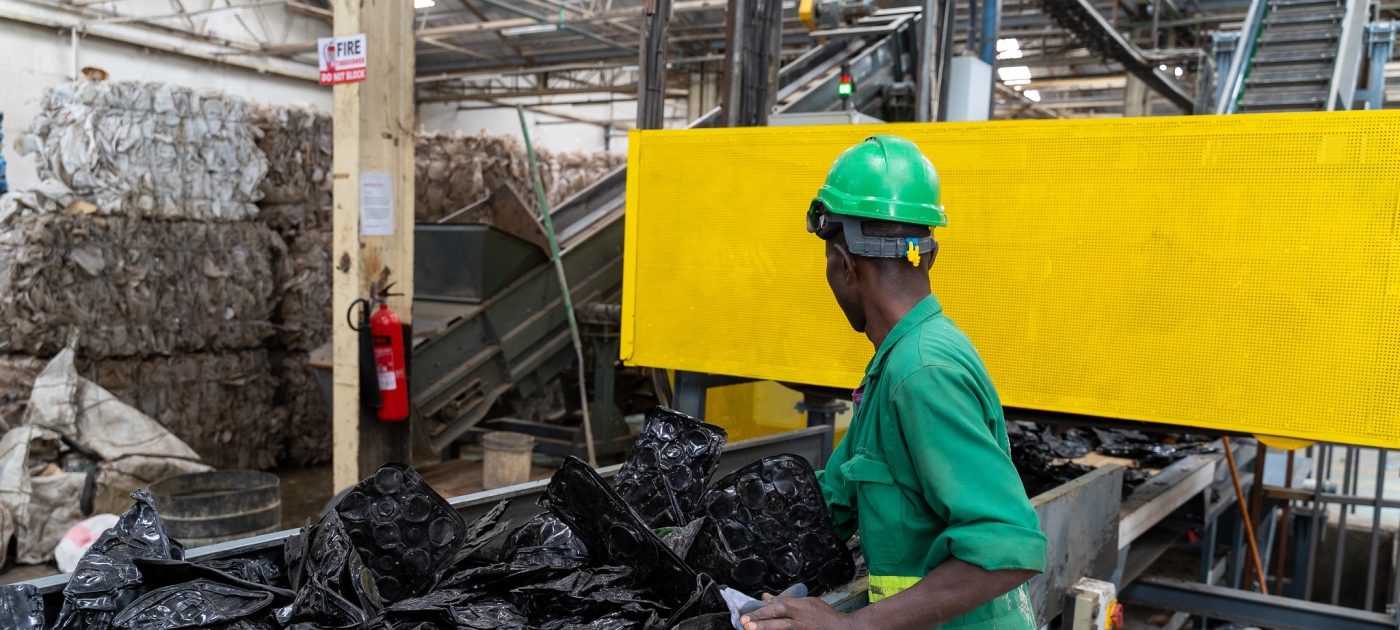
Preventing, controlling and managing pollution is central to improving health, human well-being and prosperity for all.
UNEP drives capacity and leadership in sound management of chemicals and waste while working to improve ways to reduce waste through circularity and pollutants released to the air, water, soil and the ocean.
Persistent Organic Pollutants (POPs) are our "Worst Friends Forever" (WFF). POPs are organic chemicals that remain intact in the environment for long periods. They can spread widely through air, water, and soil, accumulate in organisms, and are toxic to both humans and the environment.
Scientists and governments have joined forces under the Stockholm Convention to track these pollutants and protect human health and the environment from their harmful effects.
Transforming Textiles: Tackling the Hidden Cost of Textile Waste in Chile
Chile is among the world’s top 10 importers of secondhand clothes—yet over 75% can’t be reused and often ends up dumped or burned. UNEP spoke with Environment Minister Maisa Rojas on tackling textile waste and how policy can help beat waste pollution.
The Policy Podcast is part of the wider initiative ‘Policy action on textiles – A dialogue series facilitated by UNEP’. Alongside UNEA-6, governments called for a global policy dialogue on textiles, facilitated by UNEP. They agreed that the dialogue series should be government-led, inclusive and address various aspects of circularity in textiles.
In the lead-up to the establishment of a science-policy panel (SPP) to contribute further to the sound management of chemicals and waste and to prevent pollution, this series of webinars and events is organized by the ad hoc open-ended working group (OEWG) Secretariat and the Geneva Environment Network to build bridges and promote collaboration and knowledge sharing between and among stakeholders, and to raise public awareness about the OEWG preparing proposals for the establishment of the panel.
The event brought together 110+ participants from Member States, UN entities and other partners to explore how international cooperation can fast-track clean air action.
Participants highlighted opportunities for joint advocacy, regional collaboration, and capacity development - all while supporting countries to avoid harmful and polluting development paths. UNEP will now follow up with next steps, including setting up working groups and regular communication with the Network.
He warns of fashion’s heavy toll on the planet—urging governments to act, and businesses to move beyond greenwashing and embrace real change to beat waste pollution.
Tengeneza Café is a community workshop in Nairobi, Kenya, where people come together to mend, swap, and reimagine their clothes. It’s about creativity, care, and choosing repair over waste.
This Zero Waste Day and every day, let’s work to beat waste pollution one piece of clothing at a time.
A unified call for One Health: Driving implementation, science, policy and investment for global impact
Image: World Organisation for Animal Health (WOAH)
As global leaders in human, animal, plant and ecosystem health, the Quadripartite collaboration reaffirms its unwavering commitment to advancing the One Health approach.
This integrated approach is essential to sustainably balance and optimize the health of people, animals, plants, and ecosystems and to address health risks at the human-animal-environment interface. Meeting at WOAH headquarters in Paris for the Third Quadripartite Executive Annual Meeting, we call for urgent, strategic, and sustained support and investments to scale up One Health implementation worldwide.