Preventing, controlling and managing pollution is central to improving health, human well-being and prosperity for all.
UNEP drives capacity and leadership in sound management of chemicals and waste while working to improve ways to reduce waste through circularity and pollutants released to the air, water, soil and the ocean.
01 Jul
2026
18:39
New report: Global progress on antimicrobial resistance (AMR)
Photo credit: FAO/Alessia Pierdomenico
The Quadripartite (FAO, UNEP, WHO and WOAH) has released its second biennial progress report on AMR. The report highlights progress achieved, identifies where more action is needed and underscores the importance of stronger governance, sustained investment and integrated One Health approaches—including environmental action—to tackle AMR.
Deadline extended until 10 July: You are still on time to present your images featuring the global challenge of air pollution and solutions for clean air. Selected entries can be featured in campaign materials for the International Day of Clean Air for blue skies (7 September).
From assumptions to evidence: the data behind circular textiles
Photo Credit: Unsplash / Sergio Gonzalez
How can the textile industry make sustainable decisions beyond traditional assumptions and contribute to a circular, cleaner economy? Lifecycle assessments (LCAs) help shift the conversation away from generic claims toward a more nuanced understanding of impacts across the entire value chain.
"One of the most important findings from LCA evidence is that extending the life of garments — through reuse, repair, or simply wearing them longer — often delivers the largest environmental benefits (around 20–30% in some studies)," explains Claudia Giacovelli, who leads UNEP's InTex programme and works on circular textile value chains.
In the context of the Textiles Recycling Expo, taking place in Brussels, Belgium, on 24–25 June, learn about UNEP's work on making lifecycle assessment findings more accessible to the textile industry. Read the full interview.
20 Jun
2026
09:08
First anniversary of the Intergovernmental Science-Policy Panel on Chemicals, Waste and Pollution
Designed to fill a major gap in the global environmental architecture, the panel will provide countries with independent, policy-relevant scientific advice on chemicals, waste, and pollution prevention. The panel completes a global scientific trifecta alongside the Intergovernmental Panel on Climate Change (IPCC) and the Intergovernmental Science-Policy Platform on Biodiversity and Ecosystem Services (IPBES).
Over the past year, the panel has grown to 133 members, reflecting the breadth of global commitment to strengthening the science-policy interface to address the global pollution crisis.
19 Jun
2026
12:44
UNEP and GEF kick off global initiative to strengthen monitoring of toxic chemicals and mercury
The UN Environment Programme (UNEP) and the Global Environment Facility (GEF) have officially kicked off a US$ 23.5 million Global Chemicals Monitoring Programme (GCMP). The initiative is designed to support the evaluation of the effectiveness of the Stockholm Convention on Persistent Organic Pollutants (POPs) and the Minamata Convention on Mercury; it aims to reduce global pollution while strengthening developing countries’ capacity to monitor hazardous chemicals and support evidence-based policy making.
Chemical safety: How national action is turning global goals into reality
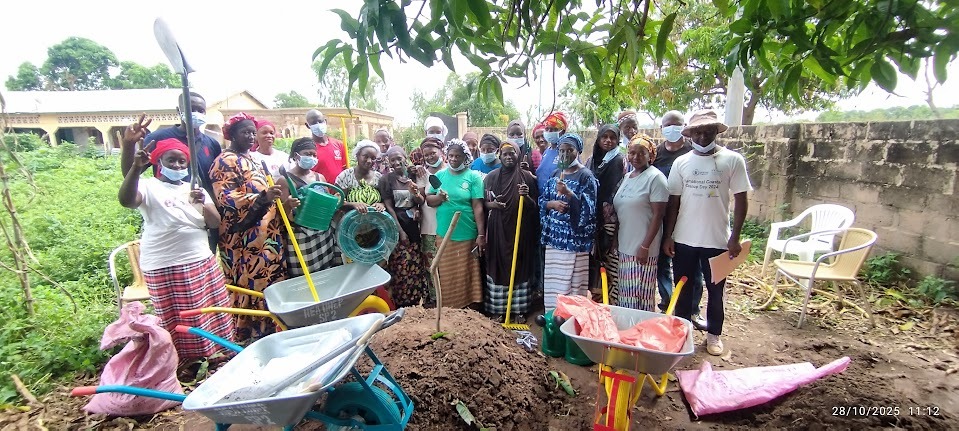
In a community garden in The Gambia, women are turning kitchen scraps into compost instead of reaching for synthetic pesticides. In Moldova, a farmer carefully rinses chemical containers using a technique he learned at a local training session. In Armenia, scientists are strengthening mercury monitoring systems to detect pollution risks earlier. Across very different contexts, a common thread is emerging: countries are finding practical, local ways to act on global commitments to manage chemicals and waste more safely — and the Special Programme is helping make it happen.
Chemicals underpin more than 95 per cent of manufactured goods — and with global chemical production expected to double by 2030, the pressure on countries to strengthen how they manage these substances is only growing. Read on to find out how communities, farmers and governments around the world are rising to that challenge — and the role the Special Programme is playing in getting them there.
10 Jun
2026
12:00
Sustainable resource use: at the heart of tackling the triple planetary crisis
Resource use has long been tied to economic growth—tripling over the past 50 years and projected to rise another 60% by 2060. This trajectory threatens climate, biodiversity and pollution goals, as well as long-term prosperity and human well-being. Today, half of global carbon emissions stem from resource extraction.
Yet growth and environmental protection are not mutually exclusive. Shifting to more sustainable resource use could make the global economy about 3% larger than under current trends, according to the latest Global Resource Outlook by the International Resource Panel (IRP).
The IRP, established by UNEP in 2007, provides science-based solutions for managing natural resources sustainably. As it holds its annual meeting this week in Berlin, watch this video highlighting key solutions based on sustainable resource management.
09 Jun
2026
16:07
Wastewater treatment: a climate solution rising #NowForClimate
Wastewater treatment is emerging as a practical and cost-effective strategy in the climate mitigation toolkit. The sector is a significant but often overlooked source of methane and nitrous oxide — two greenhouse gases far more potent than CO₂ — yet existing technologies can already cut methane emissions by up to 80 per cent, often at little or no net cost. Beyond climate benefits, investing in wastewater systems simultaneously reduces pollution, protects ecosystems and improves public health — making it a high-return solution for governments and industries looking to act on multiple fronts at once.
A practical guide developed by UNEP and partners provides practitioners and policymakers with the methodologies, strategies and policy tools needed to monitor emissions and accelerate the transition to net-zero wastewater treatment.
08 Jun
2026
14:06
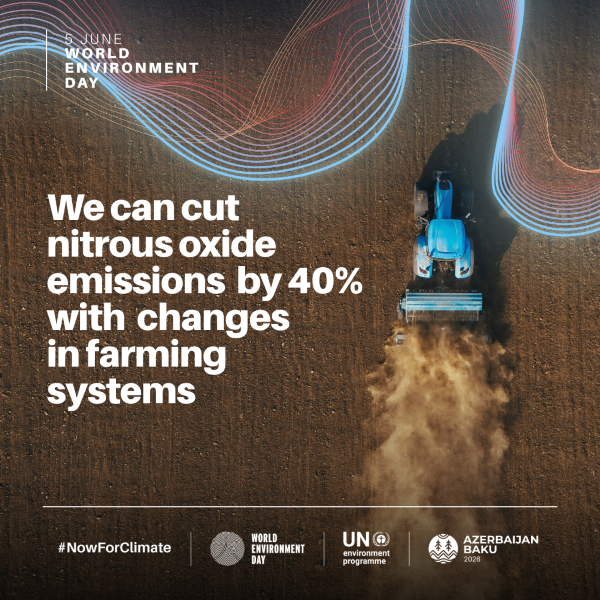
Beat Nitrogen Pollution #NowForClimate
Nitrous oxide is the third most significant greenhouse gas and the most powerful ozone-depleting substance still being emitted. Most emissions come from how we grow food.
Without urgent action on rising nitrous oxide emissions, there is no viable pathway to limiting global warming to 1.5°C.
The good news: We can cut emissions by 40%+ with practical changes in nitrogen and farming systems.
Interconnected crises: Taking action for the planet
Our planet is sending clear signals.
More heat. More floods. More wildfires.
Beyond changing weather patterns, climate change is also increasing chemical risks, affecting the air we breathe, the water we drink and the ecosystems we depend on. These challenges are deeply interconnected. And so are the solutions.