
“When we are diving and fishing, we find a lot of fish stuck—turtles, crabs, all stuck inside the plastic,” says fisherman Sir Sinho from Salvador, Bahia.
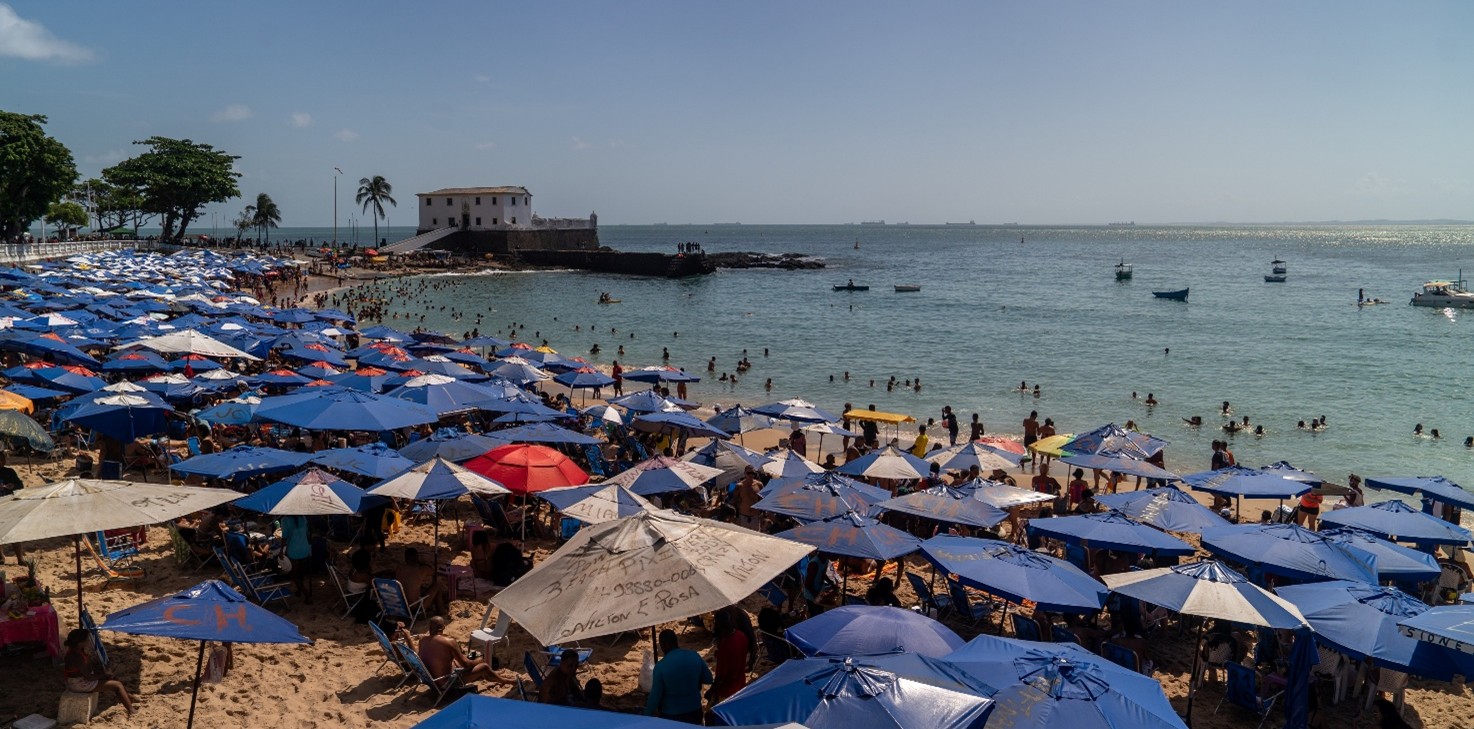
Along Brazil’s extensive coastline, fishing, tourism and marine life exist side by side. In Bahia, one of the country’s most ecologically rich coastal regions, the ocean supports local livelihoods while reflecting the imprint of everyday choices made on land.
That connection is especially visible in cities like Salvador, where restaurants, hotels and cafés serve millions of visitors each year, often relying on single-use items for convenience and cost.
Some businesses have already begun trying to change course.
“Over the years we started changing plastic bags to paper bags, plastic cups to paper cups; whatever we could,” explains Renata Proserpio, owner of an oceanfront hotel in Salvador. “It is not an easy task because plastic bags are four times cheaper.”
Local action is now being reinforced by city-level ambition. Salvador is among several Brazilian cities leading a national effort to reverse worsening trends of plastic pollution.
“We want the entire city to stop using single-use plastics. We believe this is possible in five years,” says Ivan Euler, Municipal Secretary for Sustainability and Resilience in Salvador.
This local momentum is part of a wider national and global effort. Brazil is part of the US$108 million GEF-funded Plastic Reboot Programme, co-led by the United Nations Environment Programme (UNEP) and the World Wildlife Fund (WWF), and implemented in partnership with the United Nations Development Programme (UNDP) and the United Nations Industrial Development Organization (UNIDO).
The programme focuses on upstream and midstream circular solutions, rethinking how products are designed, packaged, and used long before they reach consumers.
“Brazil is proud to be one of the 15 countries leading this programme, engaging restaurants, hotels, cafés and suppliers in reducing single-use plastics and putting innovation into practice,” says Luciana Santos, Minister of Science, Technology and Innovation. Through the Plastic Reboot programme, food and beverage businesses will receive support to adopt practices that are both environmentally sound and economically viable.
The need for this shift is clear. Brazil consumes 7.1 million tons of plastic every year, nearly 87 percent of which is single-use. Globally, research shows that a circular, life-cycle approach to plastics could save governments USD 70 billion in waste-management costs and avoid USD 4.5 trillion in social and environmental impacts by 2040.
Through upstream and midstream solutions, Plastic Reboot is helping address how plastics are used in the food and beverage sector across 15 countries. Such solutions will protect marine ecosystems, while empowering coastal communities and the livelihoods of people like Sir Sinho.