
Samarkand, 3 June 2026 – The Global Environment Facility (GEF) has approved a new project to safeguard socio-economic activities and promote sustainable land management through nature-based solutions in St. Vincent and the Grenadines.
The US $ 6.1 million Watershed Action for Restoring Ecosystems in the South Corridor of St. Vincent project was approved during the 71st GEF Council, held alongside the Eighth GEF Assembly in Samarkand, Uzbekistan. It will be led by the UN Environment Programme and executed by the Basel Convention Regional Centre for Training and Technology Transfer for the Caribbean (BCRC-Caribbean).
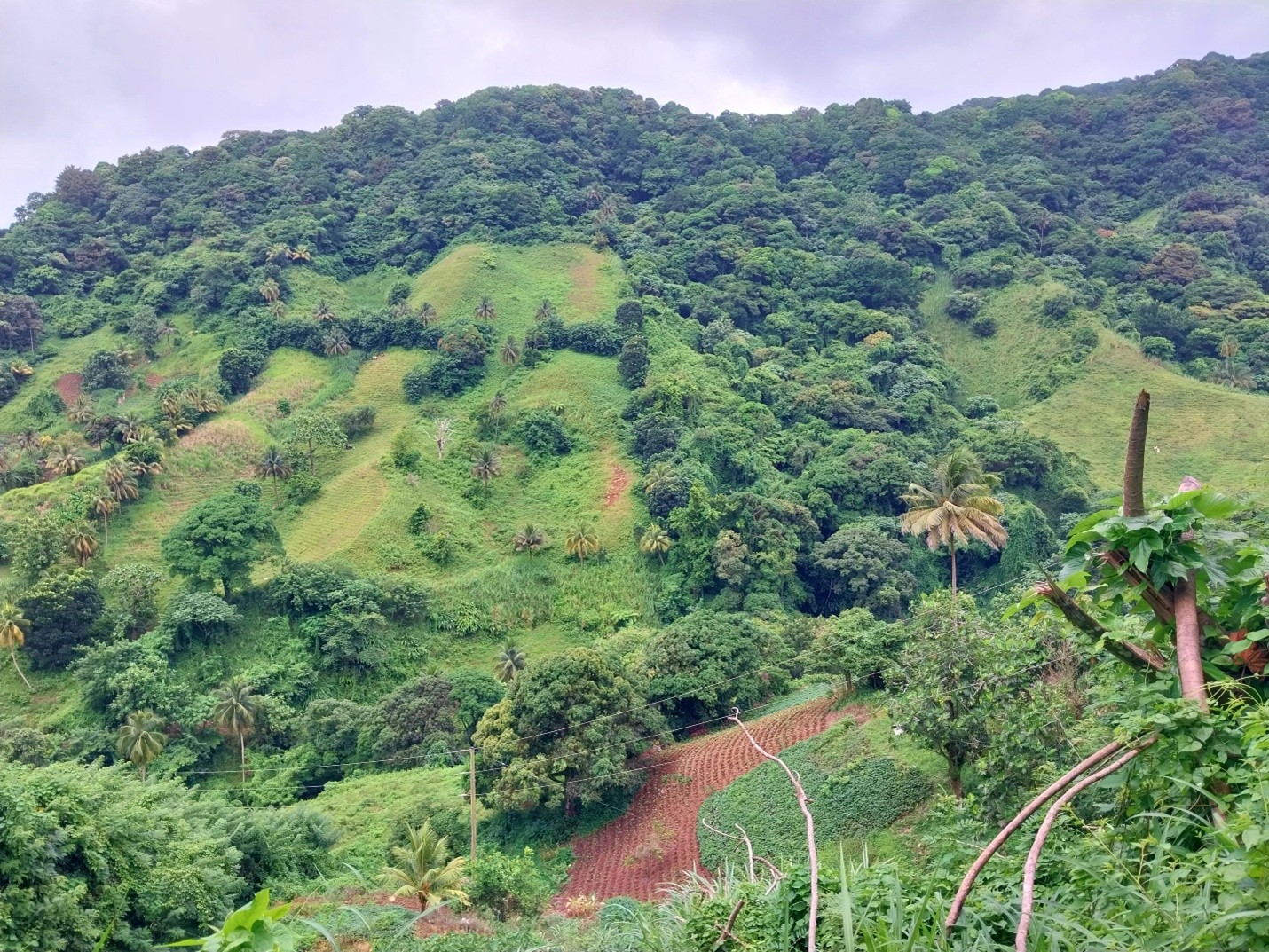
St. Vincent and the Grenadines’ southwest corridor is one of the country’s most important agricultural regions and a key sweet potato belt, supporting thousands of farmers and rural livelihoods. However, unsustainable land-use practices combined with limited soil conservation practices have accelerated land degradation and soil erosion across the area. These pressures threaten biodiversity-rich ecosystems, including forest reserves that are vital to fisheries, tourism, and climate resilience.
The five-year project will deliver global environmental benefits, including restoring at least 200 hectares of degraded landscapes, mitigating 114,564 tonnes of greenhouse gas emissions, and improving management of 3,300 hectares within the Arnos Vale, Calliaqua, and Diamond watersheds. About 1,000 people, including farmers, community groups, the private sector, and government personnel, are expected to benefit directly from the project.
The project will also support St. Vincent and the Grenadines’ degradation neutrality targets under the United Nations Convention to Combat Desertification (UNCCD). Sustainable land approaches implemented within the target area will be scaled nationally.
“The special circumstances of Caribbean Small Island Developing States make the restoration of degraded lands and landscapes even more urgent and critical. Through this initiative, St. Vincent and the Grenadines will place healthy ecosystems at the center of the wellbeing, climate resilience, and sustainable livelihoods of local communities,” said Juan Bello, Director and Representative for UNEP in Latin America and the Caribbean.
Claude Gascon, Interim CEO and Chairperson of the GEF, said, “The approval of this project is a strong testament ahead of the GEF new investment cycle that working with Small Island Developing States on ecosystem restoration and sustainable land management is critical to achieving lasting environmental resilience and supporting human wellbeing.”
The 71st GEF Council and Eighth GEF Assembly bring together countries and partners to advance global action on biodiversity loss, climate change, pollution, and land degradation, and strengthen commitments for the next phase of global environmental financing under the GEF-9 Replenishment.
NOTES TO EDITORS
About the UN Environment Programme (UNEP)
UNEP is the leading global voice on the environment. It provides leadership and encourages partnership in caring for the environment by inspiring, informing and enabling nations and peoples to improve their quality of life without compromising that of future generations.
About the Global Environment Facility
The Global Environment Facility (GEF) is the world’s largest multilateral fund for the environment. Its family of funds works together to address the planet's most pressing challenges in an integrated way. Its financing helps developing countries address complex challenges and work towards meeting international environmental goals. Over the past three decades, the GEF has provided more than $27 billion in financing, primarily as grants, and mobilized another $155 billion for country-driven priority projects.
For further information, please contact:
News and Media Unit, UN Environment Programme