
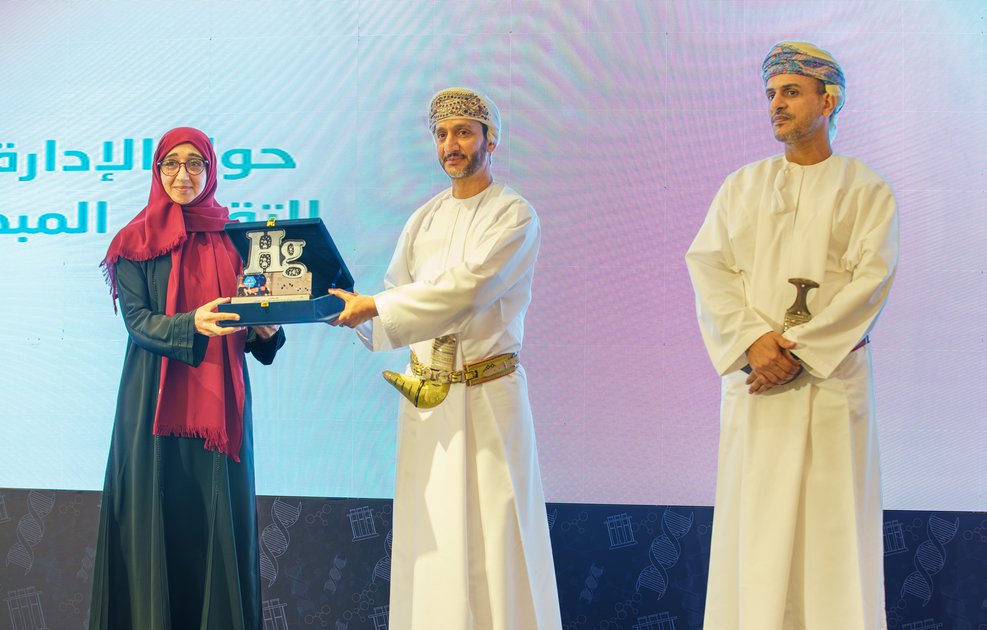
Beirut, 28 May 2025 – The Sultanate of Oman today marked the successful conclusion of a project supported by the Global Environment Facility (GEF), with the launch of its National Minamata Initial Assessment (MIA) Report. The project, implemented by the Environment Authority with technical assistance from the UN Environment Programme (UNEP), strengthens Oman’s capacity to safely manage hazardous chemicals and fulfill its international environmental obligations.
The National MIA Report provides a detailed overview of mercury sources, uses, emissions, and releases in Oman, identifying key sectors and offering practical recommendations for implementing the Minamata Convention on Mercury. Although Oman does not produce mercury, it imports products and equipment that contain the hazardous substance, raising potential environmental and health risks through emissions and releases. The assessment equips the country to prioritise and address these risks to prevent harm through policy reform, improved waste management, and the adoption of mercury-free alternatives.
The project, Development of Minamata Convention Initial Assessment (MIA) for Sultanate of Oman, represents a key milestone in building national infrastructure for the sound management of chemicals and waste. It concludes with tangible results including:
-
The development of Oman’s first MIA Report and national mercury inventory;
-
Improved institutional coordination and stakeholder engagement; and
-
Capacity-building across government, industry, and civil society.
“The preparation of this report is an important step for proper planning to minimize mercury and its compounds in the environment, as well as a practical guide for the national commitment to implement the provisions of the Minamata Convention on Mercury and contribute to achieving Sustainable Development Goal (SDG) 3 on ensuring healthy lifestyles and well-being for all at all ages and SDG 12 on sustainable and responsible production and consumption,” said the Sultanate of Oman in a recent statement. “The assessment will highlight key sectors that contribute to mercury emissions, as well as opportunities for adopting sustainable alternatives and strengthening relevant institutional and regulatory frameworks.”
Congratulating Oman on this achievement, Sami Dimassi, UNEP Regional Director and Representative for West Asia, emphasized that “full implementation of the MIA requires sustainable solutions to eliminate mercury releases into the environment. Through legislative and procedural reforms guided by this assessment, Oman can manage mercury and hazardous chemicals in an environmentally sound manner.”
The project closing and report launch event gathered a wide range of stakeholders, including representatives from government, academia, civil society, and international experts.
Participants discussed pathways for national implementation and how Oman’s new strategy can support broader sustainable development goals—particularly SDG 3 (Good Health and Well-being) and SDG 12 (Responsible Consumption and Production).
With the successful completion of this GEF-financed initiative, Oman is better positioned to contribute to regional efforts on chemicals and waste management, reinforcing its commitment to environmental sustainability and public health protection.
NOTES TO EDITORS:
About UNEP
UNEP is the leading global voice on the environment. It provides leadership and encourages partnership in caring for the environment by inspiring, informing and enabling nations and peoples to improve their quality of life without compromising that of future generations
About the Global Environment Facility
The Global Environment Facility (GEF) includes several multilateral funds working together to address the planet's most pressing challenges in an integrated way. Its financing helps developing countries address complex challenges and work towards meeting international environmental goals. Over the past three decades, the GEF has provided more than $26 billion in financing, primarily as grants, and mobilized another $148 billion for country-driven priority projects.
For media inquiries and more information, contact:
Hoda Elturk, Public Information Officer, UNEP Regional Office for West Asia
Email: elturk@un.org