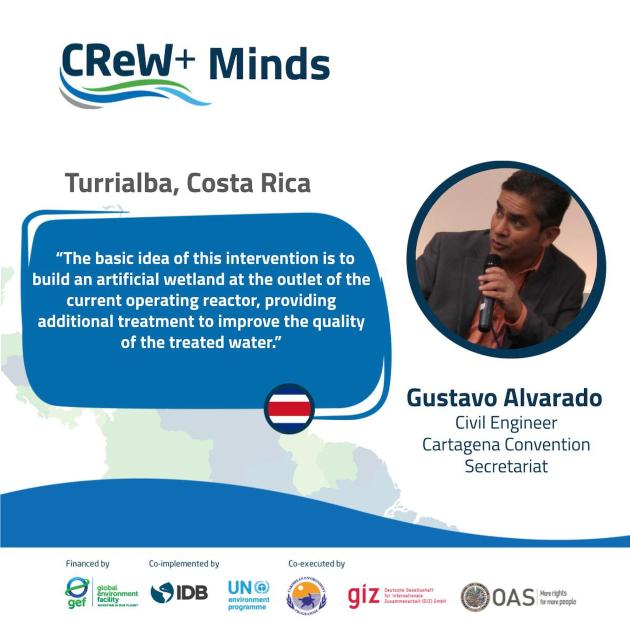

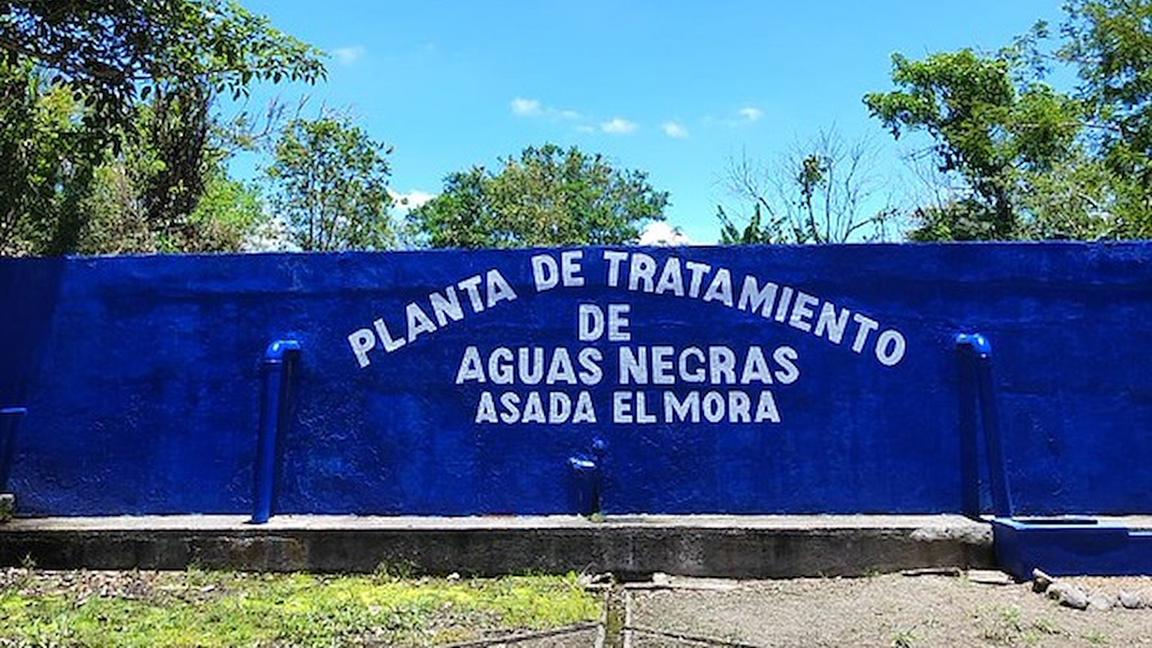
In the rural community of El Mora in Turrialba, Costa Rica, a long-standing commitment to collective water stewardship has laid the foundation for an innovative transformation. Known for its organised community water system and strong culture of conservation, El Mora is now demonstrating how local leadership can drive regional progress through the UNEP and IADB–led, GEF-funded and Cartagena Convention-executed CReW+ project. This initiative supports communities across the Wider Caribbean in improving wastewater management through practical, nature-based solutions.
At the heart of the effort is a new horizontal flow constructed wetland, designed to complement El Mora’s existing treatment plant and significantly improve effluent quality before it reaches the Aquiares River. Treating nearly 365 m³ of wastewater per day, the wetland prevents more than 133,000 m³ of polluted water annually from entering the river system and, ultimately, the Caribbean Sea. As a low-energy, easy-to-operate technology rooted in natural processes, it embodies both climate adaptation and cost-effective environmental protection.
The project’s success is grounded in the active participation of ASADA El Mora, whose decades of experience managing community water systems have become a model of local governance and peer-to-peer learning. Their leadership shows how Integrated Water Resources Management principles translate into real gains for public health, water security, and ecosystem resilience. With UNEP–GEF support, the El Mora pilot is now generating monitoring data and knowledge to help replicate similar solutions across the region.
Read the full story here, to explore how this UNEP–GEF partnership is shaping a more sustainable and resilient future for the Wider Caribbean.