

As an Implementing Agency of the Multilateral Fund, UNEP OzonAction provides a broad range of capacity‑building and information services to help countries meet and sustain their Montreal Protocol commitments. These services include policy and technical assistance, national and regional training programmes, online learning tools, access to global databases, networking, South‑South cooperation and public awareness activities.
1. Producing Training Products and Technical Tools
OzonAction develops a comprehensive suite of training materials and digital tools that support NOUs, policymakers, technicians and training institutions. These include online learning modules, training curricula, fact sheets, technical guidance, smartphone applications and global refrigerant databases that help users understand refrigerant properties, safety requirements and evolving technologies. Many of these tools are created through long‑standing partnerships, including OzonAction’s collaboration with ASHRAE, which provides practical resources for improving refrigerant management and strengthening national capacity. These products ensure that stakeholders stay informed about new refrigerants, including flammable alternatives, and updated safety and performance standards.
2. Organising National Training Programmes under HPMPs and KIPs
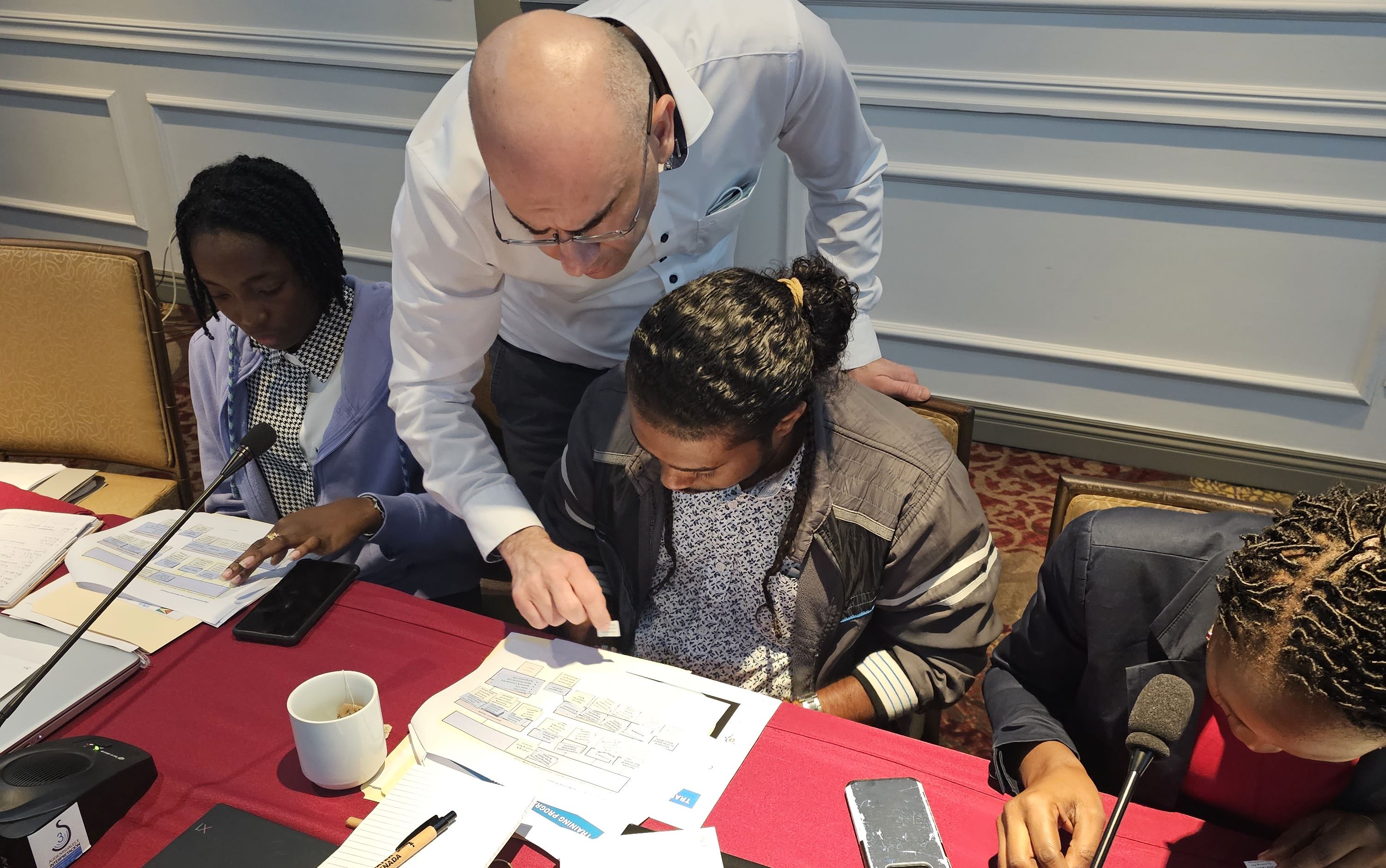
Alongside producing training products, OzonAction also organises and delivers capacity‑building activities directly within countries, as part of the implementation of HCFC Phase‑Out Management Plans (HPMPs) and the emerging Kigali Implementation Plans (KIPs). These activities include in‑person refrigeration servicing sector training courses, hands‑on workshops and technician certification initiatives that promote good servicing practices, leak reduction, safe handling of low‑GWP refrigerants and improved energy performance of refrigeration and air conditioning (RAC) systems. Delivered in cooperation with national training centres and refrigeration associations, these trainings help countries build the skilled workforce needed to transition to low‑GWP, energy‑efficient cooling technologies and to manage refrigerants safely throughout their lifecycle. 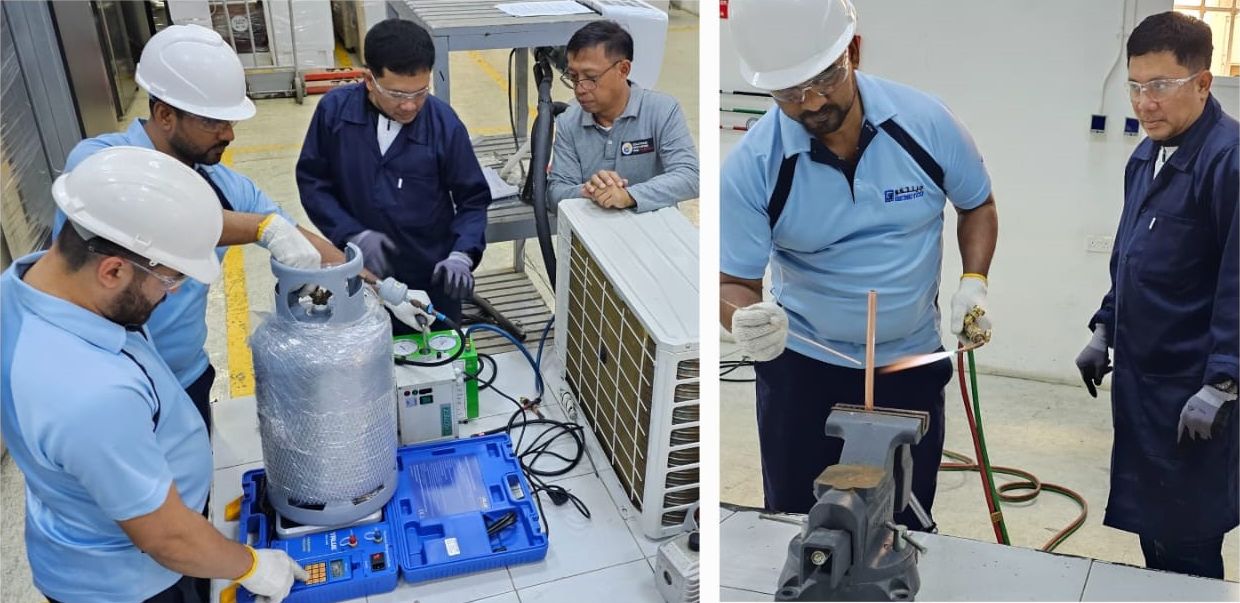
3. Supporting the Development of Certification Schemes
Certification plays a critical role in ensuring that RAC technicians and enterprises are competent to handle refrigerants safely and responsibly. Certification provides official recognition that a technician or organisation has demonstrated the skills and knowledge needed to install, maintain, repair and decommission RAC equipment to appropriate technical and safety standards.
Certification schemes, whether mandatory or voluntary, help countries:
- verify technician competence in handling all refrigerants, including flammable and high‑pressure alternatives
- reduce refrigerant leakage, emissions and safety risks
- ensure technicians follow good servicing and refrigerant‑management practices
- adapt safely to new technologies introduced through HPMPs and KIPs
- strengthen customer confidence and protect public safety
OzonAction assists countries in understanding certification models, developing national certification frameworks and integrating certification with training and technician registration systems. As countries transition to alternative refrigerants such as hydrocarbons, ammonia, CO₂ and HFOs, each with distinct safety profiles, the importance of certification increases significantly. Certification is considered the most practical method to ensure that RAC personnel can manage refrigerants responsibly throughout the lifecycle of equipment.
By combining high‑quality training products, national training delivery and support for technician certification, OzonAction provides comprehensive and neutral technical assistance. This integrated approach helps countries make informed technology choices, strengthen their national systems, and achieve a safe, inclusive, and energy‑efficient transition to ozone‑ and climate‑friendly cooling.