


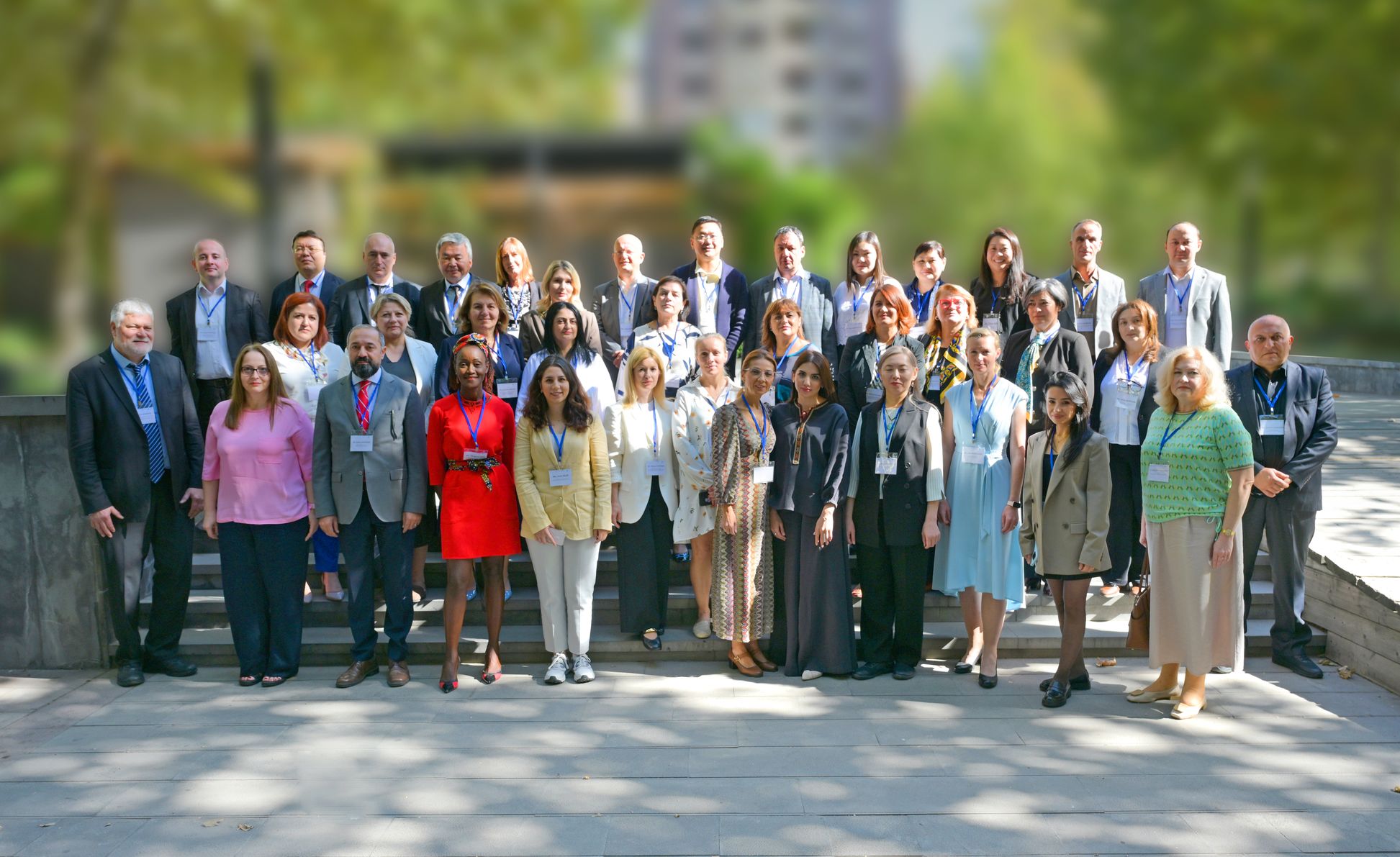
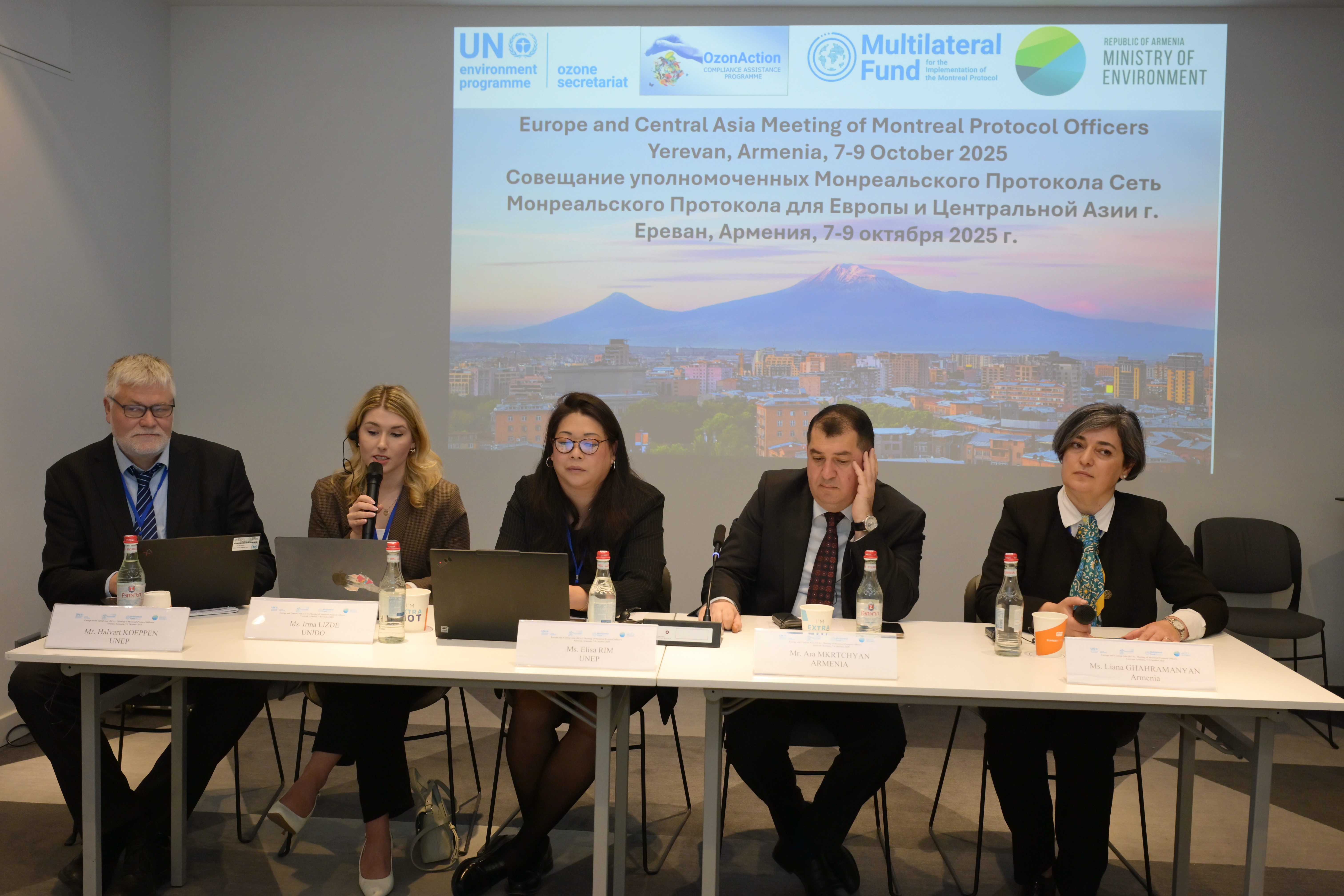
 Yerevan, Armenia, 7 October 2025 – The ECA network meeting was opened by Mr. Ara Mkrtchyan, Deputy Minister of Environment, and representatives of the Multilateral Fund Secretariat, UNIDO, and UNEP. Armenia’s Montreal Protocol Officer, Ms. Liana Ghahramanyan, facilitated the opening and morning session, and together with her professional team ensured the local arrangements, including the Ministry’s welcome reception, the technical site visit, the networking reception, the photographer, and the sunny weather, among other details.
UNEP OzonAction would like to convey its profound gratitude to the host country, Armenia, the Ministry of Environment, and all local actors.
For the first time in years, participants were mainly Montreal Protocol Officers without the involvement of other stakeholder groups, as requested by the network countries in the survey on ECA needs and priorities. In addition, UNEP invited four new staff members of the Montreal Protocol Units to build their capacity. Experts from the Czech Republic and the Environmental Investigation Agency (EIA) enriched the agenda, and the Ozone Secretariat contributed to the meeting via teleconferencing.
UNIDO supported the participation of two countries with economies in transition under their regional GEF project (Kazakhstan and Uzbekistan). The participation of these countries is crucial as they are neighbouring countries and an integral part of the ECA region. Azerbaijan, Kazakhstan, Ukraine, and Uzbekistan are working towards ratifying the Kigali Amendment, which has already been ratified by all eleven Article 5 countries in the region.
The meeting was funded by the Multilateral Fund for the Implementation of the Montreal Protocol as part of UNEP OzonAction’s Compliance Assistance Programme and arranged in a cost-efficient way. The Armenian Ministry of Environment hosted and invited participants to the welcome reception.
The meeting aimed to continue the discussions of the ECA network meeting in Batumi in June 2025, which focused on the training of environmental inspectors and the Climate and Clean Air Coalition (CCAC) workshop on refrigerant life-cycle management. During that meeting, discussions on a wide range of topics were initiated, and several challenges were highlighted. It became evident that more in-depth discussions are needed, and the agenda of the Yerevan meeting was designed accordingly. It contained mainly contributions by the network countries and allocated significant discussion time. It applied the Executive Committee’s approach, which means that no fixed time was allocated to each session.
The sessions covered topics suggested by the network countries including energy-efficiency, disposal of unwanted substances, gender mainstreaming, hydrofluorocarbon (HFC) licensing and quota systems, Montreal Protocol implementation in Kazakhstan and Uzbekistan, HFC Kigali implementation plans, HCFC phase-out management plans, sustainability of project activities, safety standards, World Ozone Day activities, as well as updates by the Ozone Secretariat and Multilateral Fund Secretariat. Other highlights of the meeting were the technical site visit of the state-of-the-art ammonia chillers at the Kilikia brewery and the networking reception at the Van Ardi winery.
The results of the survey on ECA needs and priorities provided the countries’ preferences concerning venues, dates, and focus of the forthcoming ECA network meetings in Kyrgyzstan in May / June 2026 and in Türkiye in September / October 2026. The twinning workshop with Montreal Protocol Officers and Energy-Efficiency Experts is planned in 2027, possibly a joint workshop with the West Asia network. Most countries are in favour of joint meetings with other regional networks. Other aspects of the survey covered the capacity building of female Refrigeration Experts, priority topics for future ECA online meetings, the need for country-to-country assistance or small-scale meetings, and the operation of the ECA network.
North Macedonia suggested that the Montreal Protocol should cover the disposal of end-of-life substances/equipment, and that shipments of bulk substances should require prior informed consent between the trade partners. Also, the definition of “waste” in the context of the Montreal Protocol would need to be defined. Kyrgyzstan’s exports for destruction to Russia are difficult, because national legislation in Kazakhstan does not allow transit. It is a fact that many countries do not allow transit or import of chemicals for reclaim/destruction. Armenia suggested that the Ozone Secretariat might update the list of reclaim/destruction facilities and review national legislation to determine whether it allows transit or import for reclaim/destruction. Several countries supported these suggestions, and an ad-hoc online meeting was arranged with the Ozone Secretariat to understand the different options, like amendments, adjustments, or MOP decisions.
A half-day session was dedicated to the operation of HFC licensing and quota systems and the use of the informal Prior Informed Consent (iPIC) procedure. Major issues are related to the calculation of the historical market share, the allocation of quota, the re-allocation of unused quota, the request for unrealistic high quotas by some importers, the appearance of new importers, the import of recycled substances, and the control of free trade zones. According to the WCO’s Kyoto Convention, free trade zones are part of the countries’ territories and within their jurisdictions. The enforcement of the HFC licensing systems remains challenging, and several countries reported huge discrepancies between exports reported by exporting countries and imports. Probably because of the high number of HFCs and blends and the increased workload, iPIC consultations have become less frequent, even if importing countries request exporting countries to initiate them for all export licenses issued. Some countries felt that the issue could be addressed by a mandatory iPIC procedure. Another option might be automated notifications for all export licenses issued. That might address the workload problem and allow importing countries to intervene if there is an issue. Some of these issues will also be discussed during the so-called “Informal Meeting” in the margins of the Meeting of Parties in Nairobi in November 2025, and a few ECA countries have been invited to share their experience at that meeting. EIA encouraged countries to issue import/export licenses per shipment, and to also cover HFC exports and transit in their HFC licensing system. And they encouraged UNEP to publish the recent iPIC statistics prior to the informal meeting.
Albania mentioned that they imported recycled refrigerants from China, but the supply of recycled refrigerants was discontinued. Countries importing recycled refrigerants are encouraged to verify their origin and to apply to iPIC to ensure the authenticity of certificates that confirm the refrigerants are genuine and have been recycled. The refrigerant cylinders should be labeled as recycled. Importers should reclaim or at least test the quality of the recycled refrigerants. As part of good practices, only reclaimed refrigerants should be sold on the market for use in other appliances.
Türkiye explained how they achieved the complete phase-out of HCFCs well ahead of the Montreal Protocol schedule. They highlighted the importance of the single-window system for effective enforcement, that tracking transit is a challenge, and that there is a global shortage of refrigerant identifiers.
Kyrgyzstan reported on the useful study tour to Minsk under their energy-efficiency pilot project. The country lacks a laboratory necessary for conducting conformity testing. Therefore, certificates of conformity issued in Kyrgyzstan cannot be considered authentic. Discussions on laboratories are ongoing during Executive Committee meetings.
The Czech Republic and Armenia’s National Body on Standards and Metrology provided an update on safety standards for refrigeration, air-conditioning, and heat pump systems using alternative refrigerants. These standards are most relevant for the training and certification of technicians. The revision of EN 378:2016 is ongoing, and the final vote is expected in May 2026. The revised version will follow a risk-based approach.
Georgia has a mandatory certification system in place, but it lacks practical exercises and assessments. It would be useful to offer free training and to increase the number of assessment questions, especially as they are publicly available. Otherwise, passing the assessment might not guarantee thorough knowledge of the technicians. There is currently only one category of certificates for the different users, and it might be useful to create different categories in the future.
Several countries presented their extensive World Ozone Day celebrations, including impressive awareness activities in schools and universities, stakeholder meetings, cultural events and theatre performances, and several videos were displayed. Armenia produced two videos on energy-efficient refrigerators and air-conditioners under their energy-efficiency project. Countries are encouraged to submit short reports and photos of their activities to OzonAction and the Ozone Secretariat, so that they can be uploaded to the respective World Ozone Day pages:
OzonAction: www.unep.org/ozonaction/news/news/world-ozone-day-16-september-2025
Ozone Secretariat: https://ozone.unep.org/ozone-day/from-science-to-global-action
During the preparation of Georgia’s HFC Kigali implementation plan, it was discovered that a significant amount of R-134a is used for laser treatment. In this process, the skin is cooled through direct evaporation. Such emissive use should be reported under aerosol use and not as use for refrigeration servicing. It is not eligible for funding under the HFC Kigali implementation plans. Other countries might verify the R-134a use for laser treatment. It is unlikely that only Georgia is using it.
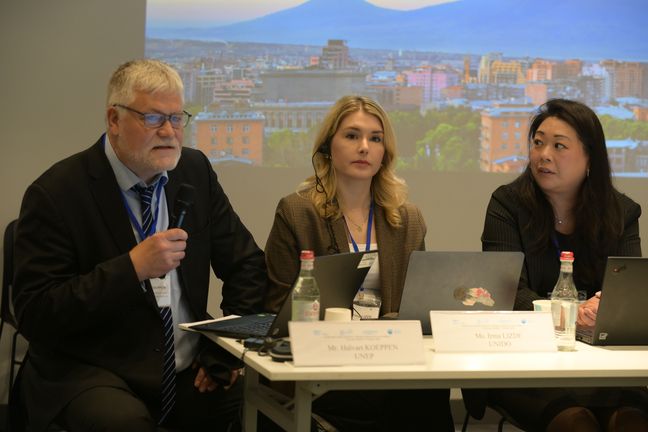 The discussion on sustaining activities beyond project completion focused on Montreal Protocol related legislation, the integration of relevant modules into the training curricula for customs/enforcement officers and refrigeration technicians, mandatory training and certifications schemes, business models, revolving funds, financing mechanisms, environmental funds, and institutionalization, e.g., formal agreements between relevant ministries.
Last but not least, the participants surprised the ECA Network Coordinator, Halvart Koeppen, thanking him for two decades of dedicated support and intense network meetings. Mr Koeppen thanked each one of them for their friendship, patience, and hard work.
Meeting documents, presentations, and group photos are available from the OzonAction meeting portal:
For more information:
Halvart Koeppen
Montreal Protocol Regional Coordinator, ECA
Denis Toichiev
Programme Management Officer, ECA