


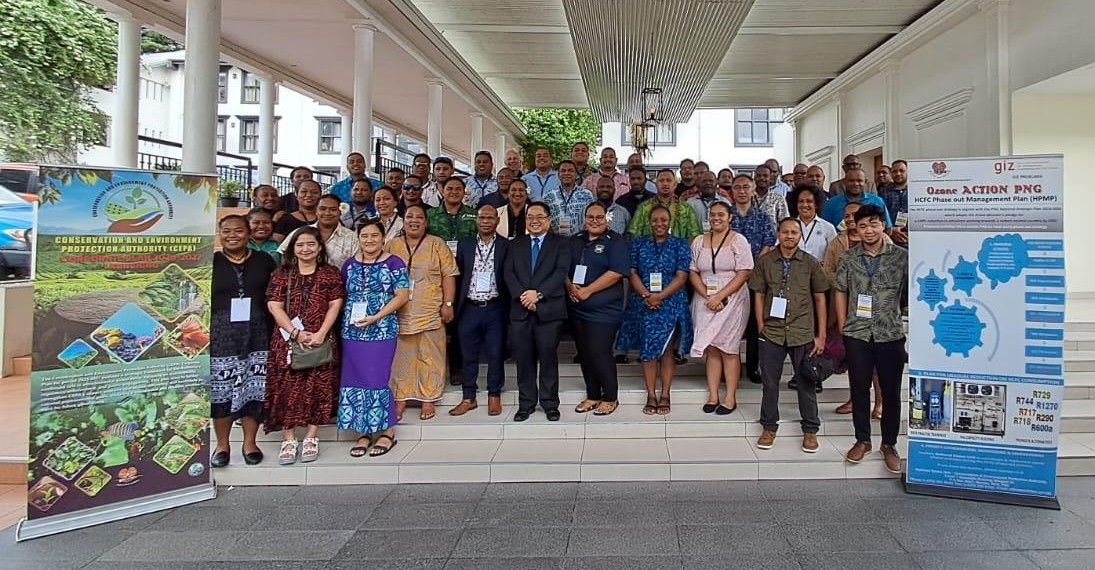
Port Moresby, Papua New Guinea, 25-31 March 2026 - National Ozone Officers, Customs Officers, Energy Efficiency Officers, and partner agencies from Pacific Island Countries convened in Port Moresby for three back-to-back regional training workshops on trade control, monitoring, and reporting of controlled substances and refrigeration and air-conditioning equipment. The workshops were jointly organized by the Conservation and Environment Protection Authority of Papua New Guinea and UNEP OzonAction, with support from the Multilateral Fund for the Implementation of the Montreal Protocol. The three back-to-back events were attended by 73 participants (42 women and 31 men), including 12 participants who joined the event virtually.
The meetings discussed the approved regional Multilateral Fund projects for Pacific Island Countries, including the HCFC Phase-out Management Plan Stage II and the Energy Efficiency in the Servicing Sector project under Decision 89/6. They aimed to strengthen national implementation capacity, deepen cooperation among National Ozone Units, Customs and Energy Authorities, and support:
- stronger enforcement of trade control of controlled substances in bulk and of refrigeration and air-conditioning (RAC) equipment through the licensing system and current mechanisms of the Customs;
- enhanced product registration system for Minimum Energy Performance Standards (MEPS), while integrating information of refrigerant technology to enable the country to have a harmonized and comprehensive database for RAC appliances that enables the authorities to assess penetration of low-GWP and energy efficient RAC appliances; and
- monitoring, reporting, and verification through market surveillance.
The first workshop, the Regional training workshop on implementation and enforcement of trade control, monitoring, and reporting of controlled substances under the Montreal Protocol, held from 25 to 26 March, focused on implementation and enforcement of trade control, monitoring, and reporting of controlled substances under the Montreal Protocol. Participants discussed licensing and quota systems, data discrepancies, prior informed consent, digitalization, National Single Window systems, mandatory labelling of refrigerant cylinders, market surveillance, customs training, and the need for clearer standard operating procedures for enforcement actions. The meeting also recognized Papua New Guinea’s ratification of the Kigali Amendment (date) as a regional milestone.
The second workshop, the Regional training workshop on product registration and approval of Minimum Energy Performance Standards (MEPS) and refrigerants in refrigeration and air-conditioning (RAC) equipment, held from 27 to 28 March, addressed these topics. Discussions highlighted product registration as a practical compliance gateway, not only an administrative step. Participants examined technical documentation, test reports, approval procedures, links between MEPS and refrigerant controls, the Pacific Appliance Database, integrated electronic systems, and the value of harmonizing data on refrigerant and energy efficiency of RAC appliances, and the advantage of linking product registration approval with customs clearance.
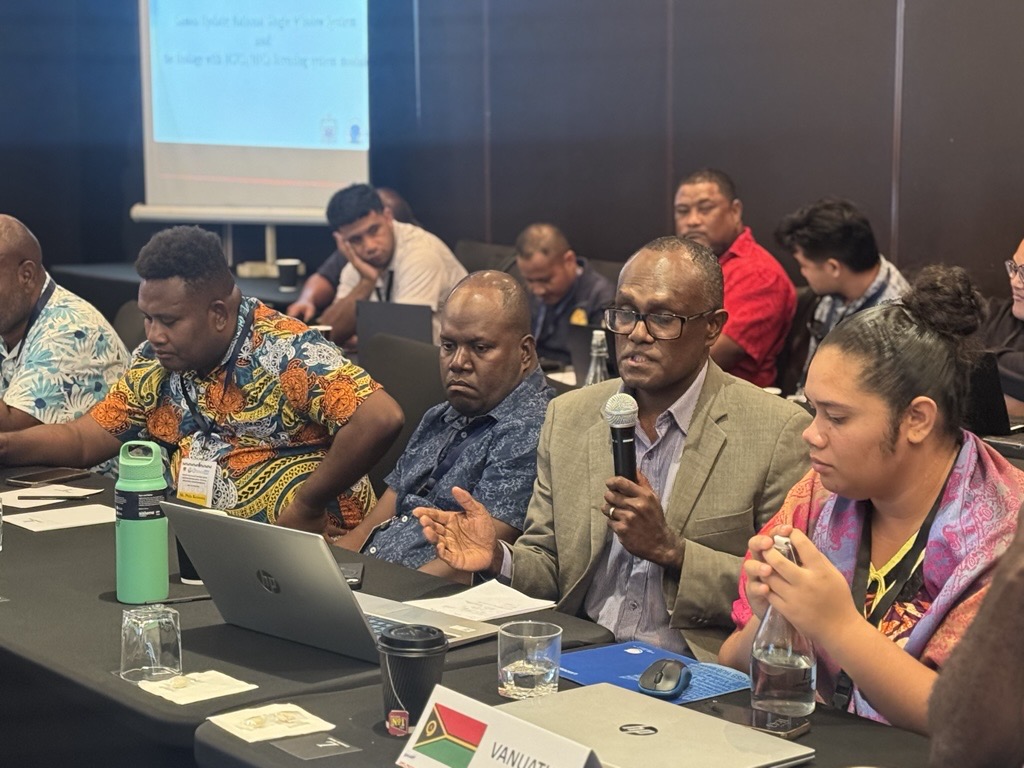 Mr. Stanley Trief, Manager of the Vanuatu Single Window Systems, stated that, “A single application system would help make energy efficiency and environmental approval requirements clear in one place, reduce duplication, and support a more practical approval process for RAC equipment. I would like to encourage countries to consider incorporating the Ozone Depleting Substances module and Energy Efficiency Module in the Single Window system and Vanuatu is ready to provide guidance to our neighboring countries on this process.”
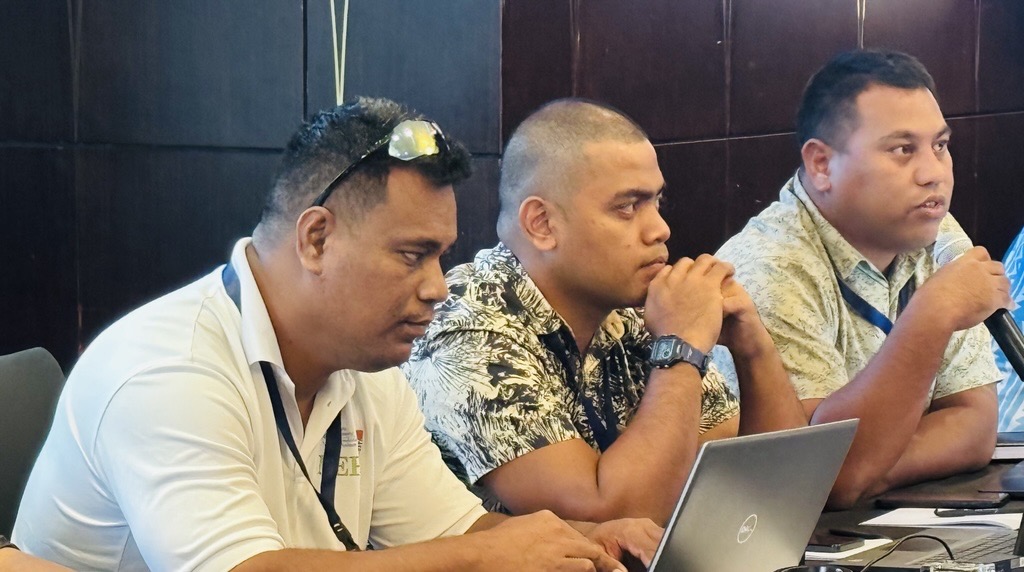 The final workshop, the Regional training workshop on implementation and enforcement of trade control, monitoring and reporting of MEPS and refrigerant in RAC equipment, held from 30 to 31 March, focused on the enforcement of trade control, monitoring, and reporting of MEPS and refrigerant in RAC equipment. Sessions addressed border control, market surveillance, harmonized system (HS) codes, customs data reconciliation, PACHS22 implementation, preparation for PACHS28, and risk profiling for both declared and non-declared HCFC/HFC shipments and RAC equipment. Working group sessions allowed National Ozone Officers, Customs Officers and Energy Officers to assess national risk profiling approaches and discuss criteria suited to their country contexts.
Key outcomes from the workshops included:
- Stronger recognition of the need to digitize licensing systems linking product approval, trade control, and customs clearance.
- Mutual agreement on the need to strengthen cooperation between National Ozone Units, Energy Efficiency Authority, and Customs Authority to harmonize a comprehensive database of RAC appliances among different authorities and to enforce trade control of controlled substances in bulk and RAC appliances using different mechanisms of the customs, such as risk profiling and market surveillance.
- The need to develop or improve the enforcement of Standard Operating Procedures (SOP).
- The advantage of extending mandatory labelling from HCFC cylinders to HFC cylinders where appropriate.
- Updating the current product registration systems with the integration of refrigerant information.
- The need to improve data sharing among authorities, in particular trade statistics, through HS codes.
Samoa emphasized the continued importance of the Pacific Appliance Database as a regional tool for product registration and information sharing, while also noting the need for improvement.
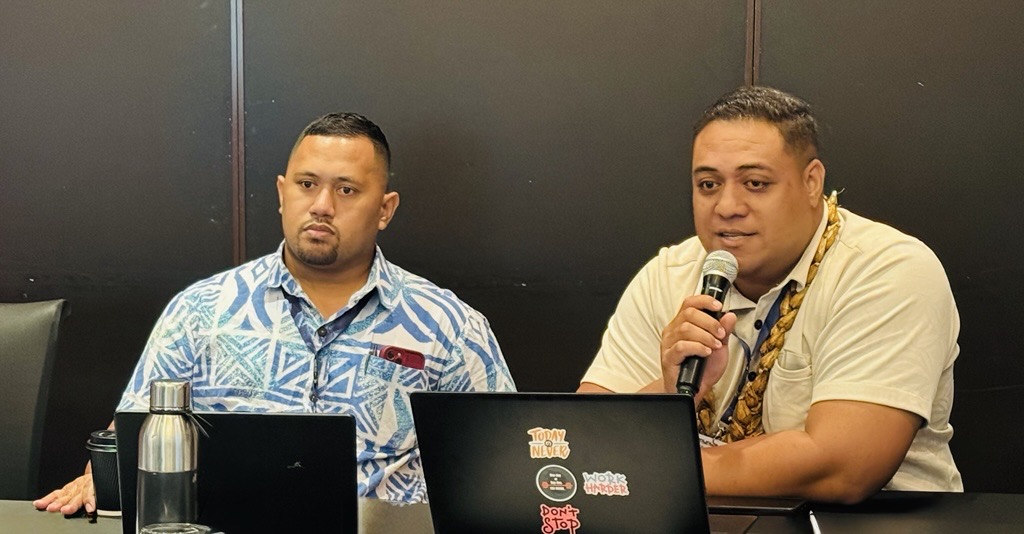 Mr. Faatauvaa Vaalele Lafai Tavita of the Samoa Ministry of Works, Transport and Infrastructure stated that, “The Pacific Appliance Database remains useful for coordination and information sharing, but it needs to be updated and modernized to capture newer appliances, improve reporting, and better support countries in implementing MEPS requirements.”
The participants reaffirmed the Pacific region’s shared commitment to practical implementation of the Montreal Protocol and the Kigali Amendment. By bringing together ozone, customs and energy officers in one coordinated programme, the meetings strengthened a common approach to controlling controlled substances, improving data quality, preventing illegal trade, and supporting more efficient and compliant RAC markets across Pacific Island Countries.
Participants expressed appreciation to the Government of Papua New Guinea for its hospitality and leadership, and to UNEP, the Ozone Secretariat, the Multilateral Fund Secretariat, the Government of Australia, the Oceania Customs Organization (OCO) and the International Institute for Energy Conservation (IIEC) for their continued technical and financial support.
For more information:
Mr. Pipat Poopeerasupong
Montreal Protocol Regional Coordinator
Southeast Asia/Pacific Island Countries Network
UNEP OzonAction CAP, Asia and Pacific Office
Bangkok