

As the world marks the International Day of Women and Girls in Science, the UNEP Cartagena Convention Secretariat reflects on a reality that is as urgent as it is inspiring: women and girls are critical to the science that protects the Caribbean Sea.
The Wider Caribbean Region is one of the most biologically and culturally rich marine areas on the planet. Its coastal ecosystems support millions of people and drive economies built on tourism, fisheries, shipping, and biodiversity. However, these same ecosystems face mounting pressures—from land-based pollution, marine litter, oil spills, climate-driven coral bleaching, and coastal erosion. Addressing these challenges requires robust science, inclusive decision-making, and diverse leadership.
And yet, globally, women remain underrepresented in scientific fields, making up less than one third of the world’s researchers (UNESCO). Further to that, in Latin America and the Caribbean, women comprise less than 30% of graduates in STEM (Science, Technology, Engineering, and Mathematics) fields (UNICEF).
For the Caribbean, this gap directly affects the speed, quality, and impact of environmental action.
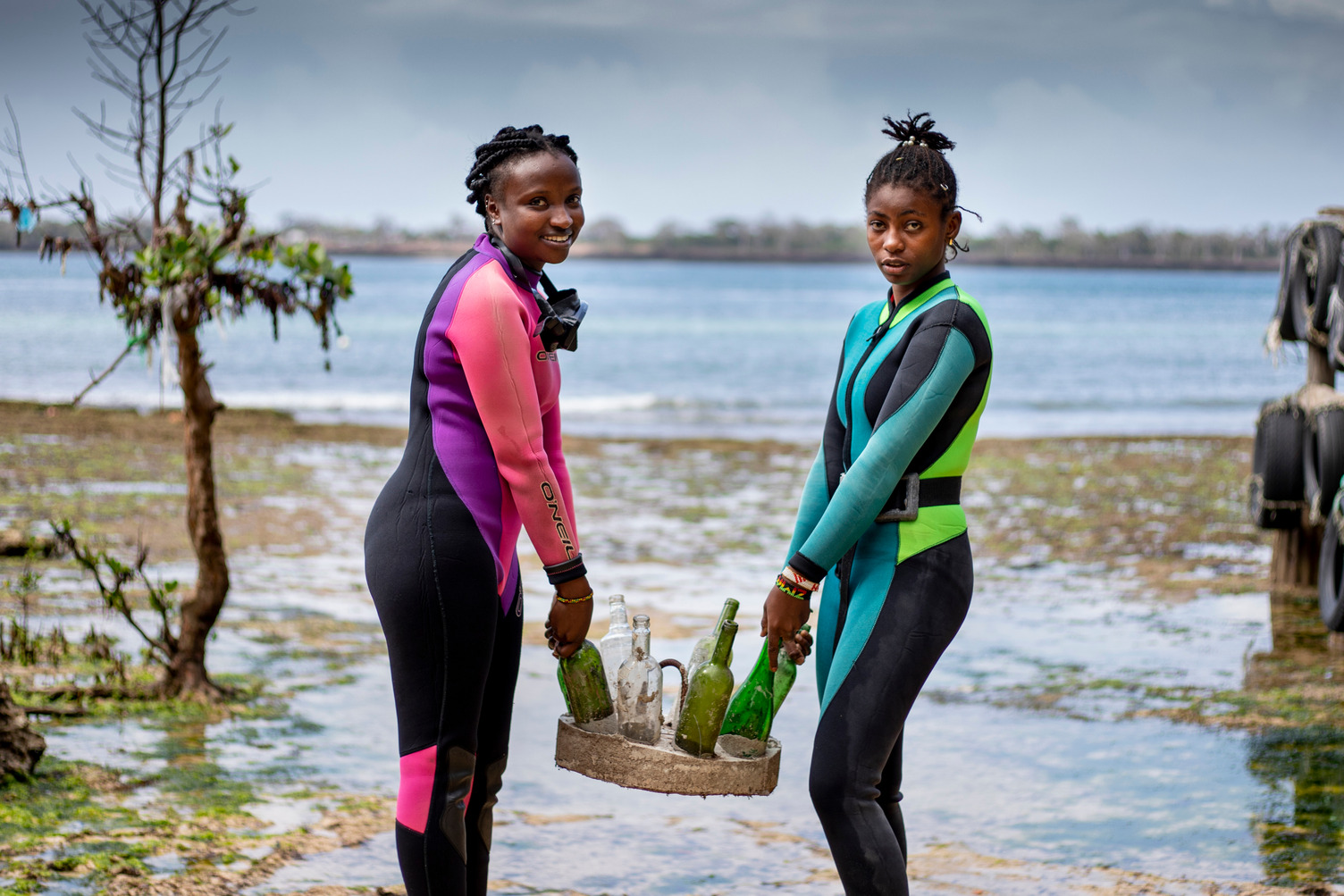
Women scientists, engineers, and environmental professionals already play essential roles in pollution monitoring, climate adaptation research, ecosystem restoration, and environmental policy. They lead laboratories, design coastal solutions, manage protected areas, and carry out community-based conservation grounded in both science and traditional knowledge.
At the UNEP Cartagena Convention Secretariat, we are proud to lead by example. Approximately 71% of the Cartagena Convention Secretariat staff are women, many of whom serve as programme managers, environmental specialists and technical professionals, supporting the implementation of the regional protocols. Their leadership reflects a powerful truth: when women are present and empowered, the quality and impact of environmental work increases. Their contributions shape the implementation of the Cartagena Convention and its protocols—especially efforts to reduce marine pollution, strengthen compliance, and enhance resilience across the Wider Caribbean.
But we need more of them.
We need more women designing science-based solutions to protect coral reefs.
More women developing new approaches to reduce land-based pollution.
More young girls empowered to pursue science and engineering careers.
More women helping bridge the gap between environmental science, policy, and community action.
This year’s theme— “From Vision to Impact”—reminds us that women in science are not only contributing ideas; they are driving measurable change. Empowering women and girls in STEM is not an addon. It is a foundational part of building a cleaner, healthier, more resilient Caribbean Sea.
Today, the UNEP Cartagena Convention celebrates their leadership—and recommits to supporting the next generation of women and girls whose curiosity and innovation will shape the future of our region.
Because the Caribbean Sea needs every voice in science.
And when women lead, our ocean benefits.