

By Christopher Corbin Coordinator, UNEP Cartagena Convention Secretariat
Kingston, September 16, 2025. September is a month when significant global observances capture our attention on the vital ecosystems that sustain us. From celebrating the pristine beaches of Punta Cana in the Dominican Republic to "Nature Island"- Dominica which boasts the region’s most prolific rivers to the vibrant coral reefs off the coast of Belize, this month provides a powerful backdrop for urgent conversation on marine pollution. Pollution from maritime transportation, untreated domestic wastewater, poor agricultural practices, solid waste, mining and industry continue to impact the Caribbean Sea. Pollutants, especially plastic waste are a pervasive threat, choking marine life, destroying ecosystems, and undermining the very foundation of our tourism-dependent economies. For our part at the Cartagena Convention Secretariat our commitment to a cleaner Caribbean Sea remains unwavering. We continue to champion the control, reduction and prevention of all forms of marine pollution from land and marine-based sources and activities including addressing pollution at source and transitioning to more circular economy approaches.
Marking International Coastal Clean-up Day
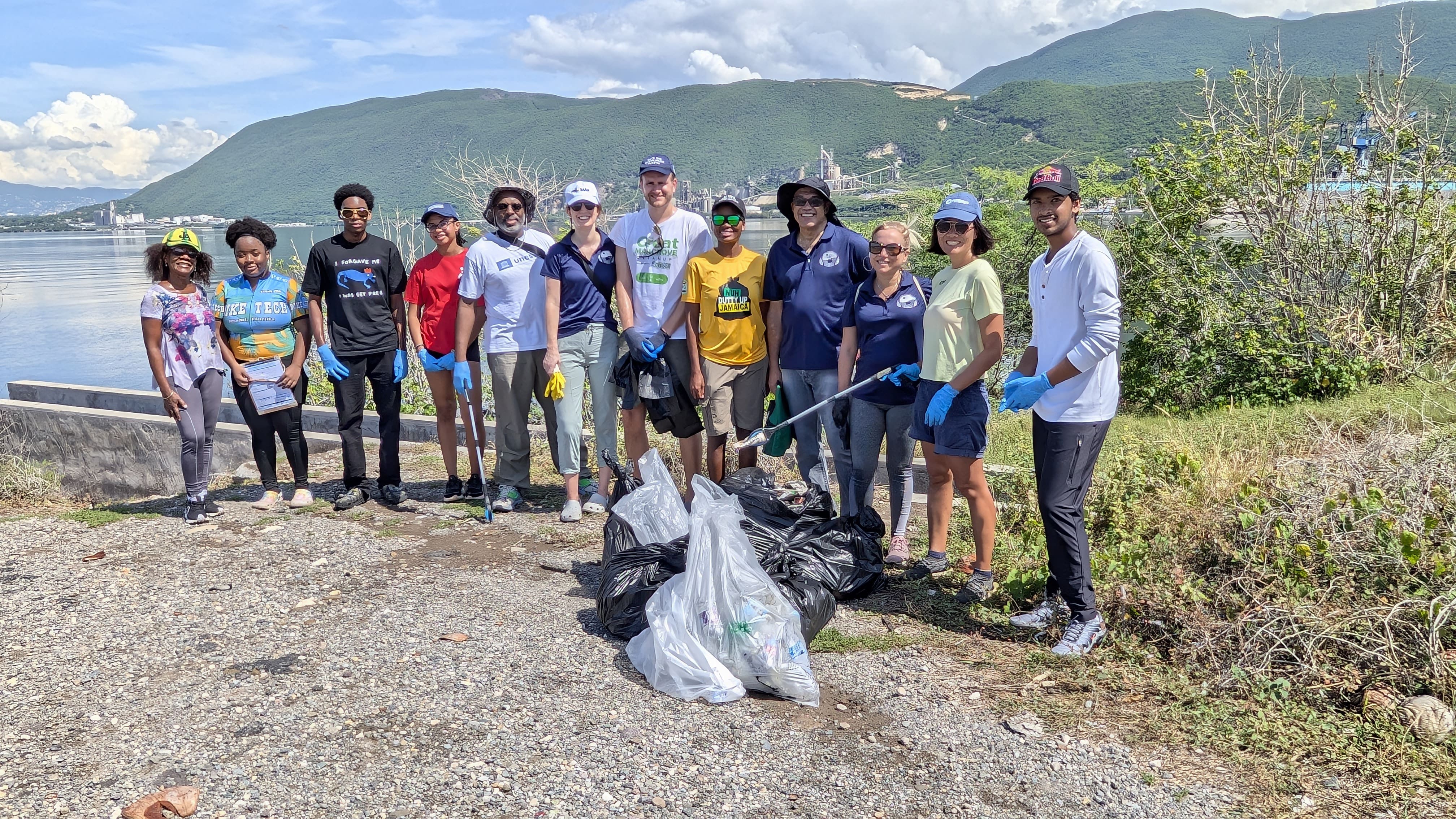
A major highlight of the month is the 40th anniversary of International Coastal Clean-Up Day (ICCD) which will take place on Saturday, September 20, under the theme “ #SeatheChange." This year the United Nations Environment Programme (UNEP) through the Cartagena Convention Secretariat and the Caribbean Sub-Regional Office is proud to join forces with the University of the West Indies (UWI) Life Sciences Department for a clean-up of the Gypsum Mangrove Restoration Site along the Palisadoes roadway in Kingston, Jamaica. Our team will join thousands of volunteers across Jamaica and the globe to collect marine litter, raising critical awareness about the scale of ocean pollution. With the subtheme "#WhatTHEFOAM” this year’s ICCD places a special emphasis on plastic and styrofoam, highlighting the urgency of addressing these persistent pollutants.
But while events like ICCD shine a spotlight on the visible crisis of plastic waste, the problem runs much deeper. Pollution from solid waste, domestic and industrial wastewater, agrochemicals including excess nutrients and oil also pose a significant threat to our ecosystems. Our reality in the Wider Caribbean Region demands focused, intense, and decisive action.
The Cartagena Convention -A Framework for Regional Action
The Cartagena Convention with its mandate to protect the marine environment of the Wider Caribbean has been at the forefront of this fight for decades. Through its various Protocols, particularly the Land-Based Sources (LBS) of Pollution Protocol, the first regional pollution agreement to be developed following the adoption of the Global Programme of Action for the Protection of the Marine Environment from Land-based Activities (GPA) in 1995, we have been actively implementing projects designed to tackle marine pollution head on.
Key initiatives tackling marine pollution
Through projects funded by partners like the European Union, the Government of Germany, and the Global Environment Facility (GEF) we support several initiatives including the development of national and regional pollution reports, strategies and action plans, waste audits, recycling programmes, and the promotion of alternatives to single-use plastics. We also support our Contracting Parties in building their capacity for more effective monitoring and assessment thus ensuring that policy and decision making is guided by the latest science.
Combating Solid Waste including Plastic Waste
Prime examples include the Prevention of Marine Litter in the Caribbean (PROMAR) project, financed by the Government of Germany in partnership with adelphi; and the Global Environment Facility (GEF)-funded project, "Circular Cities Beyond Plastics: Reducing Marine Plastics and Plastic Pollution in Latin America and the Caribbean”. The project is expected to move beyond waste collection to help cities like Panama City and Colon in Panama, Barranquilla and Cartagena in Colombia, and Kingston and Montego Bay, in Jamaica to embrace more circular economy approaches to waste and plastics management. By fostering innovation and promoting public- private partnerships, we will be facilitating new models that can be scaled in cities across the Wider Caribbean region.
Addressing Wastewater and Nutrient Pollution
We are also making progress in developing technical guidelines proposed for wastewater and nutrient management and enhancing regional monitoring capabilities through new data platforms. Our US EPA Water Quality Capacity Development Project, which focuses on improving national water quality monitoring programmes is also in high gear.
Tackling the Sargassum Challenge
While not a pollutant, unprecedented sargassum crisis is likely due to an interaction of multiple environmental factors. In May 2025, the Atlantic basin saw a record 37.5 million metric tons, a massive surge fueled by climate change, nutrient pollution, deforestation, fertilizer run off, and shifts in wind patterns/atmospheric pressure that enhance nutrient upwelling. This influx poses a severe threat to the region’s health, environment, and economy. Rotting sargassum releases toxic gases, harms vital tourism and fishing industries and smothers critical coastal ecosystems like coral reefs and mangroves which harbour many protected species.
In response the Cartagena Convention Secretariat is leading a coordinated effort to tackle this challenge. We are advancing regional action plans, developing early warning systems, and promoting sustainable management strategies. By leveraging the recently developed Regional Ocean Coordination Mechanism for the Caribbean, we are uniting the environment, tourism, fisheries and health sectors. This collaborative approach aims to build resilience and safeguard the Caribbean’s marine biodiversity and the livelihoods that depend on it.
Encouraging ratification of the Cartagena Convention Protocols
A major milestone during the past year was the ratification of the LBS protocol by St. Kitts and Nevis, becoming the 16th Contracting Party. We look forward to welcoming more countries to the fold, as we pursue collaborations that will ramp up more ratifications of our LBS and Specially Protected Areas and Wildlife (SPAW) Protocols, the latter which we are currently celebrating 25 years. The SPAW Protocol which protects the Caribbean’s most important coastal and marine ecosystems and species already covers over three hundred endangered species of flora and fauna.
September -a month of reflection, a future of action
Whilst the focus on coastal clean-ups is important, we are also mindful of the connections between our actions on land and the health of the sea which are highlighted by other key observances this month.
Coral Reef Awareness in Jamaica: - stresses the need to protect these fragile and in some cases endangered ecosystems which are severely threatened by land-based pollution.
World Maritime Day -(Sept 25) and World Tourism Day -(Sept 27) highlight the importance of a clean marine environment for shipping, tourism, sporting, fishing, agriculture, logistics and related industries that power our regional economies.
World Rivers Day - (Sept 28): reminds us that rivers and gullies are often major conduits for marine litter and pollution from unknown sources and that everyone must play their part in keeping them free of pollutants.
A Catalyst and Current for Change
The spirit and resilience of the people of the Wider Caribbean, combined with a growing political will, form a powerful catalyst for change. Following the 18th Conference of Parties (COP) for the Cartagena Convention to be held in Jamaica from 13th to 16th October, the Secretariat looks forward to implementing new initiatives that will further drive our dedicated work to this end. We will continue to intensify our efforts, project by project and country by country, to create a cleaner, healthier, and more prosperous Wider Caribbean Region. The future of our people and our Caribbean Sea demand nothing less.