


Background
The East Asian Seas region has the richest marine biodiversity in the world. It contains one of the greatest concentrations of coral reefs, mangroves, seagrasses, coastal wetlands and other important habitats. Human activities in the region threaten reef health and other ecosystems and jeopardize the benefits that flow from the services and goods. These threats range from sedimentation from deforestation, agricultural practices and coastal development, pollution, tourism, harvesting of corals for aquarium trade, cement excavation, destructive fishing practices and overfishing, to global issues such as global warming and rise in sea levels.
The East Asian Seas Action Plan envisages implementation of integrated marine and coastal management, including the establishment of a viable network of Marine Protected Areas (MPAs), in order to conserve biodiversity and maintain productivity. COBSEA strengthens use of ecosystem-based management approaches based on the best available scientific evidence, including MPAs and Marine and Coastal Spatial Planning (MCSP), towards achievement of relevant Sustainable Development Goals and Kunming-Montreal Global Biodiversity Framework.
COBSEA has contributed to the resource base for ecosystem-based marine and coastal planning and management. This includes technical tools, resource guides, trainings well as a network of national institutions and resource persons, such as the working groups on coral reefs, mangroves, seagrass, coastal wetlands and fishery refugia. Ongoing work includes advancing MCSP in the region by building capacity and supporting development of a conducive policy environment, carried out in partnership with Blue Solutions Initiative.
COBSEA Marine and Coastal Ecosystems (MCE) Framework
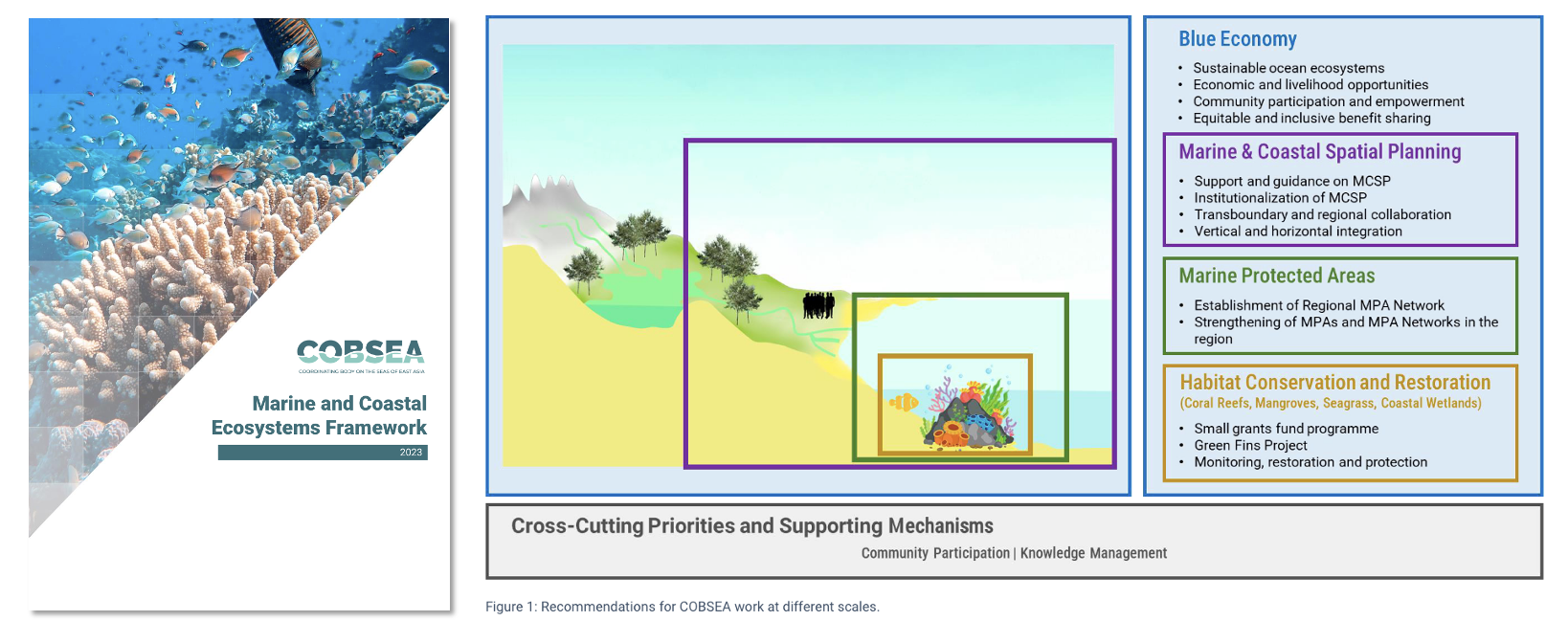
The Marine and Coastal Ecosystems (MCE) Framework, adopted in 2023, is a guidance of COBSEA’s strategy on ecosystems and biodiversity conservation and management. Anchored on the overarching theme of Blue Economy, the MCE Framework provides a clear direction to achieving the relevant targets from the Sustainable Development Goals and the Kunming-Montreal Global Biodiversity Framework.
- Sustainable Blue Economy: Conserving marine and coastal environment, alongside ensuring inclusive and equitable sharing of resources, and assuring the well-being and livelihoods of local communities.
- Marine and Coastal Spatial Planning: Identifying and planning the use of a marine and coastal space, whether it’s for conservation purposes, fisheries, tourism, and other marine industrial activities.
- Marine Protected Areas (MPAs, including MPA Networks and Other-Effective Area-based Conservation Measures): Providing protection in areas of the marine and coastal ecosystems where human activities are regulated to restore the health of the ocean.
- Marine and Coastal Habitats Conservation and Restoration (coral reefs, mangroves, seagrass, and coastal wetlands): Ensuring conservation on coastal ecosystems for its role of important services and value for nature during the implementation of all related activities.
COBSEA Working Group on Marine and Coastal Ecosystems (WGMCE)
The Working Group on Marine and Coastal Ecosystems (WGMCE) was established to provide guidance and support on the implementation of the MCE Framework. The WGMCE and COBSEA Secretariat develop biennial workplans for the implementation of the MCE Framework to determine specific activities, priorities and opportunities to be approved by the COSBEA Intergovernmental Meeting (IGM).