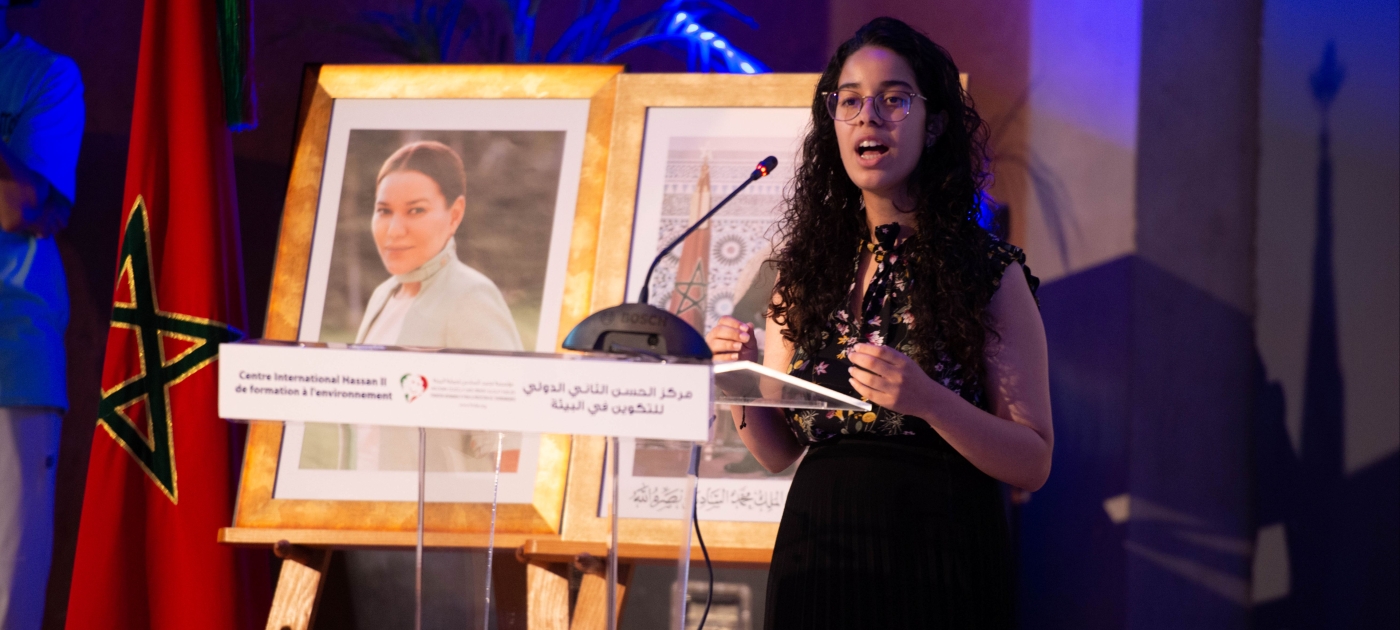
The webinar was co-organized by a broad coalition of partners, the Hassan II International Center for Environmental Training (the academic arm to the Mohammed VI Foundation for Environmental Protection), UNEP, IUCN WCEL, the Africa Major Groups and Stakeholders to UNEP, the Women's Major Group to UNEP, the Children and Youth Major Group to UNEP (CYMG), CYNESA, Youth for Climate, the African Youth Climate Hub (AYCH), and the African Green Universities and Youth Education Network (AGUYEN) — reflecting the depth of multi-stakeholder mobilization around Africa's climate agenda. Conducted on World Environment Day 2026 with simultaneous interpretation in English, French, and Arabic, the event brought together institutional actors, civil society networks, and youth organizations to advance the Ubuntu framework ("I am because we are") as an ethical foundation for collective climate responsibility and intergenerational solidarity.
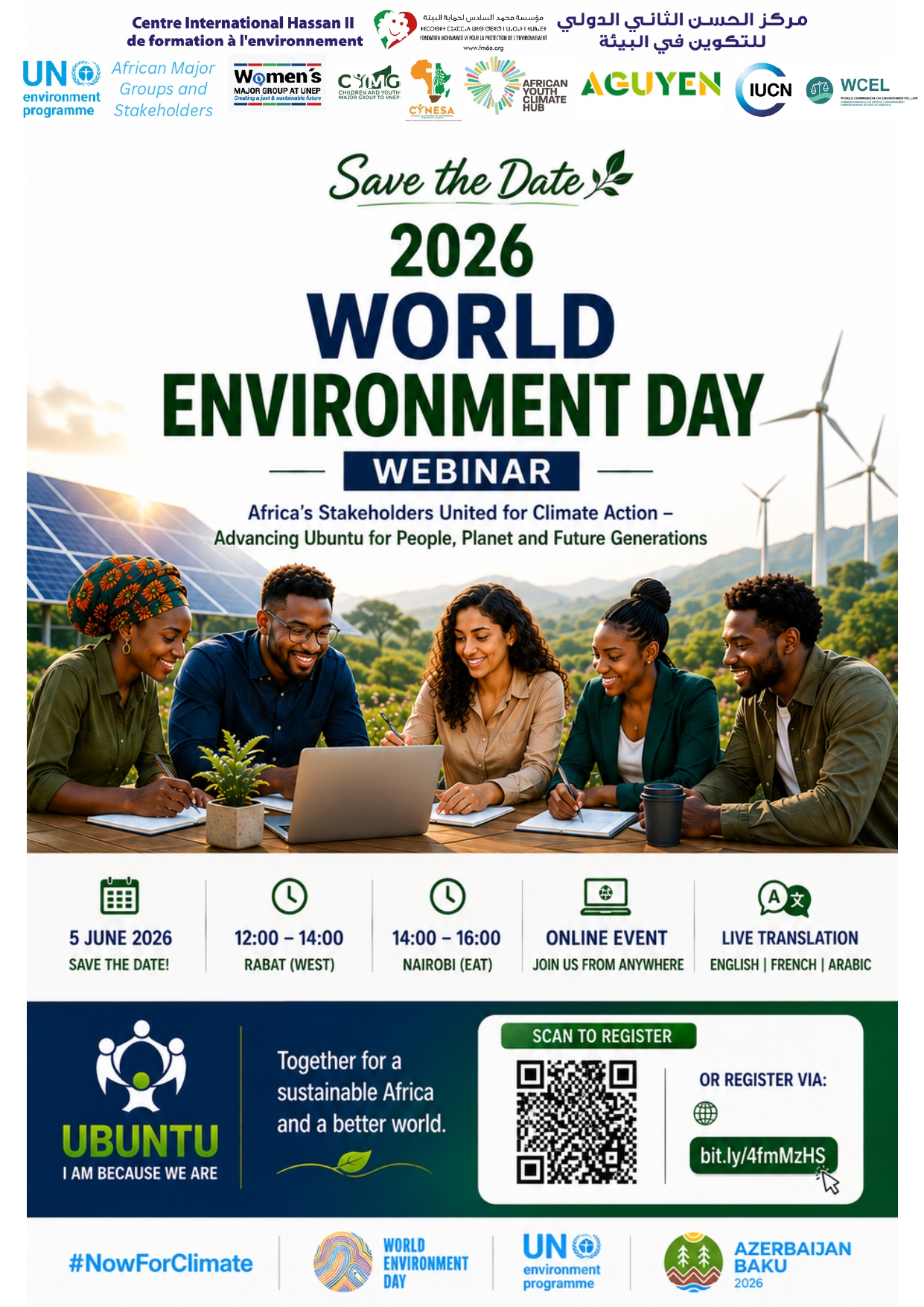
Four keynote addresses provided the thematic and normative foundation for the day. UNEP presented the WED 2026 theme, anchoring the event in Ubuntu as a values framework for collective action. A representative of the Pan African Climate Justice Alliance (PACJA) addressed structural inequities in global climate finance and carbon markets, calling on Africa to assert its agency in international negotiations and for equitable operationalization of loss and damage finance. A representative of IUCN WCEL examined climate litigation trends and advisory opinions as tools for accountability and stronger climate governance. A representative of the CYMG to UNEP reflected on persistent gaps in meaningful youth participation in multilateral processes, urging co-design over tokenistic representation. The intergenerational dialogue featured speakers from across this partnership ecosystem including representatives of UNCCD civil society, the Women's Major Group to UNEP, CYMG to UNEP, AYCH, Youth for Climate, AGUYEN, and CYNESA, engaging six complementary thematic areas: inclusive governance, nature-based solutions, climate education, community resilience, youth leadership, and partnerships for implementation. A collective whiteboard exercise then distilled six shared priorities for the next five years, from strengthening multi-stakeholder climate governance and advancing South-South cooperation, to embedding climate education in formal and informal learning systems and advocating for equitable climate finance and effective loss and damage mechanisms.
Closing reflections powerfully reaffirmed that Africa is a continent of solutions, innovation, and leadership not merely a victim of climate change and that the transition to climate resilience must be just, equitable, and leave no community behind.
Watch the webinar here, featuring a World Environment Day 2026 session uniting global partners to advance the Ubuntu approach to collective climate action.