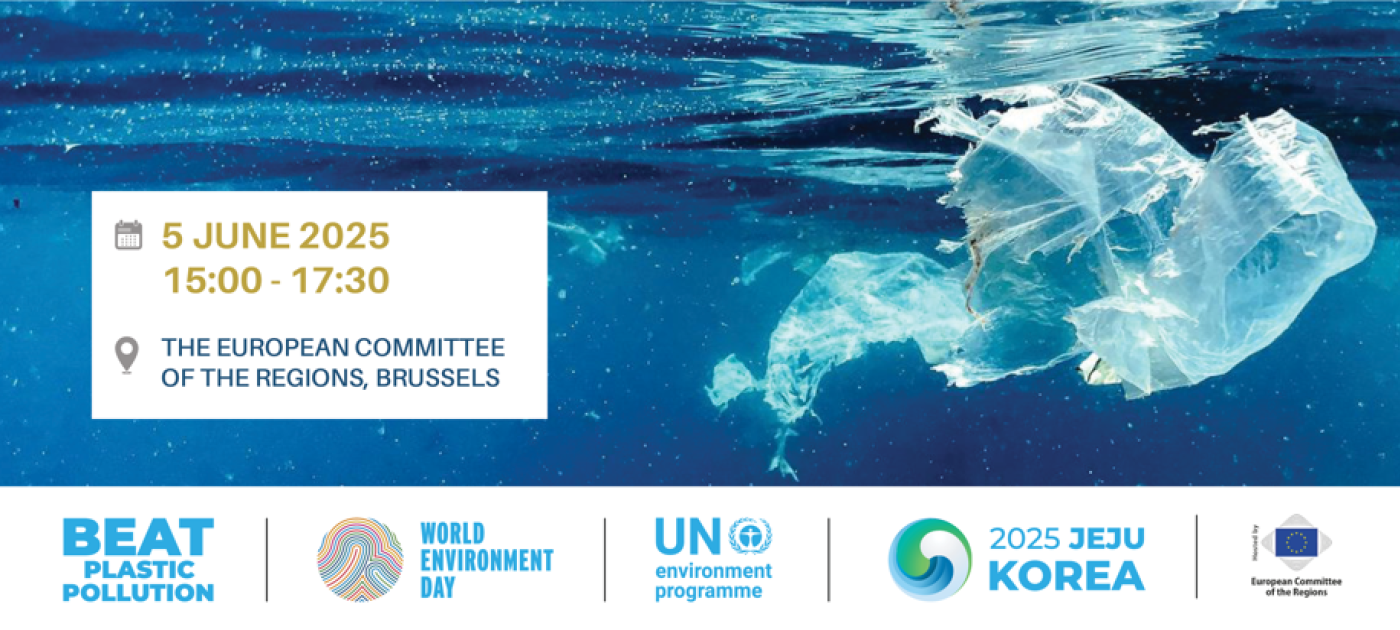
The event “Bridging Generations for Change: Ending Plastic Pollution Together” was held by the United Nations Environment Programme (UNEP) on the occasion of World Environment Day 2025, on 5 June, and hosted by the European Committee of the Regions.
The event brought together voices across generations to reflect on the plastic pollution crisis and how to build shared solutions. It offered a timely reminder: real progress requires bridging generations, perspectives, and systems.
Takeaways:
- Plastic pollution isn’t just an environmental emergency, it’s a societal issue -linked to inequality, environmental injustice, and the disproportionate impacts on vulnerable communities-, that demands inclusive solutions.
- The cost of inaction is growing, from collapsing ecosystems and polluted rivers to health impacts from chemicals.
- Youth, as both citizens and consumers, and as future leaders, have a key role to play in the fight against plastic pollution.
- Solidarity, not blame, must guide the transition, emphasizing shared responsibility across age groups, sectors, and regions.
- Discussions showed that people around the world are willing to engage and make a positive change. As we look ahead to the resumed negotiations for a global plastic treaty at INC-5.2 in Geneva in August, this event highlighted the need for collective engagement and raised ambition.
Disclaimer: This report provides key messages derived from the discussions held at the event. It may not reflect the views or positions of UNEP.
Impact of plastic pollution:
For decades, plastic pollution has infiltrated every corner of the world, contaminating the water we drink, the food we eat, and the air we breathe. Microplastics are now even found in our bodies. In 2025, an estimated 516 million tonnes of plastics will be produced globally, with 23 million tonnes entering water bodies, enough to cover Brussels in a 30-centimeter layer of waste. By 2030, there will be more plastic than fish in the oceans. The Republic of Korea, host of World Environment Day 2025 and home to a new initiative to make Jeju Island free from plastic pollution by 2030, reaffirmed its commitment to bold, cooperative action.
UNEP is actively involved in the fight against plastic pollution through the UNEP Plastics Initiative, driven by a bold and transformative vision: to end global plastic pollution. This long-term goal requires a fundamental shift in how we produce, use, and manage plastics, moving away from the current linear model of “take-make-dispose” to a circular system where plastic products are designed to be reused, recycled, and repurposed. To bring this vision to life, the UNEP Plastics Initiative aims to create an enabling and empowering environment that accelerates market transformation. Central to this effort is the promotion of upstream innovations and solutions that focus on reducing plastic production and increasing reuse, rather than relying solely on recycling. This is reflected in four strategic goals: (1) reducing the size of the problem; (2) designing for circularity, (3) ensuring circularity in practice; and (4) dealing with legacy, i.e., managing plastic waste that cannot be reused or recycled in an environmentally sound manner.
“Plastic pollution impacts every ecosystem and every person on this planet. By 2040, plastic leakage to the environment is predicted to grow by 50%. That pollution creeps into our bodies through the food we eat, the water we drink, and even the air we breathe. But we can unite to unleash innovative solutions. Solutions that tackle the life cycle of plastics, solutions that enable the deployment of alternatives and ultimately drive down plastic pollution leaking into our environment. Solutions that rethink how products are designed and how we make, use and reuse plastics. Solutions that help protect our health, our environment, and our communities.”
Inger ANDERSEN, Executive Director, United Nations Environment Programme, in her video message.
Why intergenerational fairness matters:
Intergenerational fairness is both a moral responsibility and a strategic necessity. Plastic pollution is a legacy challenge, that younger generations are increasingly mobilizing to address. In this context, the dialogue aimed not only to spark reflection but also to reinforce the sense of shared responsibility for action across generations and sectors.
“People across generations must lead the way. Young people are not just the most affected by these decisions; they are shaping them. Through activism and entrepreneurship, their voices are already making a difference. At the Busan negotiations, youth delegates showed how meaningful their voice can be. We also have much to learn from older generations, those who lived by the principle: reuse before you discard. That mindset must guide us as we shift towards more sustainable systems. I believe progress comes when generations work together, combining innovation with experience.”
H.E. Ambassador RYU Jeonghyun, Ambassador of the Republic of Korea, in his opening remarks
Panel Discussion
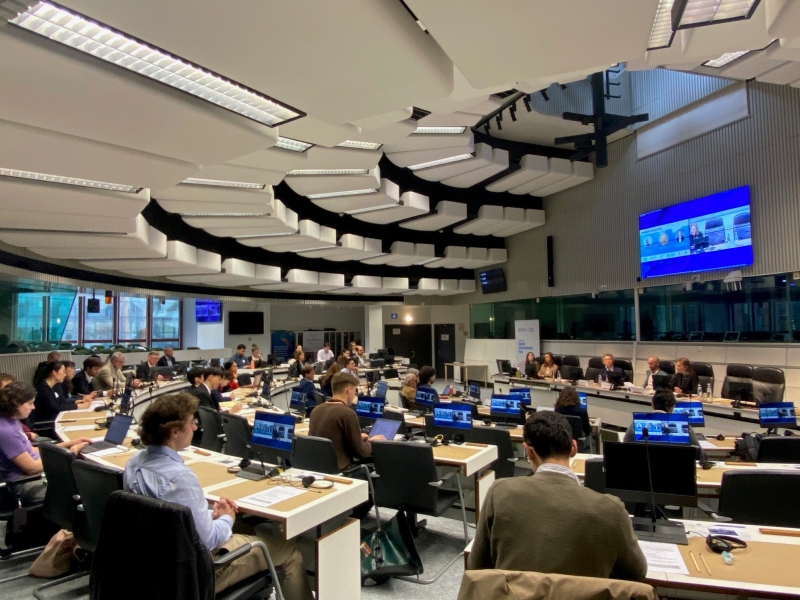
The panel featured representatives of young and elder generations, including local and EU policymakers, activists, politicians and scientists. Panellists were invited to reflect on youth engagement in environmental policies, the benefits of intergenerational fairness, local solutions, policy gaps, and the role of science and education. The dialogue emphasized the importance of moving beyond blame and fostering cooperation across age groups, institutions, and sectors. The message was clear: solidarity, fairness, and collaboration across generations are critical to shape a future free of plastic pollution.
The event was opened by remarks from:
H.E. Ambassador RYU Jeonghyun, Ambassador of the Republic of Korea to the EU
Veronika HUNT ŠAFRÁNKOVÁ, Head of the UNEP Brussels Office
The panel consisted of:
Lena SCHILLING, Member of the European Parliament
Prof. Bedřich MOLDAN, former Czech Minister of the Environment (joining online)
Marieke SCHOUTEN, European Committee of the Regions
Sneha SHAHI, Tide Turner Ambassador (joining online)
Hedwig VAN GUCHT, Grandparents for Climate ambassador
Driss ZAYOU, European councillor for local government, Dessel
Moderated by Nicola SPANO, Joint Research Centre, European Commission
Key messages:
- Plastic is deeply embedded in modern life, used across packaging, construction, electronics, and more.
- Both younger and older generations share a common goal: ending plastic pollution. This collective commitment should be harnessed to drive change.
- Collaboration across generations fosters stronger solutions, with each generation bringing vital perspectives (experience, innovation, urgency, and hope).
- Youth are on the frontline of action, as shown through global clean-up efforts, and should be better integrated into negotiations and policy structures. The UNEP Tide Turner Challenge was highlighted as a key initiative, involving hundreds of students restoring habitats, notably in India.
- Local solutions can drive global change.
- Historical practices offer inspiration. Older generations lived with little to no waste, reusing and repairing. Measures that trigger behavioural change for plastic use reduction are needed.
- New technologies offer potential, but must be scaled responsibly.
Collective brainstorming on solutions to plastic pollution:
An interactive session with audience members and panellists revealed common threads: the need for education on the impacts of plastic pollution, upstream solutions, and equity.
Key messages:
- The current political paradigm, centered on welfare, needs to shift towards a focus on human and planetary wellbeing. Reducing plastic use is both a health and moral imperative. Reframing priorities in this way can lead to more effective policies to combat plastic pollution.
- Education and cultural narratives are powerful tools, especially among young people who have grown up surrounded by plastic. Raising awareness through schools, traditions and local storytelling can shift behaviours.
- The real cost of plastic pollution, including its health, environmental and social impacts, is only now being understood, and must be better communicated to drive action.
- Plastics are pervasive due to convenience and low cost, especially in packaging, transportation, and electronics, but this widespread use is not inevitable.
- Reducing plastic pollution must start upstream, tackling production and design, not just waste management or consumer behaviour. Consumers cannot bear the burden alone. While individual responsibility matters, governments and industries must implement strong regulations and systemic solutions.