Building with Nature: Responding to the Demand for Urban Development and Affordable Housing through a Biodiversity Lens
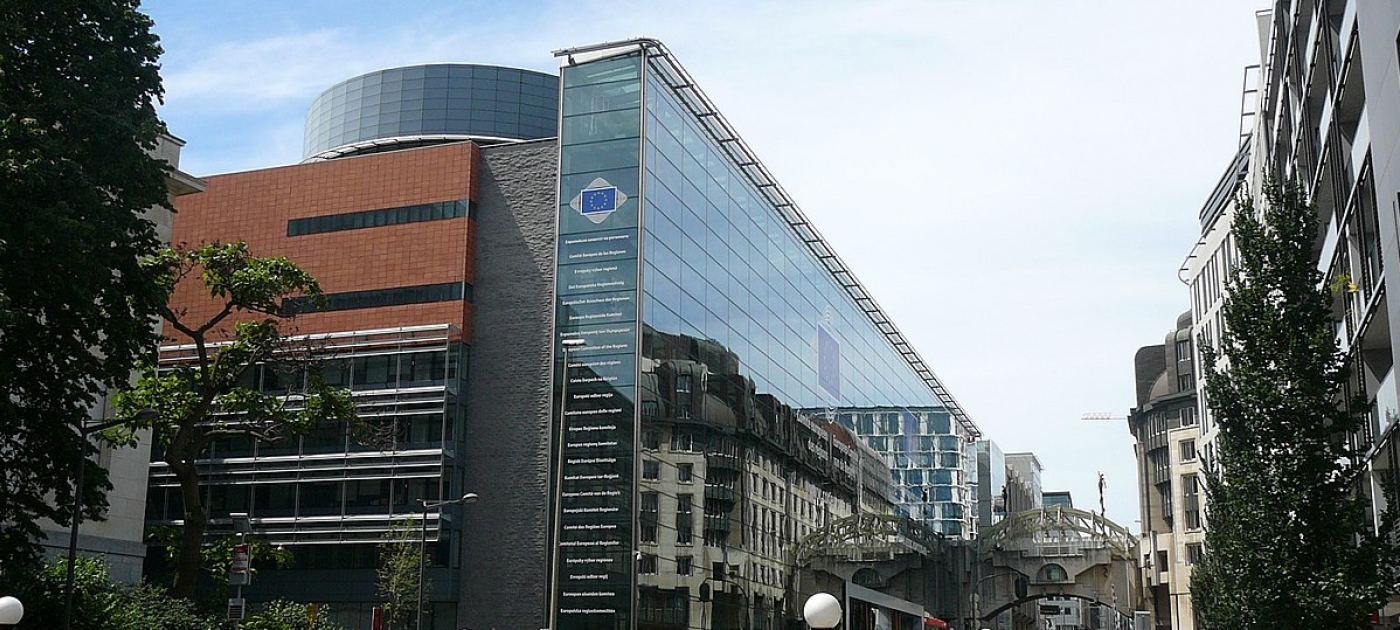
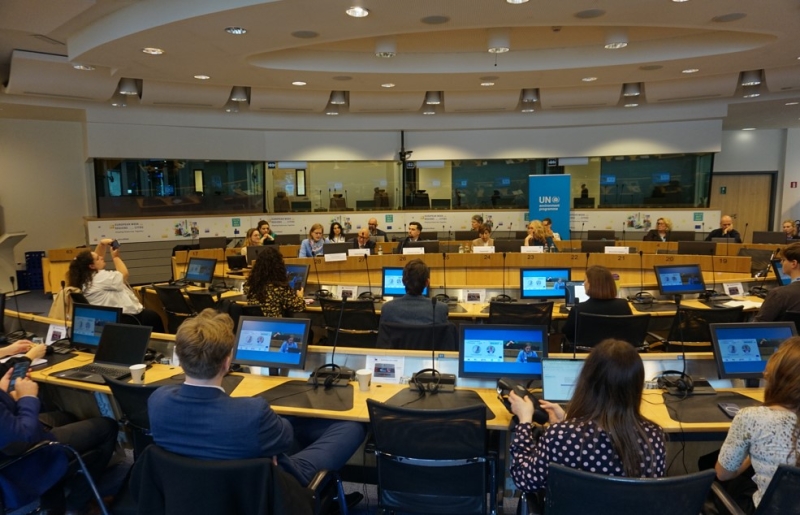
On 14 October 2025, during the EU Week of Regions and Cities, UNEP and UN-Habitat hosted a high-level panel at the Committee of the Regions in Brussels. The event focused on how cities could address the rising demand for affordable housing while safeguarding biodiversity and enhancing climate resilience. The panel brought together EU officials, urban leaders, scientists, and UN representatives to discuss integrated urban development strategies centered on nature-based solutions (NbS).
Key Takeaways
- Cities must integrate biodiversity into urban planning to tackle climate change, pollution, and habitat loss.
- The growing demand for more and affordable housing often leads to increased consumption of natural resources. Social needs must be jointly integrated with ecological limits, balancing housing needs with environmental sustainability.
- Nature-based solutions offer cost-effective ways to cool cities, reduce emissions, and improve livability. Integrating nature into urban development can help resolve this tension by offering cost-effective, socially inclusive, and environmentally beneficial alternatives.
- Urban development should avoid ecologically sensitive areas and align with natural processes.
- European cities are pioneering NbS approaches that can be adapted globally.
- Green financing mechanisms, funding for innovation and ambitious legislation are crucial to scaling nature-inclusive urban design.
- Citizen engagement and inter-city collaboration are key to replicating successful models.
- Economic valuation of nature can unlock private investment and municipal support.
Discussion Highlights
Welcome and Introduction
Opening the event, Veronika Hunt Šafránková, Head of the UNEP Brussels Office, emphasized the critical overlap between environmental sustainability and urban housing. She pointed out that the global push for affordable housing was straining ecosystems and resources, and cities must respond by embedding resilience into their design. “Extreme heat kills nearly 500,000 people annually,” Ms. Hunt Šafránková warned. “Urban resilience, livability, and affordability depend on embedding biodiversity into city systems, not treating it as an add-on.”
Dyfed Aubrey, Head of UN-Habitat Brussels, moderated the discussion. He highlighted that while UN-Habitats’ focus was on the Global South, European cities offered valuable lessons in integrating biodiversity. He emphasized the need for integrated thinking across urban planning, architecture, and ecological science to overcome the limitations of siloed approaches and better harmonize urban growth with nature.
Panel discussion
Harriët Tiemens, Director of the Arnhem-Nijmegen Green Metropolitan Region, shared its vision of “More Landscape, More City,” which aims to build 60,000 homes while expanding green and blue infrastructure. She explained that previous housing policies led to unattractive, isolated neighborhoods, whereas the innovative approach of Arnhem-Nijmegen undertaken by the metropolitan region prioritized beauty, ecological harmony, and livability. A long-term climate strategy developed with Wageningen University based on foresight projections for 2100 proposes giving rivers more space, storing freshwater, and avoiding construction on fertile soils. Floating homes, for example are being considered for flood-prone areas, though affordability remains a concern. She also addressed the Dutch nitrogen crisis, noting that while strict environmental laws protected nature, they necessitated innovative and socially sensitive urban planning to avoid political backlash and enable sustainable housing.
Gulnara Roll, Head of UNEP’s Cities and Buildings Unit, discussed the need to integrate biodiversity in housing policies and unlock innovative finance. She mentioned the economic advantages of passive cooling through NbS. With Europe needing over 10 million new homes, she emphasized that mechanical cooling is often more expensive than Solutions based on Nature and is intensive in natural resource consumption, while integrating nature in cities is both a socially and economically smart choice. NbS can significantly reduce infrastructure costs and emissions. She introduced UNEP’s upcoming “Beat the Heat” initiative, which will encourage cities to adopt natural cooling strategies, by providing tools and safety training. Gulnara also underscored the importance of quantifying nature’s economic value to attract investment and support local governments. UNEP’s Urban Finance Academies help cities plan and monitor biodiversity-positive investments, unlocking benefits like green jobs and improved public health.
Francisco Carvalho, Chair of the Working Group in Biodiversity and Green Areas and Chair of the Adaptation Taskforce at EUROCITIES, called for a shift from GDP-focused growth to well-being-centered development. Representing the city of Guimarães and the Landscape Laboratory, in Portugal, he highlighted the work undertaken by the Portuguese municipality on urban resilience and NbS integration in spatial planning, for which it won the EU Green Capital award for 2026.
The innovations in urban nature led at the city level in Guimarães are disseminated through the EUROCITIES network for peer-learning with other cities. Carvalho showcased the Guimarães Sponge City Project as an example, which transformed a flood-prone area into a resilient, biodiverse ecosystem, through re-naturalization, smart water management, and strong community engagement, with results that inspired replication across Europe. This has prevented dozens of floods and has even earned UNESCO recognition. He also highlighted Guimarães’ Green Radial Strategy, which used ecological connectivity data and real-time environmental monitoring to guide adaptive planning, while active citizen participation ensured the social acceptance and long-term success of new green spaces and lifestyle changes. He highlighted the proactive climate planning with science-based decision making supported by the Landscape Laboratory on applied research, innovation and education, and the importance of citizen involvement and city-to-city learning. He added that thanks to networks like EUROCITIES, cities across Europe were sharing and adapting successful NbS models to local contexts.
Marcos Ros Sempere, Member of the European Parliament, professor of urban planning, concluded the panel by pointing out the EU has two instruments to promote change: legislation and funding. He highlighted the importance of EU funding instruments to promote innovation to accelerate and scale up the transition towards green, climate neutral cities in Europe. He emphasized the need to ensure adequate funding in the next EU multiannual financial framework. He also suggested that EU funding programs could accelerate innovation by requiring features like bike infrastructure or NbS integration. He advocated for bioclimatic architecture and highlighted the importance of innovative design, over industrial products, to reach EU climate and environmental targets. Effective planning and design approaches, he noted, should be less about creating and protecting “green belts” that delineate urban areas and green areas, but should rather emphasize bringing nature into cities - urban roads, pathways, open spaces and buildings - greening the grey. He highlighted the New European Bauhaus as a creative platform for merging sustainability with design in future housing projects.