Environmental multilateralism: a strategic investment for competitiveness, resilience, and global cooperation
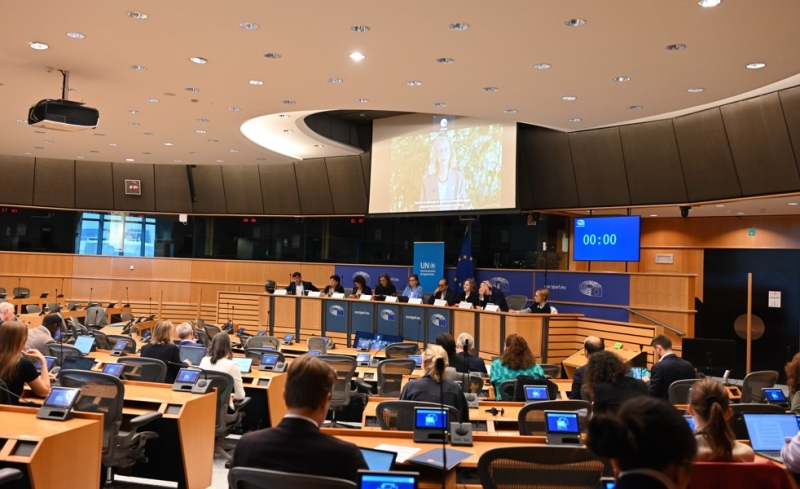
On 14 October 2025, UN leaders, EU policymakers, industry representatives, and civil society gathered in Brussels to reaffirm the importance of environmental multilateralism as a cornerstone of global cooperation, sustainable competitiveness and public health.
Organized by the United Nations Environment Programme (UNEP) and hosted by Mr. Antonio Decaro, Chair of the Environment Committee of the European Parliament, the event reflected on major global achievements in the fields of pollution, health, nature and climate, and highlighted the relevance of multilateral environmental agreements (MEAs) and global frameworks for building resilient and competitive socio-economic systems.
Through a series of engaging panel discussions, the conversations underscored the importance of increasing the visibility on existing global norms and standards on environment. Those frameworks, stemming from a consensus by all UN Parties, including the EU, represent a solid basis driving business and industrial activities, as well as great potential for EU’s engagement with global partners.
Key Takeaways
Global frameworks enhance competitiveness through innovation and predictability.
- Discussions emphasized that well-designed international frameworks (e.g., the Basel, Rotterdam and Stockholm Conventions, or the Kigali Amendment to the Montreal Protocol) enhance global competitiveness by fostering innovation and providing regulatory predictability. These agreements offer the stability needed for long-term investment while encouraging technological advancement and the development of circular business models that make industries both cleaner and more efficient.
Sustainability and competitiveness are mutually reinforcing.
- Speakers, in their diverse roles and capacities, underlined that environmental ambition and economic growth go hand in hand, with international cooperation on sustainability driving innovation, resilience, and shared prosperity. The Montreal Protocol’s projected $1.8 trillion in health benefits and strong economic returns of nature-based solutions illustrates how collective environmental action can generate lasting economic and social benefits at the same time.
International cooperation levels the playing field and opens sustainable markets.
-
From mercury phase-outs (Minamata Convention) to legal wildlife trade (CITES), discussions underlined that global environmental agreements help align rules across countries, reduce unfair competition, and enable access to emerging green markets. Such frameworks turn shared environmental goals into engines for inclusive prosperity and peaceful, rules-based economic relations.
Highlights from the discussions
Opening the event, Ms. Annalisa Corrado, member of the Committee on the Environment, Climate and Food Safety of the European Parliament, celebrated the legacy of global environmental agreements as powerful symbols of cooperation and innovation. She rejected the notion that sustainability undermines competitiveness, arguing instead that the two are mutually reinforcing. Ms. Corrado highlighted the European Parliament’s role in translating international commitments into EU legislation and framed environmental cooperation as a strategic investment in peace, as well as shared prosperity.
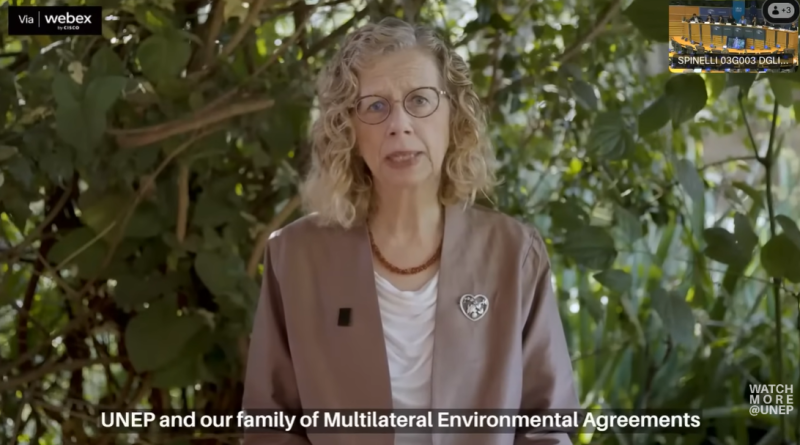
In her opening video message, Ms. Inger Andersen, Executive Director of UNEP, commended the EU leadership in global environmental governance. She pointed to recent achievements such as the creation of the Science-Policy Panel on Chemicals and Pollution and the recent adoption of the Agreement under the United Nations Convention on the Law of the Sea on the Conservation and Sustainable Use of Marine Biological Diversity of Areas beyond National Jurisdiction (BBNJ Agreement). The Executive Director also acknowledged the challenges multilateralism is facing, but underscored its effectiveness and direct contribution to global economies, citing the Montreal Protocol on Substances that Deplete the Ozone Layer‘s projected $1.8 trillion in health benefits as one clear example.
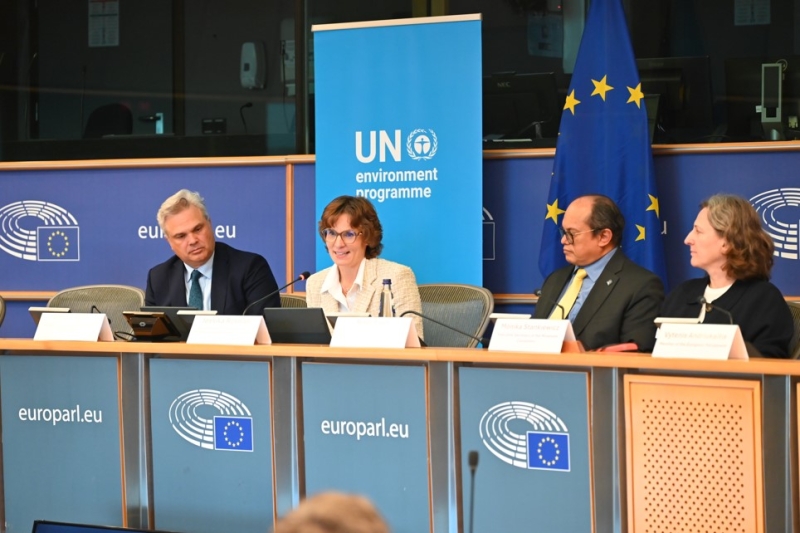 In her closing remarks, Ms. Jessika Roswall, EU Commissioner for Environment, Water Resilience and a Competitive Circular Economy, reaffirmed the EU’s commitment to environmental multilateralism. She underlined that those global environmental challenges are shared problems that require shared solutions, and that the EU intends to continue leading by example through collective, science-based action.
Echoing EU’s competitiveness agenda, Commissioner Roswall also emphasized the close link between environmental protection and economic growth. She noted that investing in nature-based solutions, supporting the circular economy and developing sustainable markets can enhance competitiveness, foster innovation and create long-term resilience.
You can find the full speech here.
Global frameworks on pollution and health – actionable solutions for competitiveness and resilience
Panelists
Mr. Rolph Payet, United Nations Executive Secretary for the Basel, Rotterdam and Stockholm Conventions.
Ms. Monika Stankiewicz, Executive Secretary of the Minamata Convention.
MEP Mr. Vytenis Andriukaitis, member of the European Parliament Committee on Health and former EU Health Commissioner.
Ms. Chrysanthi Sofokleous, European Chemical Industry Council (Cefic) and Industry representative to the Global Framework on Chemicals (GFC).
In discussions on global chemicals and waste governance, participants underlined the importance of aligning regulation with innovation to advance circularity, resource efficiency, and the protection of health and the environment. They emphasized that multilateral environmental agreements play a crucial role in ensuring fair trade, fostering technological progress, and creating a level playing field for sustainable solutions.
The exchange highlighted how EU policies and international cooperation can accelerate global phase-outs of harmful substances, while also addressing persistent challenges in informal sectors and emerging markets. Speakers stressed the need to better integrate chemicals and waste management into development cooperation, enhance science-policy collaboration, and promote transparency and capacity building worldwide. A shared call emerged for the EU and its partners to champion global sustainability frameworks and support their effective implementation.
Global nature and climate commitments at the service of economic sustainability
Part I
Panelists
Ms. Ivonne Higuero, Secretary-General of the Convention on International Trade in Endangered Species of Wild Fauna and Flora (CITES) Secretariat.
MEP Ms. Manuela Ripa, member of the European Parliament Committee on the Environment, Climate and Food Safety.
Ms. Françoise Van de Ven, President of the International Tropical Timber Technical Association (ATIBT).
The discussion highlighted the role of multilateral frameworks in promoting sustainable, legal, and traceable trade in wildlife and natural resources, underscoring shared responsibilities between producing and consuming countries. Participants emphasized that sustainable trade can contribute to economic growth and local livelihoods when grounded in sound environmental governance.
They noted that progress in emissions reductions and renewable energy deployment demonstrated the potential for environmental and economic objectives to reinforce each other, yet that biodiversity loss continued to pose major risks. The conversation stressed the importance of viewing nature restoration as a long-term economic investment, and called for greater policy coherence across fiscal, agricultural, and trade domains. Ensuring that emerging market mechanisms and trade regulations support, rather than hinder, sustainable development was seen as essential -requiring harmonized standards, capacity building, and inclusive international cooperation.
Part II
Mr. Johannes Auer, Head of Product related Environmental Protection, Siemens AG.
Ms, Megumi Seki, Executive Secretary of the Ozone Secretariat.
Mr. Anthony Agotha, EU Special Envoy for Climate and Environment, European External Action Service.
The discussion underscored that stable, science-based regulation was essential to drive innovation, support long-term investment, and create the conditions for sustainable technological progress. Participants highlighted how global cooperation under multilateral environmental agreements, such as the Montreal Protocol and the Kigali Amendment, had delivered measurable benefits for the planet and the economy (directly applicable by the industry) – showing that coordinated action can both protect the environment and generate prosperity. The conversation further emphasized the importance of viewing nature also as a strategic asset, calling to maintain governance mechanisms, the reinforcement of evidence-based policymaking and predictable market conditions to accelerate the transition toward a green and resilient global economy.
This event was moderated by Ms. Veronika Hunt Safrankova, Head of the UNEP Brussels Office