Organised by United Nations Environment Programme (UNEP), United Nations Development Programme (UNDP) and United Nations Industrial Development Organization (UNIDO), together with Circular Innovation Lab ApS, the Accelerator Session "Circular Supply Chains in Action: Transitioning Towards Solutions in Fashion and Construction" will take place on Thursday 17 September 2026 at the World Circular Economy Forum 2026, Gandhinagar, India.
When: Thursday 17 September 2026, 12:00-14:30 IST (8:30-11:00 CEST)
Format: Hybrid, in person and online
Target audience: Policymakers, business leaders, working-level practitioners, financiers and investors.
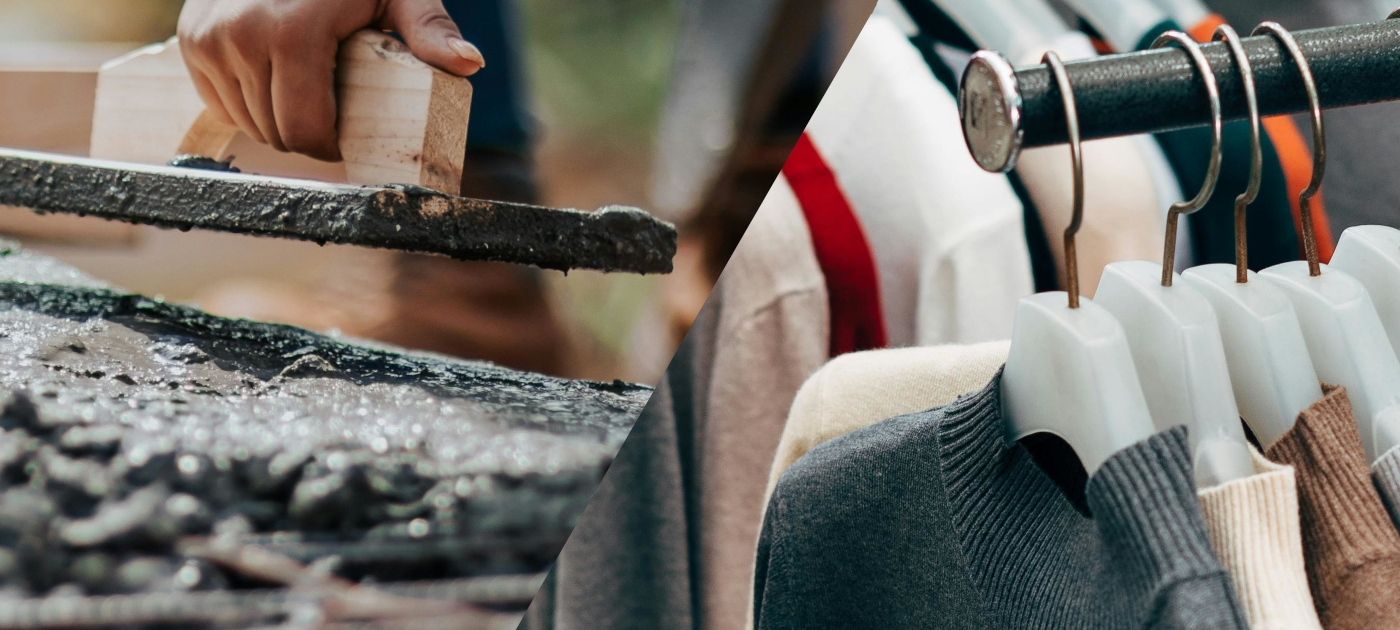
Description: Fashion, plastics and construction are among the most water, chemicals and resource intensive supply chains on the planet. Although these sectors face similar challenges, these are rarely addressed together. This session brings them into one room, drawing on the GEF-funded Integrated Programme on Eliminating Hazardous Chemicals from Supply Chains, which works across eight countries on three continents, and the UNEP, UNIDO and UNDP country portfolios on textiles.
Two linked panels frame the conversation: The first is a cross-cutting discussion that looks across fashion, plastics and construction at the same time, treating value chain transformation as a single challenge shared by all three sectors. The second discussion examines fashion as a concrete entry point, showing how national circular-economy interventions can be designed and scaled, from product design, more sustainable production practices and safer chemistry through to transparent, circular supply chains. This illustrates how interventions shift the value chain as a whole and draws out which lessons are transferable to other chemical-intensive sectors such as construction.
The session asks how can we design truly non-toxic, circular value chains, and how do we align design, chemicals management, policy, and finance to get there at scale? What solutions and approaches transfers easily between sectors, and which does not, and how can policy coherence and access to finance unlock change at scale?
Working from live country examples, including India, Mongolia, Cambodia among others, the accelerator session offers practical, transferable lessons for the global circular transition rather than abstract principles.