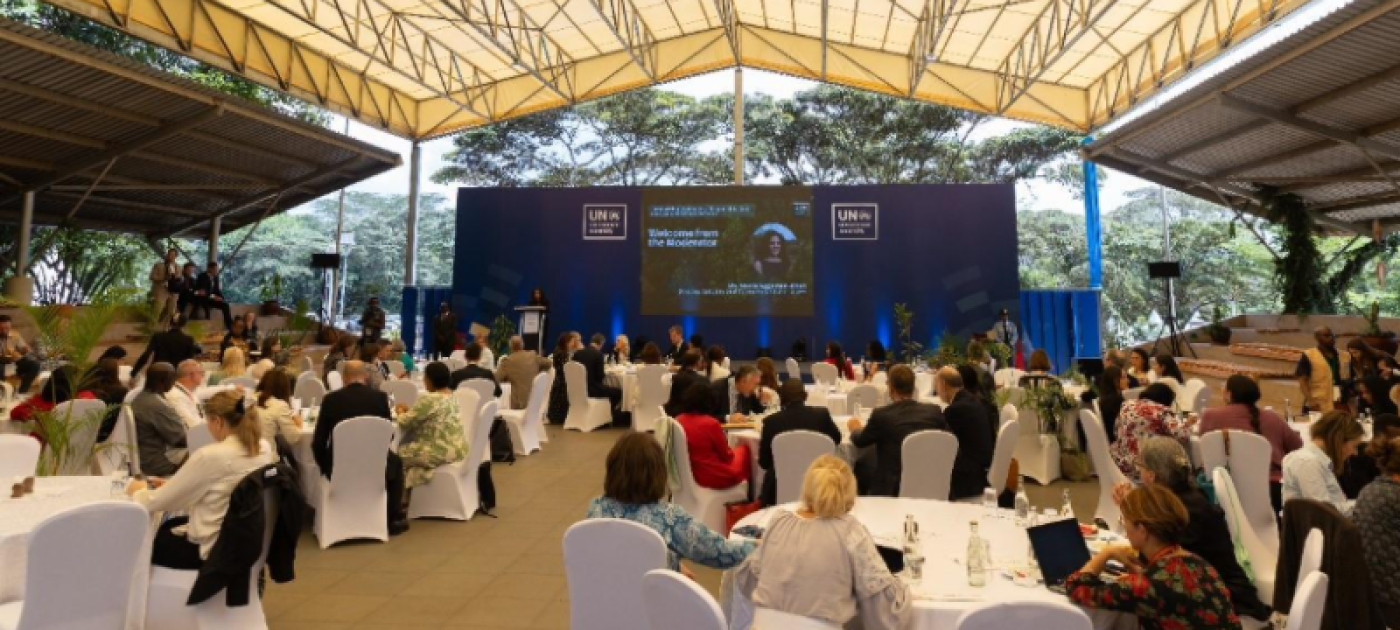
On 11 December 2025 at UNEA-7 in Nairobi, UNEP, in partnership with UN Women and the Germany Federal Ministry for the Environment, Climate Action, Natural Conservation and Nuclear Safety, organized a high-level leadership lunch titled “Critical Energy Transition Minerals (CETM): Empowering Women for a Responsible, Just, and Equitable Minerals Sector” on the margins of UNEA-7. The event aimed to advance understanding and awareness of opportunities and actions to support women’s empowerment, promote gender equality, and protect the rights of women and girls across the CETM sector.
The event brought together ministers, UN leaders, civil society, and private sector representatives to examine how the global push for Critical Energy Transition Minerals (CETM) can advance gender equality and women’s rights.
Drawing on the Beijing Platform for Action, UNEA resolutions, and the UN Secretary-General’s Guiding Principles on CETM, the dialogue highlighted women’s role as environmental stewards, specialists, community leaders, and agents of peace in resource-rich countries. Participants also called for safer and more dignified workplaces, equal pay and opportunities, and stronger protections against discrimination and gender-based violence.
Key Speakers and Opening
The 90-minute lunch featured a mix of keynote speeches, an interactive panel discussion, and open dialogue among participants. The event was moderated by Ms. Sheila Aggarwal-Khan, Director, Industry and Economy Division, UNEP.
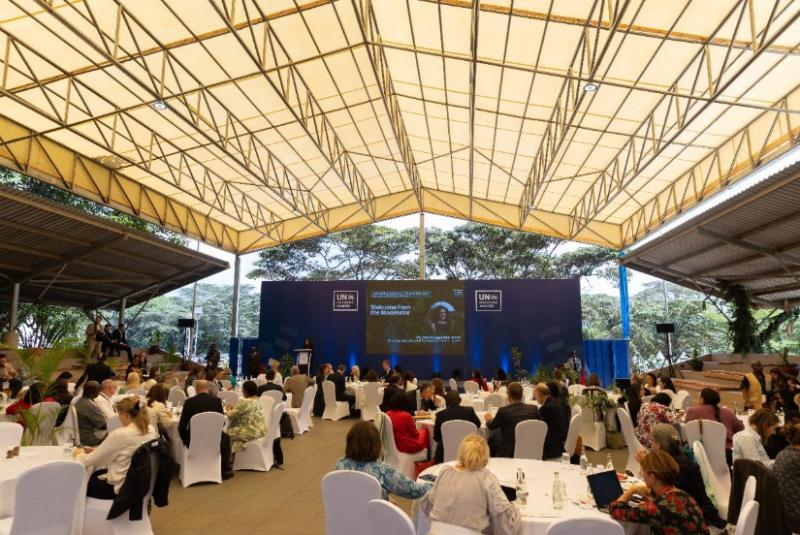
Welcome and opening remarks were delivered by:
- Ms. Inger Andersen, Under-Secretary-General of the United Nations and Executive Director of UNEP
- Ms. Rita Shwarzelühr-Sutter, Vice-Minister, Federal Ministry for the Environment, Climate Protection, Nature Conservation, and Nuclear Safety, Germany
- Mr. Lok Bahadur Thapa, President, UN Economic and Social Council (ECOSOC)
- Mr. Alexander De Croo, UN Development Programme Administrator
- Dr. Yasmine Foaud, Executive Secretary, UN Convention to Combat Desertification
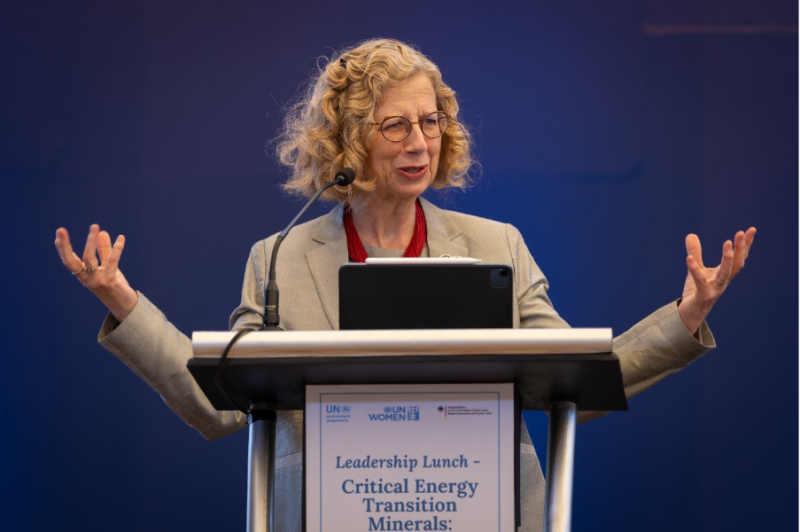
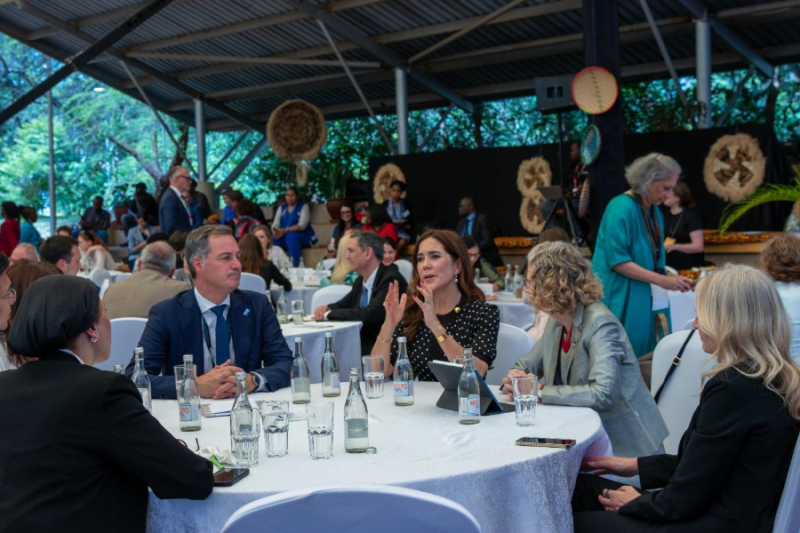
Her Majesty Queen Mary of Denmark attended the session. Please see the welcome and opening remarks
 Interactive Dialogue Segment:
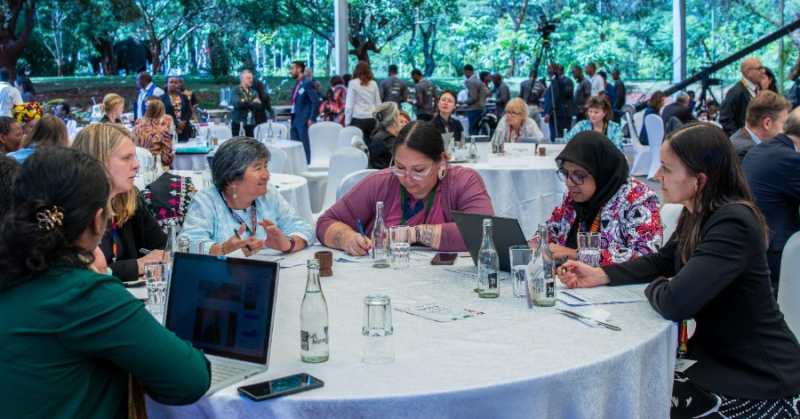
Participants benefited from thematic discussions organized around three key areas:
- Theme 1 - Enhancing visibility and strengthening women’s environmental leadership in the minerals sector
- Theme 2 - Building a just minerals order through women empowerment and equality.
- Theme 3 - Women as agents of transformational change for sustainability and peace transitions in CETM countries.
Each team presented its outcomes at the end of the session. Please see the plenary video.
 The event closed with a shared commitment to pursue a responsible, just, and equitable minerals sector, one that accelerates energy transition while promoting gender equality and upholding the rights of women and girls.
Gender equality is a core requirement for a just and sustainable minerals transition; however, the sector remains predominantly male-dominated. A structural redesign is necessary to ensure equitable outcomes allowing women to be recognized and positioned as decision-makers and leaders, not only beneficiaries or affected groups. Such redesign will depend on cooperation across governments, UN agencies, civil society, Indigenous leaders and the private sector. Some of the key take aways include:
- Governance systems are outdated relative to CETM demand. Current regulatory and institutional frameworks do not reflect environmental, social, and technological realities; fail to account for gender specific vulnerabilities; and reinforce inefficiencies, such as weak enforcement
- Gender inequality in the minerals sector is structurally produced
- Data systems are insufficient for policy, regulation and accountability
- Rights, participation and local service provision are essential foundations for stability
- Economic empowerment requires structural enablers
- Responsible CETM development depends on coherence across the value chain
- Multi-level cooperation and shared standards are required
To get a sense of the session, please see the photos from the event UNEP flikr
UN Women’s photos here: https://flic.kr/s/aHBqjCDqSK