
Rooted in Legacy: Rising for Climate Justice
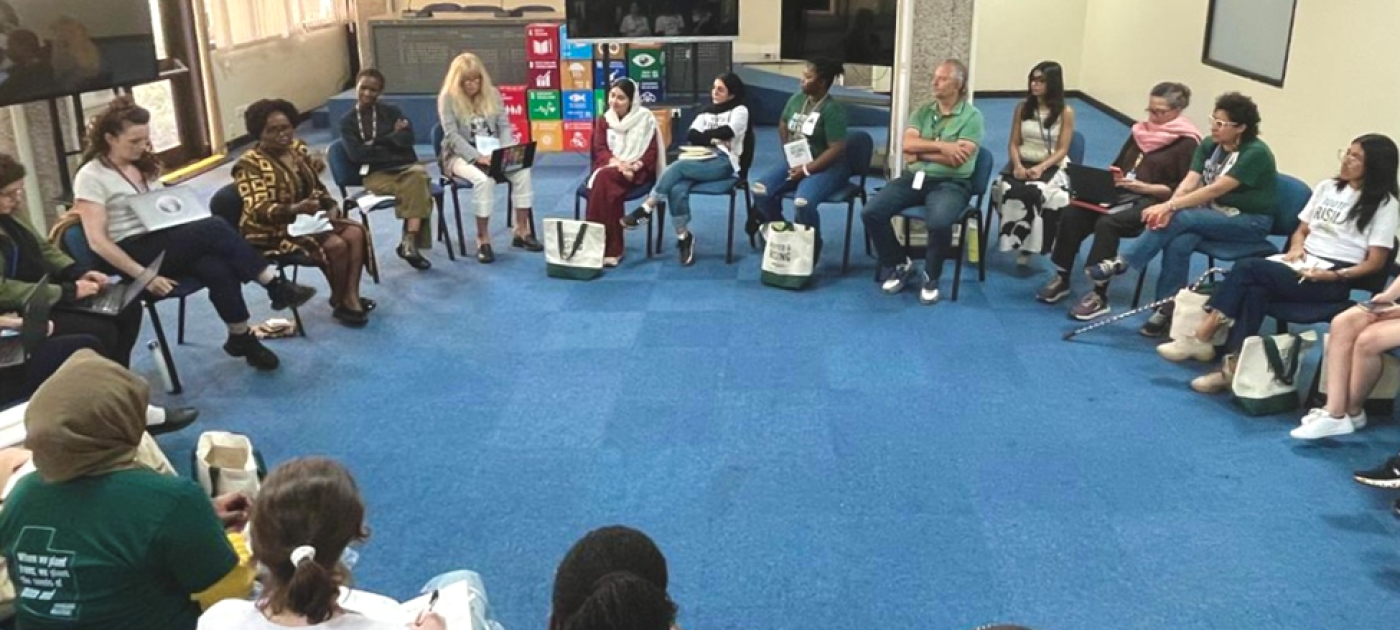
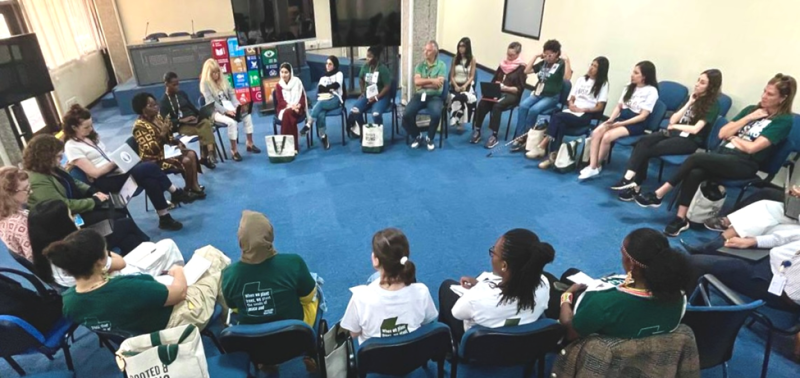
Nairobi, 3 March 2026 – To mark Africa Environment Day and Wangari Maathai Day, the UNON Press Room became a hub of intergenerational dialogue and feminist leadership – honoring the legacy of Nobel Laureate Wangari Mathaai and amplifying the voices of today’s feminist climate leaders. Organized by the Quality Assurance Section (QAS) of UNEP’s Policy and Programme Division (PPD), the event brought together 14-member strong delegation from the Nobel Women’s Initiative (NWI) "Rooted and Rising" programme and UNEP experts to bridge the gap between grassroots activism and global environmental governance.
A Legacy of Courage
Maria Dotesenko, Head of the Quality Assurance Section, welcomed the delegation and highlighted that gender equality is not a side conversation in environmental governance, but that it is central to achieving effective, lasting and just solutions. When women are included in decision making spaces, environmental policies become more responsive, more equitable and more impactful.
Patricia Mbote, Director of the Law Division, shared personal reflections on her own career journey and her engagement with the Nobel Laureate. She emphasized the critical need to support Environmental Defenders, noting that Professor Wangari Maathai’s impact goes beyond the millions of trees planted - it lives in the democratic space she carved out for women in environmental diplomacy as “environmental justice and peace are inseparable".
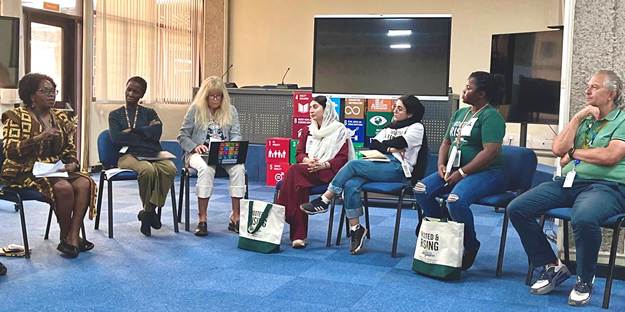 Photo credit: UNEP
Turning crisis into resilience
The dialogue moved into the urgent realities of the Conflict and Disasters Programme. Cecilia Aipira, Head of the Disasters and Conflict Branch under the Ecosystems Division, highlighted UNEP’s global footprint in responding to environmental crises.
With more than 2,500 disasters and 40 major conflicts recorded globally this century, Cecilia Aipira highlighted how UNEP is supporting governments in leveraging nature-based in conflict-and disaster affected to ensure environmental is central recovery efforts while strengthening peace and security. She emphasized the key role of the environment in cushioning impact of disasters and climate change and fosterimg cooperation.
Voices from the frontlines
Young feminist leaders brought lived experiences on building stronger bridges between grassroots and UN and posed questions for clarification and information.
UNEP colleagues from the Civil Society Unit and the Youth, Education and Advocacy Unit joined the exchange, exploring how feminist leadership can reshape treaty processes and strengthen inclusive decision-making at UNEA and beyond.
Laetitia Zobel from the Civil Society Unit highlighted the long-standing engagement of Major Groups and other civil society stakeholders within UNEP since 2001. She explained that through the Major Groups and Stakeholders forums—including the Youth Environment Assemblies—as well as through ongoing preparatory engagement and intersessional collaboration, they work to ensure the meaningful inclusion of youth, women, and Indigenous Peoples and other major groups across UNEP programmes and projects.
As a result, even grassroots organizations can also access structured pathways to influence UNEP processes. By participating through membership in, or collaboration with, larger networks and internationally operating organizations, they can become an accredited observer and are able to contribute beyond the role of a recognized observer, and actively help shape outcomes of relevant meetings and conferences.
Marianna Osipova from the Youth, Education and Advocacy Unit highlighted that engaging youth in environmental action and policy processes through formal and non-formal education is a key competency and capability over the last 10 years of UNEP’s youth programming. For example, UNEP works with the largest youth movements such as Scouts and Girl Guides on the Tide Turners youth programme which engaged nearly 1 million youth over the past 6 years in 61 countries, raising awareness about the impacts of single-use plastics, encouraging behaviour change, and supporting community action. UNEP supports young people in driving biodiversity and nature action in their communities and supports advancing green skills development and policy integration.
Since 2017, UNEP recognizes activists, entrepreneurs, and environmental innovators from age 18 to 30 for their outstanding ideas to protect the environment with the Young Champions of the Earth prize - UNEP’s flagship global youth initiative.
QAS/PPD: Driving UNEP-Wide integration of Cross Cutting Issues in Environmental Governance and Conservation.
As the primary organizer, the Quality Assurance Section (QAS) of the Policy and Program Division (PPD) continues to lead the charge in fostering these high-level, UNEP-wide engagements that integrate cross-cutting issues in its environmental work. By providing a platform where grassroots advocates like Daniela Alba-Patiño (Colombia) and Jamella Chesney (Guyana) can directly interface with UNEP colleagues on gender and youth issues, PPD ensures that the "multilateral" in multilateralism remains inclusive and grounded in lived experience.
The event concluded with key outcomes, including renewed momentum to protect environmental defenders, and shared vision of climate justice that centers women, youth and frontline communities. The closing group photo captured more than a moment, it reflected solidarity between the champions of environmental law and the rising generation of feminist climate leaders.
If you are interested in any engagement with UNEP, explore the following webpages: The Civil Society Unit, Children and Youth Major Group, Women’s Major Group and Accreditation.
#WangariMaathaiDay #RootedAndRising