Why now
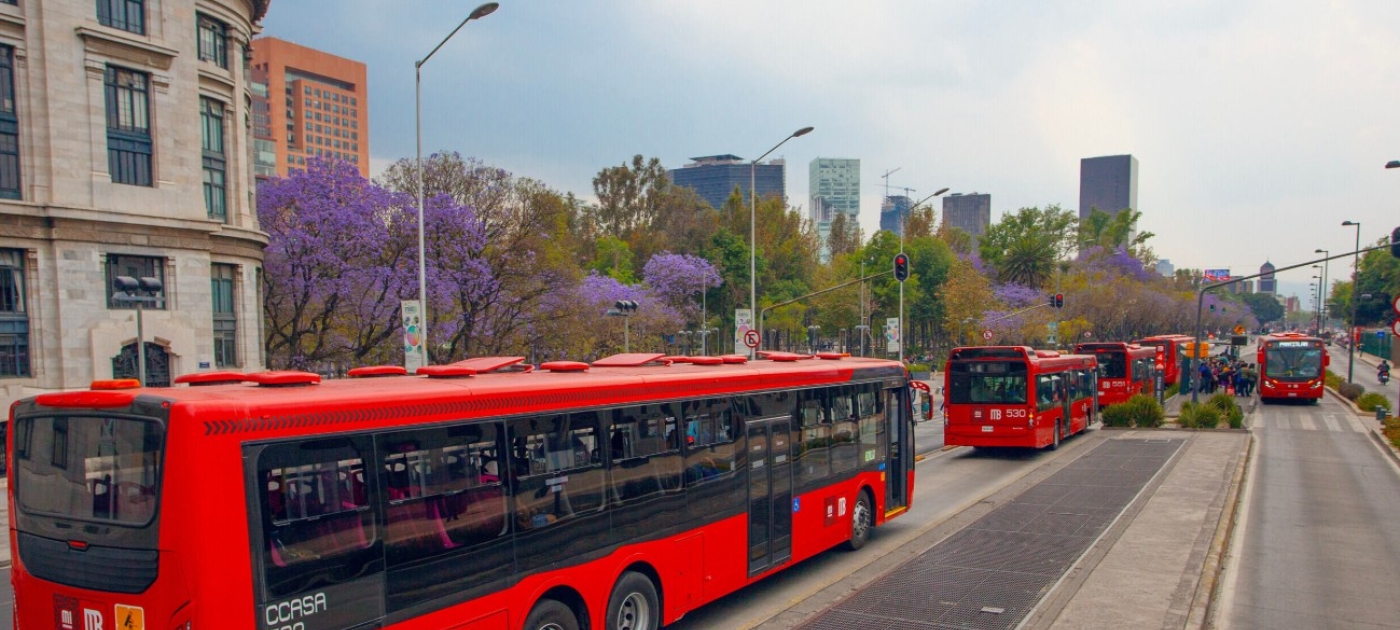
The urgency of decarbonizing urban transport is global, but the solutions vary by city. Mexico City—one of the world’s largest metropolitan areas—has become a testing ground for bold mobility interventions that address climate goals, social equity, and liveability simultaneously. Its Cablebus aerial transit system has connected remote communities to the city’s transport grid. The Metrobus BRT corridors are integrating electric fleets and digital operations platforms. And the Vía Activa programme has shown how temporary street closures can reshape residents' perceptions of public space.
At the same time, cities are grappling with their own mobility transitions—adapting infrastructure for cycling, managing the shift to electric public transport, and rethinking how data can improve planning and service delivery. The convergence of these challenges creates a natural opportunity for mutual learning.
Objectives
The workshop is designed to:
- Identify innovative, cost-effective, and inclusive mobility measures implemented in Mexican cities and assess their relevance for other urban contexts.
- Understand the enabling factors behind successful interventions—including governance models, financing mechanisms, community participation, and design decisions.
- Generate insights for applied research, pilot design, and public policy development across both countries.
- Strengthen long-term scientific cooperation between institutions on sustainable urban mobility.
Programme at a glance
The five-day programme combines academic exchange, technical field visits, institutional dialogues, and structured reflection sessions. Each day is anchored in a different dimension of sustainable urban mobility, allowing participants to move between classroom-style learning and direct observation of real-world systems in operation.
Day 1 – Introduction and knowledge exchange
Venue: Tecnológico de Monterrey Presentations on the ACCESS project's Urban Living Lab approach and urban mobility challenges in Germany, followed by Mexican counterparts on Cablebus, Metrobus, and Vía Activa. Afternoon: academic presentations and visit to the Distrito Tlalpan Urban Laboratory.
Day 2 – Metrobus, electrification, and digitalisation
Visit to Metrobus operations covering BRT fleet electrification, charging infrastructure, and digital systems including fare collection and real-time monitoring.
Day 3 – Cablebus and Urban Utopías
Extended visit to a Cablebus line covering planning, financing, governance, and connectivity for marginalised communities, followed by Utopía Iztapalapa and its community-centred approach to public space.
Day 4 – Active mobility and public space
First-hand experience of Vía Activa and tactical urbanism interventions, plus Mexico City's cycling infrastructure and the ECOBICI bike-sharing system. ACCESS project exchange session.
Day 5 – Public transport and synthesis
Venue: WRI Mexico
Public transport innovation and digitalisation, with case studies from Mérida and Hermosillo. Closing synthesis of insights and future collaboration opportunities.
Target Audience
The workshop is designed for approximately 25–30 participants drawn from:
- Urban mobility, transport, and urbanism organisations
- Technical teams working on ACCESS project pilots
- Research institutions and academics from Germany and Mexico
Key partners
- Wuppertal Institute for Climate, Environment and Energy – Lead organiser, anchoring the workshop through its Urban Living Lab and ACCESS programme activities.
- United Nations Environment Programme (UNEP) – Leading the ACCESS project and global efforts on sustainable urban mobility and digitalization.
- Leibniz Centre for Agricultural Landscape Research (ZALF) – Supporting partner for the Germany–Mexico research exchange.
- Tecnológico de Monterrey – Academic host for the opening day, contributing research on urban mobility and logistics.
- ITDP Mexico – Technical partner for active mobility and public space sessions.
- WRI Mexico – Host for closing sessions on public transport innovation and digitalisation.
About ACCESS
ACCESS—Accelerating Access to Low-Carbon Urban Mobility Solutions through Digitalization—is a €20 million joint initiative working across six Latin American countries to transform how cities approach sustainable transport.
The five-and-a-half-year project (2024–2029), led by UNEP and funded by Germany’s International Climate Initiative (IKI), brings together nine leading organizations—including UNDP, UN-Habitat, ITDP, ICLEI, the Wuppertal Institute, UEMI, —to deploy digital solutions that measurably reduce greenhouse gas emissions while improving urban mobility.
Operating in Argentina, Brazil, Colombia, Ecuador, Mexico, and Peru, ACCESS supports demonstration pilots in cities ranging from Buenos Aires to Quito, where digital tools are being deployed to optimize public transport, enable modal shifts to cycling and walking, and improve freight logistics. Across the region, cities are using data dashboards, real-time monitoring, and algorithmic systems to make evidence-based decisions about sustainable mobility investments.
For more information, please contact:
Rocío Ruelas: rocio.ruelas.gast@wupperinst.org
Constanza Urbina: constanza.urbina@wupperinst.org