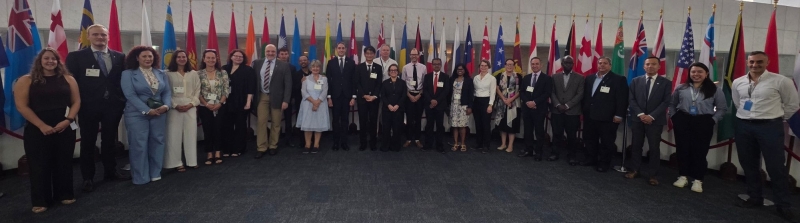
A new chapter for the Regional Seas Programme: Launch of the updated indicators framework
4-6 November, Bangkok, Thailand - Across the world’s oceans, clear and reliable indicators are helping countries understand and manage the health of their marine and coastal ecosystems. In the Baltic Sea, scientists track nutrients and water clarity to spot areas at risk of algal blooms. In the Mediterranean Sea, long-term measurements of contaminants in sediments and fish identify pollution hotspots, beach-litter surveys reveal where waste is accumulating, and monitoring of key species like seabirds, cetaceans, and seagrasses shows how biodiversity is responding to human pressures. Across both regions and many other regional seas, these indicators guide protection, restoration, and policy actions where they are most needed.
Recognizing the value of such indicators, the Regional Seas Programme has adopted a new framework of 22 indicators to strengthen how Regional Seas Conventions and Action Plans assess, track, and communicate the condition of the marine and coastal environment. Formally endorsed on 5 November 2025 by the Coordinators and Executive Secretaries of the Regional Seas Conventions and Action Plans (Regional Seas), the framework reflects a shared commitment to enhance regional cooperation, improve reporting, and support evidence-based decision-making.
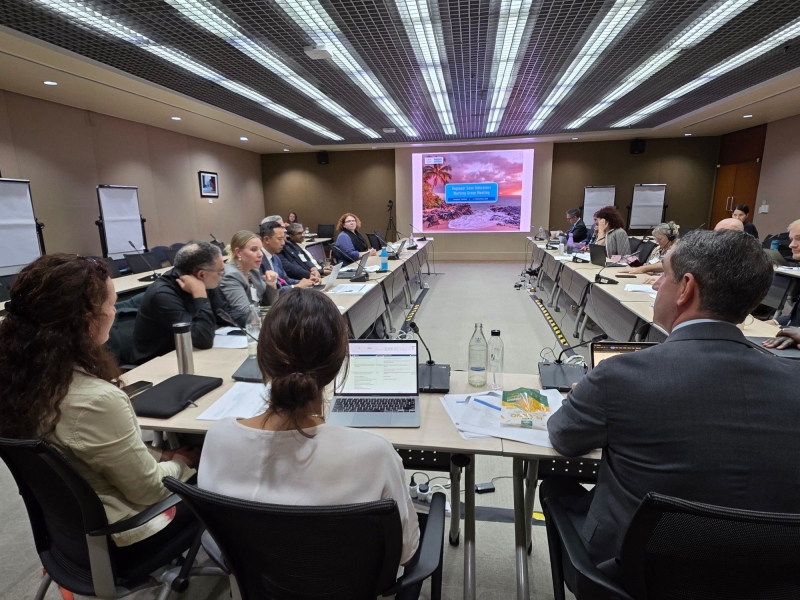
Meeting participation
The workshop brought together more than 30 participants from 14 Regional Seas (Abidjan Convention, Bucharest Convention, Cartagena Convention, Coordinating Body on the Seas of East Asia (COBSEA), Helsinki Convention, Kuwait Convention, Lima Convention, Nairobi Convention, Northwest Pacific Action Plan (NOWPAP), Secretariat of the Pacific Regional Environment Programme (SPREP), South Asia Co-operative Environment Programme (SACEP), the United Nations Environment Programme / Mediterranean Action Plan (UNEP/MAP), The Black Sea Commission and Tehran Convention). Also in attendance were UNEP colleagues, the Convention on Biological Diversity, the Basel, Rotterdam and Stockholm Conventions Secretariat, UN Biodiversity, UNEP-WCMC, GRID-Arendal, and other partners.
The meeting was opened by Dr. Pinsak Suraswadi, Director General of Thailand’s Department of Marine and Coastal Resources, Marlene Nilsson, Deputy Regional Director of UNEP ROAP, and Alberto Pacheco Capella, Chief of the Regional Seas Branch, Ecosystems Division, UNEP.
Meeting proceedings
The first two days focused on technical deliberations on methodology, policy relevance, and data readiness across regions. Participants reviewed the existing framework, discussed gaps, and reached consensus on the revised indicator set and the way forward.
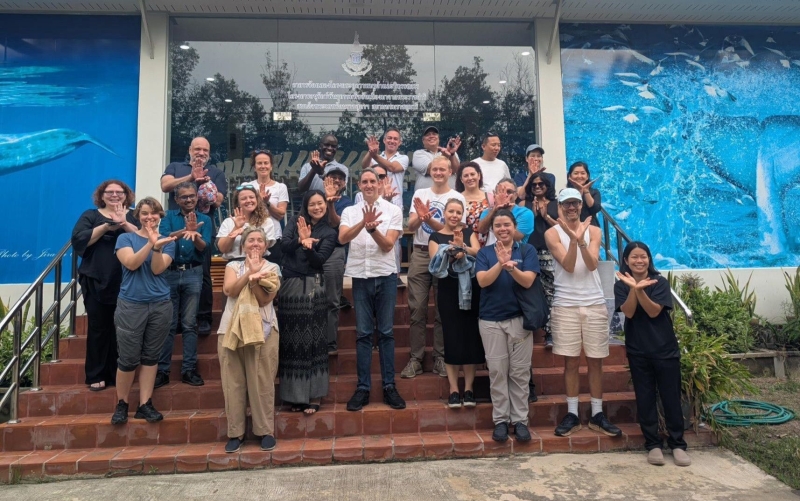
On the third day, participants undertook a field visit that showcased community-led and government-supported initiatives on sustainable fisheries, marine debris management, coastal restoration, and marine research.
Key outcomes
-
A strengthened indicators framework
i) Addressing the three planetary environmental crises and challenges
The updated Regional Seas Indicator Framework is now organized fully in line with UNEP’s three planetary environmental crises and challenges Biodiversity, Pollution, Climate Change, with an additional cross-cutting category for integrated ecosystem-based approaches. This restructuring provides a clearer scientific logic, strengthens alignment with global commitments including the Kunming - Montreal Global Biodiversity Framework, the 2030 Agenda for Sustainable Development, the Global Framework on Chemicals, the BBNJ Agreement and relevant MEAs, and enables more coherent regional–global reporting.
ii) A refined priority structure distinguishing core, complementary and removed indicators.
The 22 indicators have been consolidated into a clearer priority structure that better reflects regional relevance and reporting feasibility: Core indicators represent essential elements relevant to all Regional Seas and form the agreed minimum set for programme-wide reporting. Complementary indicators provide flexibility for regions to address specific ecological characteristics, monitoring capacities or policy priorities. Removed indicators streamline the framework by eliminating legacy elements that were duplicative, insufficiently aligned with global frameworks or no longer regionally applicable. This refinement enhances clarity, reduces reporting burden and supports more consistent regional environmental assessments.
iii) A four-tier method readiness system supporting harmonization and future development.
The framework now introduces a structured Tier I–IV system to clarify methodological readiness and guide future technical work:
- Tier I: Globally harmonized method available and suitable for regional application.
- Tier II: Global method exists but requires further review or adaptation for regional implementation.
- Tier III: Regionally established methods exist; harmonization at global level is not required or not desirable.
- Tier IV: Methodologies are still under development or in conceptual/pilot phase.
This tiered approach provides a transparent basis for planning methodological refinement, supporting the work of the forthcoming Indicator Working Group, and guiding regional and national capacity-building efforts over time.
- Advancing the Establishment of a Regional Seas Indicators Working Group
Participants reached consensus on the need to establish a Regional Seas Indicators Working Group to support the continued refinement, harmonisation and implementation of the updated indicators. While the Working Group will be formally established through follow-up consultation with Regional Seas Conventions and Action Plans, the meeting outlined several foundational elements:
- Purpose: to provide a coordinated platform for methodological refinement, indicator development, and alignment with global processes.
- Initial tasks: to develop the Group’s mandate, terms of reference, governance arrangements and a phased workplan.
- Scope: to support coherence across regions in relation to the Kunming–Montreal Global Biodiversity Framework, the 2030 Agenda for Sustainable Development, the Global Framework on Chemicals, and the Biodiversity Beyond National Jurisdiction Agreement.
The Barcelona Convention and the Bucharest Convention expressed willingness to serve as Chair and Co-Chair, respectively, subject to confirmation through the Working Group’s terms of reference and consultation with Contracting Parties.
A stronger foundation for regional ocean governance
The updated Regional Seas Indicators Framework will now serve as the consolidated technical foundation for programme-wide reporting and for implementing the Regional Seas Strategic Directions 2026 -2029.
Regional Seas Conventions and Action Plans will now use this framework as a basis for consultation with their Contracting Parties towards its formal adoption and utilisation. This is particularly relevant to their State of Marine Environment Reports.
The framework marks a significant advance in strengthening coherence, comparability, and the visibility of regional and national action for the protection and sustainable management of the ocean.
Next Steps
Building on the meeting’s outcomes, the Regional Seas Programme will work towards finalizing a consolidated version of the indicators that incorporates all inputs and the agreed revisions. The finalized framework will then be presented to the Regional Seas for integration into regional reporting processes.
Background
The Regional Seas indicators were developed to provide a shared foundation for assessing and reporting on the state of the marine and coastal environment across all Regional Seas Conventions and Action Plans.
With the adoption of the Kunming–Montreal Global Biodiversity Framework, the Global Framework on Chemicals, the ratification of the Biodiversity Beyond National Jurisdiction Agreement, and ongoing implementation of the 2030 Agenda for Sustainable Development, the indicators required updating to align with global commitments and the Regional Seas Strategic Directions 2026–2029.
Consultations, mapping exercises, surveys, and two technical sessions informed the revisions. This meeting consolidated those efforts into an updated operational framework that reflects a shared vision and strengthened cooperation across the Regional Seas Programme.
For more information please contact:Regional Seas Programme.