• Overview
  • Organizers
  • Documents

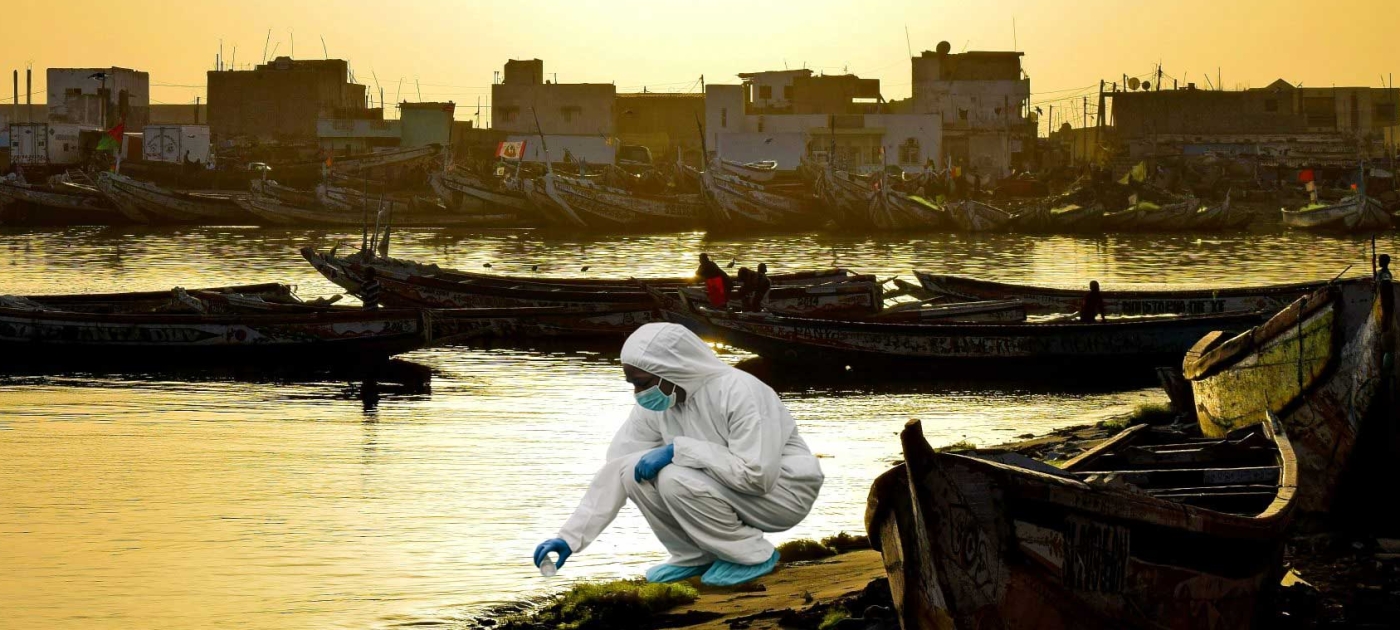
The United Nations Environment Programme (UNEP), in collaboration with the World Health Organization (WHO) and the United Nations University Institute for Water, Environment and Health (UNU-INWEH), will host the West and Central Africa Regional Workshop on Wastewater Surveillance for Environmental and Public Health from 21 to 23 January 2026 in Dakar, Senegal.

This workshop, part of UNEP’s Wastewater Surveillance for Africa (WWS) initiative, will bring together government officials, researchers, and key partners from West and Central Africa countries. Over three days, participants will explore how wastewater surveillance can serve as a powerful tool for public health protection, environmental management, and pandemic preparedness.

Through expert presentations, practical training, and group discussions, the workshop will focus on strengthening regional capacity, sharing best practices, and fostering collaboration across countries. Key topics will include the development of national wastewater surveillance systems, harmonized approaches to monitoring, capacity-building in low-resource settings, and new opportunities for surveillance at airports, aircraft, and ports.

The workshop also aims to identify regional capacity needs, build stronger networks for data sharing, and develop a harmonized roadmap for scaling wastewater surveillance across Eastern Africa.

Supported by the European Union Health Emergency Preparedness and Response Authority (HERA), the event will provide a crucial platform for knowledge exchange and coordinated action. 

Participation is by invitation only.

Organised by UNEP and UNU-INWEH, in collaboration with the World Health Organization (WHO) and partners.

UNEP: The United Nations Environment Programme (UNEP) is the leading global environmental authority that sets the global environmental agenda, promotes the coherent implementation of the environmental dimension of sustainable development within the United Nations system, and serves as an authoritative advocate for the global environment.

The Global Wastewater Initiative:  The Global Wastewater Initiative (GWWI) is a multi-stakeholder partnership launched by UNEP in 2013. Its purpose is to address wastewater-related issues, prompt coordinated action and encourage new investments for sustainable wastewater management. The GWWI intends to bring about a paradigm shift in the way wastewater is seen, from waste to a resource, and prevent further pollution and degradation of our aquatic environment.

Join the partnership: click here to apply!

WHO: The World Health Organization is a specialized agency of the United Nations which coordinates responses to international public health issues and emergencies. It is headquartered in Geneva, Switzerland, and has 6 regional offices and 150 field offices worldwide.

With financial support from:

EU DG HERA: The Health Emergency Preparedness and Response Authority’s (HERA) mission is to prevent, detect, and rapidly respond to health emergencies. HERA was launched as a new European Commission Directorate-General on 16 September 2021, and carries out the Commission’s policies related to health preparedness and crisis response and ensuring the resilience of healthcare systems across Europe.

United Nations University Institute for Water, Environment and Health (UNU-INWEH):  UNU-INWEH is the UN’s think tank on water, dedicated to providing knowledge-based solutions to global water challenges. Established in 1996 and hosted by the Government of Canada, UNU-INWEH works at the intersection of science, policy, and capacity development to support countries in achieving water-related Sustainable Development Goals. Through research, training, and strategic partnerships, the institute focuses on advancing integrated water management, strengthening water governance, and promoting evidence-based approaches to address pressing issues such as water security, climate change impacts, and pollution.