Preventing, controlling and managing pollution is central to improving health, human well-being and prosperity for all.
UNEP drives capacity and leadership in sound management of chemicals and waste while working to improve ways to reduce waste through circularity and pollutants released to the air, water, soil and the ocean.
25 Feb
2026
15:41
Waste trafficking driving toxic pollution and harming public health, says UNODC
Credit: Unsplash/Evan Demicoli
Illegal waste flows are causing economic, public health and environmental damage, especially in low-income countries, while a patchwork of regulations enables criminals to evade punishment, according to a new analysis from the UN Office on Drugs and Crime (UNODC) released today.
In “Waste Crimes and Trafficking”, UNODC examines the five main illegal waste trafficking categories: electrical/electronic waste (e-waste), plastic waste, end-of-life-vehicles and engines, metal and metal bearing wastes, and waste mixtures, as well as the modus operandi of the organized crime groups and corporations involved. It finds that legislative gaps, limited enforcement capacities, lack of traceability and low penalties are all facilitating a trade that some estimate to be worth billions of dollars.
02 Feb
2026
16:37
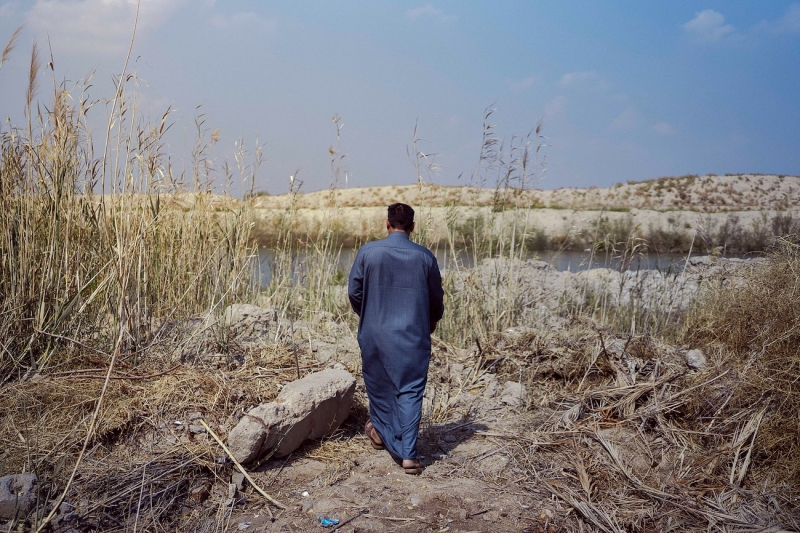
How Reed Wetlands Are Protecting Lives Amid Iraq’s Water Shortage
A constructed wetland is helping mitigate challenges posed by, among others, drought, pollution and extreme heat, benefiting more than 30,000 people and offering a practical, sustainable solution for cleaning polluted water and restoring dry wetlands.
11 Dec
2025
19:17
New UN report: Up to 142 million people are already employed in the circular economy
Repair and maintenance account for 46 per cent, followed by manufacturing (24.5 per cent) and waste management (8 per cent). Industries that are crucial to advancing the circular transition – such as construction and mining – have a very low share of circular employment, and the report stresses the need for targeted policies to “green” jobs in these sectors.
The report draws on the expertise of an international advisory board and benefits from close collaboration with the UN Partnership for Action on Green Economy (PAGE), an interagency programme that brings together the expertise of five UN agencies: ILO, UNEP, UNDP, UNIDO and UNITAR.
10 Dec
2025
18:46
Launched at UNEA-7: New task force to coordinate UN action on critical energy transition minerals
Credit: UNEP
As the world transitions from fossil fuels to renewable energies, the demand for energy transition minerals is set to almost triple by 2030. There will be no energy transition without minerals. So how can we balance climate goals, development needs, and planetary health?
The report of the Secretary-General’s Panel on Critical Energy Transition Minerals provided a roadmap. The UN is now moving into action. The United Nations Task Force on Critical Energy Transition Minerals, launched at UNEA-7, will support global action to implement the UN Guiding Principles on Critical Energy Transition Minerals.
The task force, endorsed by the UN Secretary-General, is co-chaired by the UN Environment Programme (UNEP), the United Nations Conference on Trade and Development (UNCTAD) and the United Nations Development Programme (UNDP).
“Working across the UN agencies matters and matters greatly. We need to get away from the high-metabolism linear economy and lean into circularity, and mine that which is today just garbage”, said UNEP Executive Director Inger Andersen. Watch the briefing to learn more.
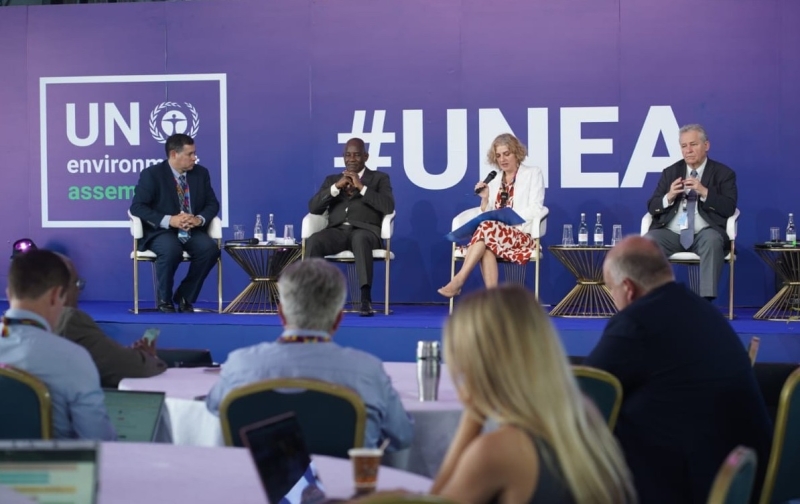
Industries and experts call for ‘transparency of product information’ to tackle pollution
Credit: UNEP
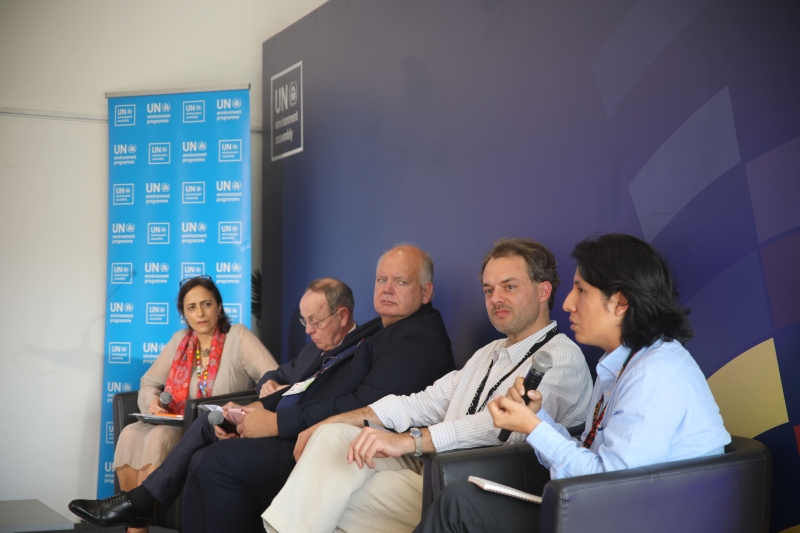
At UNEA-7, governments, industry leaders and civil society underscored that full, reliable product information is essential for reducing pollution and waste and for advancing global efforts on safer chemicals management. One event highlighted how credible ecolabels help counter greenwashing and guide safer markets, with Isabella Huang-Loh of the Global Ecolabelling Network noting that “products must truly meet rigorous environmental standards.”
Another session focused on Digital Product Information Systems, which provide data on materials, chemicals and product lifespans to enable repair, reuse and safer recycling. Speakers emphasized that comparable, interoperable data and strong partnerships are crucial reflecting a core principle of the Global Framework on Chemicals and UNEP’s wider pollution agenda: transparency is fundamental to building cleaner, safer and more circular value chains.
09 Dec
2025
18:02
Global Plastics Hub: From data to solution
Since its launch on World Environment Day 2025, more than 2,000 stakeholders have signed up to the Global Plastics Hub, a one-stop access to data, resources, and expert networkacross the plastics lifecycle, enabling evidence-based and collaborative action worldwide.
The Global Plastics Hub was presented to UNEA-7 attendees today to showcase the Hub’s key functionalities and data, and explore its future evolution along with Member States and members of the Global Partnership on Plastic Pollution and Marine Litter (GPML), the largest global multi-stakeholder partnership on plastics, for which UNEP provides secretariat services. Watch the session.
New report: Stocktake of Sustainability Standards and Initiatives in the minerals and metals sector
Credit: pexels/Tom Fisk
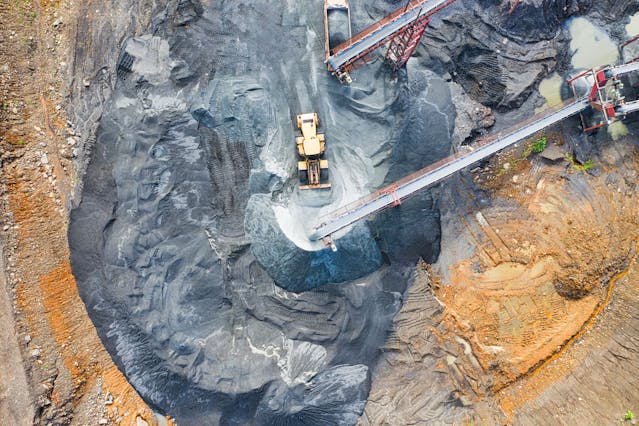
Amid the global rising demand for minerals and metals, a new report maps over 100 Sustainability Standards and Initiatives operating across value chains to clarify how these interact with laws, regulations and policy commitments, and how they might enhance environmental governance rather than undermine it. The study finds that while these standards and initiatives are increasingly used to promote environmental and social performance, their rapid proliferation has created a fragmented and often confusing landscape for governments, companies and communities. To address these challenges, the report identifies 15 hallmarks of effective sustainability standards across governance, scope, performance assurance, review mechanisms, and viability. Learn more about what these standards and initiatives are and how they can strengthen environmental governance?
01 Dec
2025
18:31
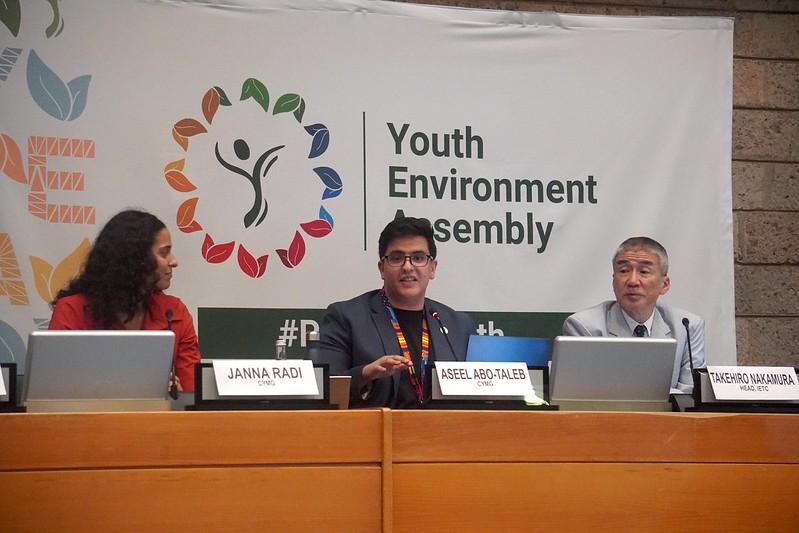
Global Waste Management Outlook for youth presented at the Youth Environment Assembly 2025