
The Global Interlaboratory Assessment on Persistent Organic Pollutants (POPs) and Mercury, Fifth Round, is launched in 2026.
Public laboratories, academic and research institutions, non-profit organizations, and qualified private laboratories with state-of-the-art facilities that are engaged in the environmental and/or biological monitoring of POPs and mercury have been invited to participate. POPs listed in the annexes of the Stockholm Convention until 2025 and total mercury will be covered in this round.
Interlaboratory assessments are crucial for ensuring comparability and harmonization of POPs and mercury monitoring data among global, regional, and local laboratories. These assessments are key to evaluating the analytical performance of participating laboratories in analyzing POPs and mercury in environmental and biotic samples.
 Participation in international intercalibration assessments is considered a prerequisite for existing and well established as well as for newly set-up laboratories and coordinating reference lab / national lab mirror analysis is important to further support the establishment of long-term analytical capacity and self-sufficient laboratories.
The Laboratory Databank identifies operational laboratories worldwide and provides information on their capabilities to analyse Lead, POPs and mercury.
The interactive Dashboard gives an overview of the distribution of the participation of the laboratories, per region over the rounds, showing how many labs registered to be evaluated and how many submitted results for the assessment, as well as the number of countries where the laboratories are located.
Previous assessments
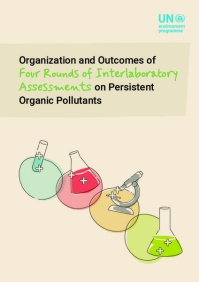
The first round of interlaboratory assessment was performed from 2010 to 2011 on the analysis of 12 initial POPs listed under the Stockholm Convention with 104 laboratories registered from all UN regions. 111 laboratories participated in the second round, from 2013 to 2014 and analysed also the nine new POPs listed in 2009. The third round interlaboratory assessment completed its work in 2017 with 175 laboratories. The fourth round launched in 2018 with 147 laboratories registered and concluded mid-2019. In total, 289 laboratories participated in the four rounds with eight test solutions and eight test matrices, covering all UN regions including 1/3 of commercial labs. Between 38 to 55 countries participated in each of the four rounds with a total of over 2950 samples analysed. Key findings include:
- The interlaboratory assessments, which aimed to assist laboratories to improve the quality of their analyses and to provide a measure of the interlaboratory comparability, shows that about 80% of labs do not have the necessary experience to analyze a large number of POPs and cannot generate global comparable and reliable data for the effective evaluation.
- There is a need to continue working on improving the quality of POPs analysis worldwide. This is evident considering that at each meeting of the COPs new POPs are included to the Convention, and there are already listed POPs, such as polychlorinated naphthalenes (PCNs) and chain chlorinated paraffins (SCCPs), which were not included in the interlaboratory assessment.
- Laboratories that participated more frequently and included a broader spectrum of POPs and test matrices improved their performance or performed better than laboratories that participated only once.
- There were some limitations with the analyses of certain POPs, regionally, for example the analyses of PFAS in Africa and GRULAC, additional to the analyses of brominated flame retardants in Africa.
- Regular interlaboratory assessment including different combinations of POPs and matrices, are for control of assessment, the routine analyses of the laboratories should be the same used for generating and reporting results.
- To improve and ensure better POPs analyses, a good quality of laboratories is needed including the instrumentation as well as all the aspect of extraction, clean-up steps, skilled personnel, material, and consumables (certified standards, high-purity solvent, and high-quality gases). It is also important throughout normal operations to apply self-control, quality assurance measures and quality controls charts.
- To ensure sustainability and maintenance of the infrastructure and instrument the laboratories need to follow a business plan of routine POPs analyses.
WHY POPS . GCMP OVERVIEW . DATA GENERATION . CAPACITY BUILDING . INTERLAB . HISTORY . REPORTS