



How cooperation between customs and environmental authorities and stronger environmental enforcement can help turn climate ambition into real-world results. This article was prepared by UNEP OzonAction in collaboration with the World Customs Organisation (WCO)
As the world marks World Environment Day 2026 (5 June), and its global call to action, #NowForClimate, one message is increasingly clear: climate ambition alone is not enough. To deliver safer, healthier and more prosperous societies, implementation and enforcement must keep pace with commitment.
Climate impacts are already here
Climate change is no longer a distant or abstract concept. It is already affecting communities across every region. In Western Europe, temperatures this May rose around 12–13°C above seasonal norms. Pacific and Caribbean island states continue to face rising sea levels and increasingly severe storms. South Asia has experienced record pre-monsoon heat, while East Africa is confronting the compounding effects of drought and floods. These impacts make clear that climate action must translate into concrete results.
Rising temperatures are also driving a rapid increase in demand for cooling, now one of the fastest-growing uses of energy worldwide. Meeting this demand sustainably is not only an energy challenge, but also a regulatory and enforcement challenge. This is where the Montreal Protocol on Substances that Deplete the Ozone Layer and its Kigali Amendment are especially important.

Why the Montreal Protocol matters for climate action
Nearly four decades after its adoption, the Montreal Protocol stands as a model of international cooperation and science-based policymaking. Its achievements are significant: a dramatic reduction in the production and consumption of ozone-depleting substances, technology transfer that has supported economies and livelihoods, and stronger protection for human health and the environment.
With the adoption of the Kigali Amendment in 2016, the Protocol also became a powerful climate instrument. The Amendment extended the scope of the Protocol to hydrofluorocarbons (HFCs), potent greenhouse gases whose global warming potential can in some cases be up to 14,800 times higher than CO₂. Measures taken by Parties to phase-down HFCs represent one of the fastest and most impactful climate mitigation opportunities available today, with the potential to avoid up to 0.5°C of global warming by the end of this century.
But these gains are not automatic. They depend on continued commitment and effective implementation. They also depend on enforcement.
Customs as frontline enforcers
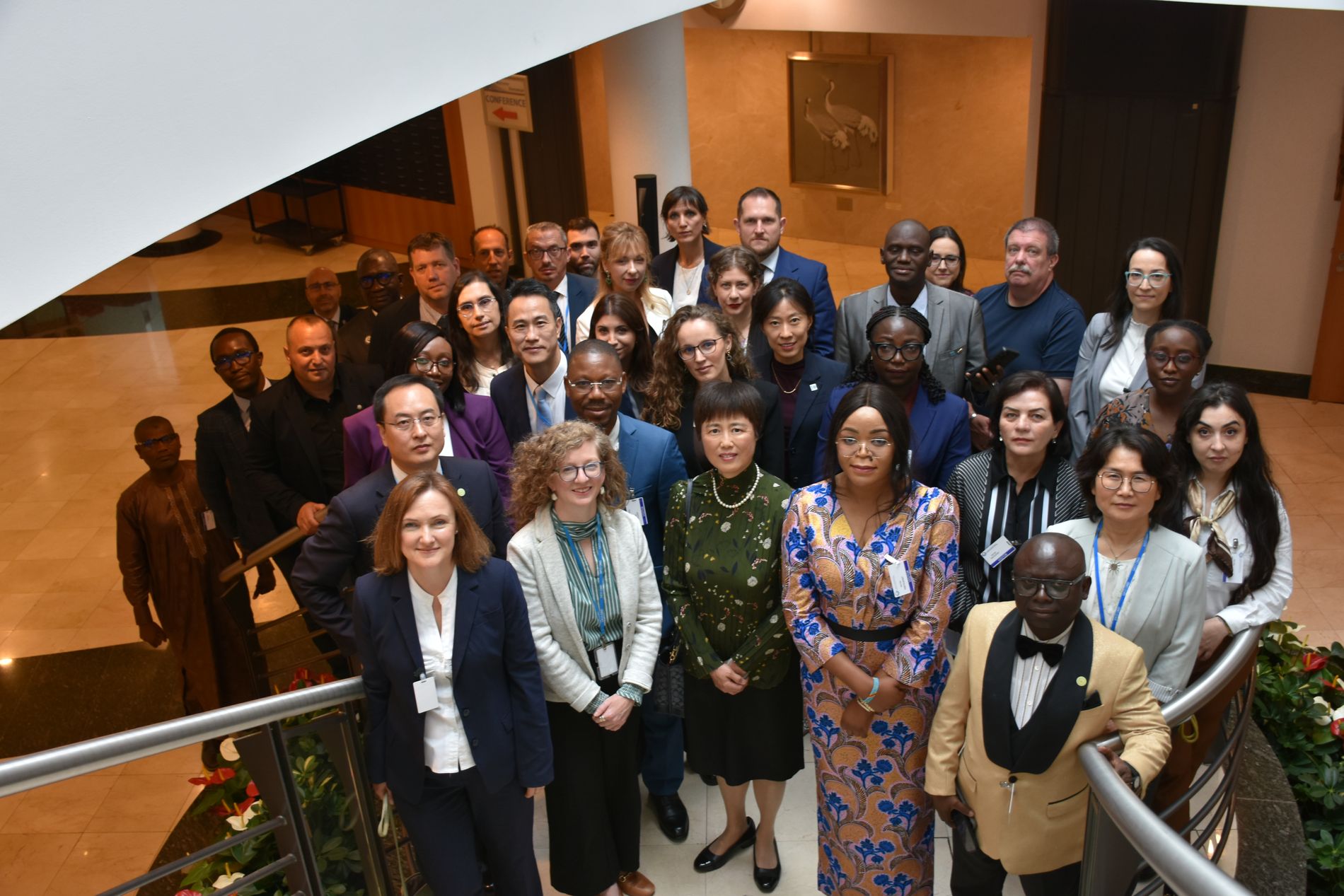
This week, around 200 in-person and online participants from customs administrations, environmental authorities, international organizations and law enforcement agencies gathered at the World Customs Organization to discuss the evolving nature of illegal trade, environmental crime and its implications for global environmental governance.
Illegal trade remains a significant challenge. Illegal trade in ozone-depleting substances (ODS), hydrofluorocarbons (HFCs), wildlife, timber and other environmentally sensitive commodities undermines regulatory frameworks, distorts legitimate trade and deprives governments of resources needed to support sustainable and climate-resilient development. Cases of illegal trade may lead to enforcement measures such as administrative offences and civil liability and violations, but can also be intertwined with other forms of transnational organized crime and financial crimes.
Customs administrations, therefore, play an increasingly important role as frontline actors in implementing the Montreal Protocol and other multilateral environmental agreements. By strengthening border controls, they help protect the environment, safeguard the integrity of global supply chains and contribute to broader efforts to uphold the rule of law and combat organized crime.
Strengthening enforcement for results
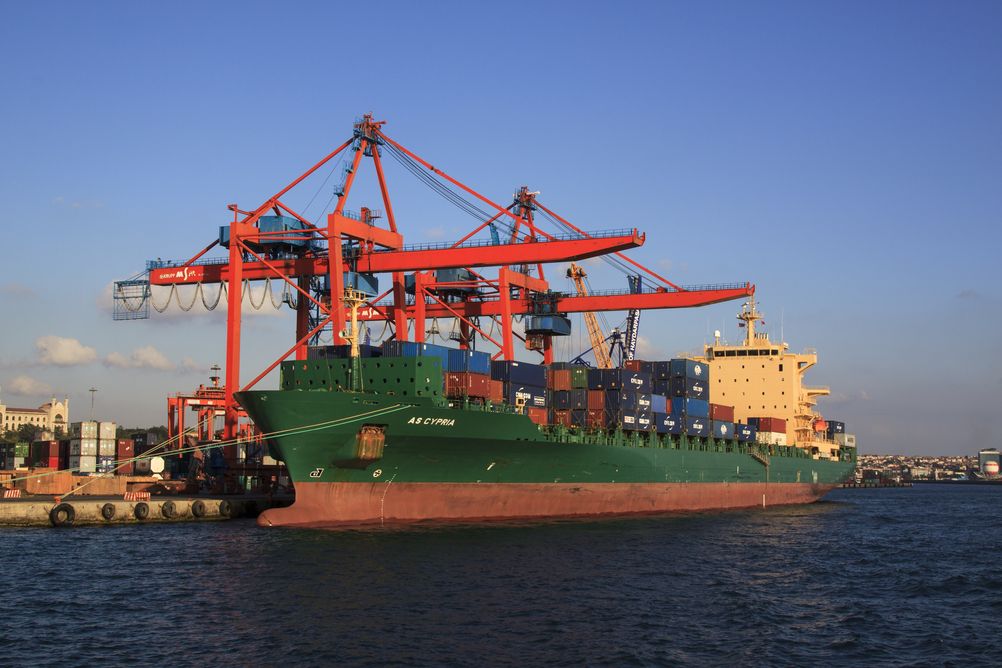
Under the Montreal Protocol, customs officers cooperate with National Ozone Units and quota and licensing authorities in the effective functioning of licensing and quota systems, identify suspicious shipments, and prevent the illegal movement of controlled refrigerants and equipment. Yet the enforcement landscape is becoming more complex. Supply chains are evolving with an increasing number of substances controlled under the Montreal Protocol and blends; these substances may be misdeclared, documentation can be falsified, and illegal transboundary movements continue to challenge national authorities. At the same time, customs administrations are increasingly required to monitor end-of-life refrigerants destined for disposal, alternative refrigerants, and equipment containing or relying on substances may be banned or restricted by respective countries.
As developing countries approach the 2030 HCFC phase-out targets and implement the HFC phase-down schedule, stronger enforcement capacity is essential. Without it, environmental gains under the Montreal Protocol could be weakened. With it, Parties can continue to deliver both ozone-layer protection and climate benefits.
Enforcement of the Montreal Protocol requires a whole-of-government and whole-of-society approach. It depends on strong international partnerships, effective information exchange, and sustained capacity building. Environmental enforcement is not only a matter of compliance, but it is also a critical part of building climate resilience, supporting the transition to sustainable economies, and protecting the natural resources on which future generations depend.
From cooperation to climate action
As the world marks World Environment Day 2026, cooperation between WCO and UNEP sends a strong signal in support of environmental enforcement and climate action. By strengthening cooperation across borders and institutions, National Ozone Units, focal points to the Montreal Protocol, and customs administrations are helping to ensure that global environmental commitments lead to tangible results.
Climate action does not end with commitments on paper. It depends on effective enforcement, strong institutions and cooperation across borders to turn ambition into measurable impact.