From emerging pathogens to antimicrobial resistance to water pollution, many threats to human, animal and environmental health can spread quietly before they are detected.
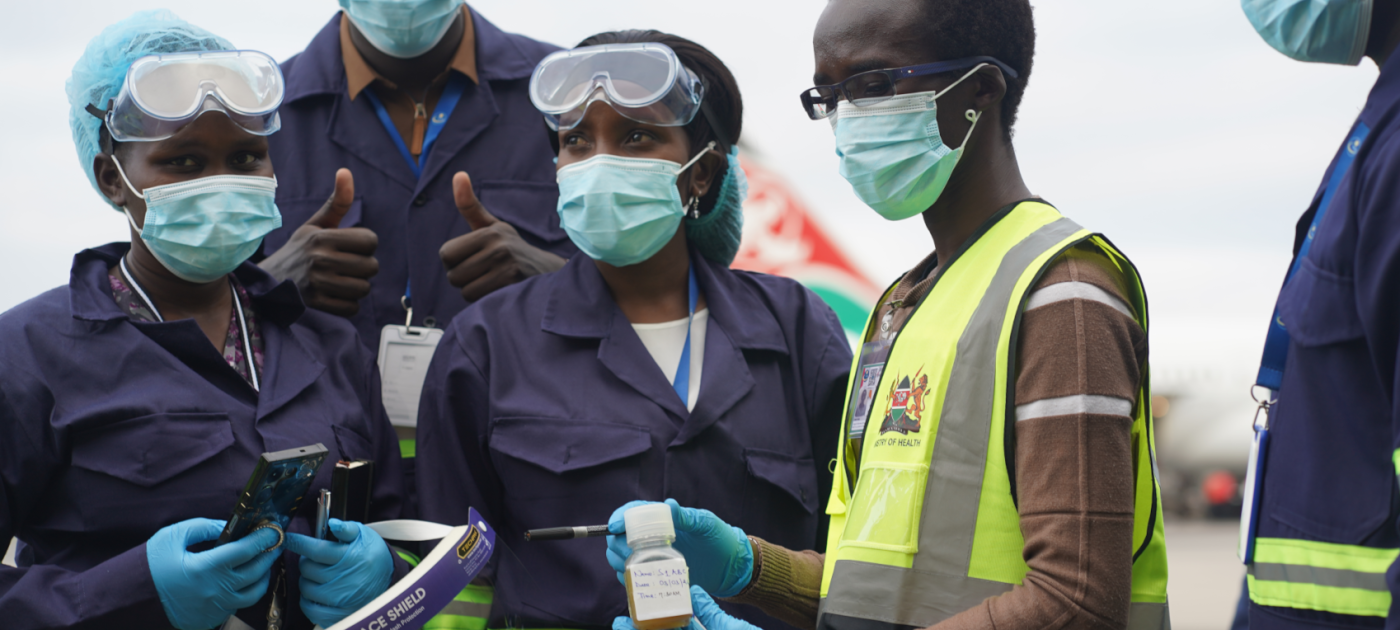
To respond to this challenge, the United Nations Environment Programme (UNEP) and partners are supporting an effort to monitor wastewater at African airports and seaports. This water can contain early signals of potential public and environmental health threats.
The push is part of the Wastewater Surveillance for Africa Initiative. Here’s a closer look at the programme, which emphasizes a One Health approach, taking into account the wellbeing of humans, animals and the environment.
What is the Wastewater Surveillance for Africa Initiative?
It is a UNEP-led initiative supported by the European Union Health Emergency Preparedness and Response Authority that helps African countries strengthen wastewater and environmental surveillance (WES). The aim is to turn WES data into faster, practical public health and environmental action. It is implemented together with African countries and key partners such as the Africa Centres for Disease Control and Prevention, World Health Organization, International Livestock Research Institute, United Nations Institute for Water, Environment and Health, and others.
What activities is UNEP conducting at airports and seaports?
UNEP together with regional and national partners is starting WES activities in travel and trade hubs by sampling wastewater and related environmental flows. These samples can help identify signals linked to public health risks and environmental pressures to support timely coordination and response. The focus is on trends and early warning and no individual level data on persons, flights, ships or travelers are collected or analyzed.
Why are airports and seaports part of this work?
Airports and ports are where travel and trade move quickly across borders. That makes them useful places to look for early signals of potential public health and environmental risks, before problems become widespread. They also bring together large numbers of people, services and shared sanitation systems, which means wastewater can provide a “sentinel” signal of what may be circulating across borders, or along a travel and trade corridor.
Where are these activities taking place?
Sampling has started from aircraft and airport-related wastewater streams in Rwanda and at Jomo Kenyatta International Airport in Nairobi. Sampling points have also been identified at the Port of Mombasa. In the near future, UNEP also aims to support similar work with partners in South Africa at O.R. Tambo International Airport and potentially other countries across the African continent.
What kinds of risks can WES help detect?
It can reveal incoming pathogens to a region and country, as well as identify types of already circulating pathogens that may be associated with travel. Also, WES can uncover patterns linked to water quality at beaches and in fishing areas.
It can also help track two silent pressures: antimicrobial resistance, when germs learn to survive antibiotic medications, and medicines in water, including antibiotics. If these signals start rising over time in port wastewater and near key outflows, it can be a warning that the ecosystem is strained. That allows partners to manage practical issues – like leaks, poor waste handling, or wastewater mixing with stormwater during heavy rains – before pollution spreads into coastal waters. It is also a great tool to understand the health of sewered and non-sewered communities.
How does this connect to One Health?
One Health recognizes that human health, animal health and the environment are closely interlinked. WES sits at that intersection because it can reflect what is happening across communities and populations, in animals, and shared water environments. Therefore, as a highly multidisciplinary approach; it involves stakeholders from across all One Health sectors.
Wastewater surveillance also supports the environmental dimension of One Health by strengthening evidence on water quality and ecosystem pressures alongside public health signals.
Why focus on surveillance and data, not only on wastewater treatment?
Effective wastewater treatment and WES serve different but complementary purposes. While expanding and improving wastewater treatment is essential, it often requires time and major investments, which may not always be feasible. WES does not replace treatment.
Even in regions with highly developed wastewater infrastructure, such as much of Europe, detectable biological and chemical signals in wastewater continue to provide valuable population-level information for public health and environmental protection. As infrastructure improves, WES can also offer earlier insight into risks, help target interventions where they are most needed, and support smarter, more cost-effective decision-making.
Who is this work supporting?
It supports national and local stakeholders, including public health and environmental institutions, water and sanitation actors, airport and seaport authorities, laboratories, scientists, and partners working across sectors.
What does turning data into action mean in practice?
It means using WES evidence to guide concrete decisions, such as where to focus monitoring, when to strengthen prevention measures, how to coordinate between health, water, environment and transport actors, and what system upgrades are needed. When a signal suggests a potential concern, the usual next step is targeted follow-up and confirmation through relevant national systems, so that any response is proportionate and evidence-based.
How will samples be used and shared?
Samples are analyzed through agreed protocols with national partners. Results are used to support public health and environmental decision-making and shared through appropriate national and partner channels, in line with applicable rules and safeguards. Data is handled with safeguards and reported in ways that support public health and environmental action without identifying individuals.
How does this align with wider regional and global efforts?
It aligns with the Global Consortium for Wastewater and Environmental Surveillance for Public Health, as well as the Libreville Declaration on Health and Environment in Africa, the One Health Quadripartite Joint Plan of Action, and the UNEP-World Health Organization Health and Environment Strategic Alliance.
About the Wastewater Surveillance of Africa Initiative
The Wastewater Surveillance for Africa Initiative is aligned with the goals of the Global Consortium for Wastewater and Environmental Surveillance for Public Health, the Libreville Declaration on Health and Environment in Africa, the One Health Quadripartite Joint Plan of Action, and the UNEP-World Health Organization Health and Environment Strategic Alliance. The initiative started in July 2024 and is implemented together with key partners, such as the World Health Organization, and with the financial support of the European Union Health Emergency Preparedness and Response Authority.
For more information, contact Riccardo Zennaro (riccardo.zennaro@un.org), Josphine Nduguti (josephine.nduguti@un.org) or Geraldine Deblon (geraldine.deblon@un.org.)