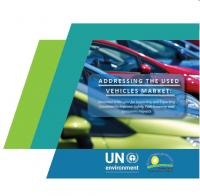

Driving safer roads, cleaner air, and lower emissions through better regulation of used vehicle imports.
This project supports the United Nations’ global efforts to regulate used vehicle trade to improve road safety, reduce air pollution, and lower greenhouse gas emissions. Ensuring that imported used vehicles meet minimum safety and environmental standards is critical to curbing road traffic injuries and fatalities and improving air quality in developing regions.
Globally, used vehicles account for most fleet growth in low- and middle-income countries. However, gaps in policy and enforcement between exporting and importing countries have enabled the flow of ageing, unsafe, and highly polluting vehicles. This project builds on UNEP’s Used Vehicles Programme, which supports evidence-based policy, regulatory adoption, and international cooperation to improve the quality of vehicle fleets worldwide.
Ensuring safer roads and cleaner air by improving the quality of used vehicles in Latin America and the Caribbean.
Did you know?
Used vehicles account for more than 90% of additional fleet growth in many developing countries, making improved regulation essential to reduce emissions and road injuries.
_________________________________________________________________
Project Overview
Why Addressing Used Vehicles Matters
Many countries in Latin America and the Caribbean (LAC) rely heavily on imported used vehicles to meet mobility demand. Weak or inconsistent regulations mean that a significant share of these vehicles is sub-standard—lacking essential safety features, emitting high levels of air pollutants, and contributing to road traffic injuries, fatalities, and climate emissions. Globally, 93% of road traffic deaths occur in low- and middle-income countries, where vehicle regulations and enforcement are often weakest. Strengthening the regulation of used vehicle imports is therefore a high-impact opportunity to reduce deaths, improve public health, and advance sustainable mobility.
Why Latin America and the Caribbean
The LAC region represents 13% of the global population but 25% of the world’s registered vehicles. Between 2015 and 2020, the region imported more than 2 million used vehicles, nearly 10% of global used vehicle exports, mainly from the United States and Japan.
Key challenges include:
- Limited or absent vehicle emission standards
- Weak enforcement of vehicle age limits
- Steering configuration mismatches (RHD/LHD) that increase crash risks
- Disproportionately high emissions of NOx, PM2.5, and greenhouse gases from older vehicles
The region has also experienced rising road fatalities, approximately 155,000 deaths annually, alongside worsening urban air pollution and climate impacts.
_________________________________________________________________
What the Project Does
The project supports exporting and importing countries to establish and enforce regulations, standards, and processes that ensure only safer and cleaner used vehicles enter LAC markets.
Led by UNEP and implemented jointly with ECLAC, the project combines data and analysis, capacity building, and standards development to address road safety and environmental performance in an integrated manner.
_________________________________________________________________
Project Objectives
The project aims to:
- Improve data on used vehicle flows, safety features, and emissions
- Strengthen national and regional capacity to implement and enforce vehicle regulations
- Support the development and implementation of safety and environmental standards for used vehicles
- Promote gender-responsive and inclusive approaches aligned with Safe System principles
- Align with UNEP’s global Used Vehicles Programme to support evidence-based policy and multi-stakeholder action
Expected Results
- Improved regional and national datasets on used vehicle imports
- Strengthened regulatory frameworks for safer and cleaner used vehicles
- Enhanced capacity of authorities in inspection, enforcement, and information exchange
- Improved cooperation between exporting and importing countries
- Alignment with the Safe Vehicle pillar of the Global Framework Plan of Action for Road Safety
_________________________________________________________________
Impact
The project will contribute to:
- Significant reductions in road traffic fatalities and injuries
- Lower vehicle emissions, including PM2.5, NOx, and greenhouse gases
- Improved air quality and public health outcomes
- Stronger institutional frameworks for long-term transport sustainability
_________________________________________________________________
Countries
Where We Work
Project Countries and Sub-Regions
Central America – SICA
- Belize
- Costa Rica
- Dominican Republic
- El Salvador
- Guatemala
- Honduras
- Nicaragua
- Panama
South America
- Paraguay
Caribbean
- Antigua and Barbuda
_________________________________________________________________
Key Pillars / Work Packages
The project is implemented through three integrated work packages, delivered in close coordination.
1. Data, Analysis & Evidence
- Collecting and analysing data on used vehicle safety and emissions
- Developing a regional data repository and technical guidelines
- Assessing policy impacts through country case studies
- Supporting data-driven policy adoption and enforcement
2. Capacity Building & Awareness
- Producing and disseminating regional and national knowledge products
- Delivering training on:
- Used vehicle inspection and monitoring systems
- Information-sharing and data management
- Safety and emissions standards for used vehicles
- Building capacity across customs, inspection agencies, transport authorities, and civil society
3. Standards, Regulation & Enforcement
- Supporting dialogue between exporting and importing countries
- Developing, implementing, and enforcing minimum safety and environmental requirements
- Promoting:
- No export of end-of-life vehicles
- Valid roadworthiness certification at export
- Compliance with importing-country safety and emissions regulations
- Strong enforcement and information exchange mechanisms
_________________________________________________________________
Innovation, Inclusion & Global Cooperation
The project is part of UNEP’s Used Vehicles Programme, which works with governments, subregional bodies, industry, and civil society to improve the safety and environmental performance of used vehicles worldwide.
The project integrates:
- Alignment with UN vehicle regulations and global road safety frameworks
- Gender-responsive and inclusive stakeholder engagement
- Regional and global cooperation, building on successful projects in Africa and Asia
- Collaboration with vehicle safety organizations such as Latin NCAP and Global NCAP
- Linkages with electric mobility initiatives to support cleaner vehicle transitions
_________________________________________________________________
Partners & Donors
Implementing Partners
- United Nations Environment Programme (UNEP)
- United Nations Economic Commission for Latin America and the Caribbean (ECLAC)
Key Partners
- Organization
- United Nations Economic Commission for Europe (UNECE)
- World Health Organization (WHO)
- World Bank Group
- Fédération Internationale de l'Automobile (FIA)
- International Motor Vehicle Inspection Committee (CITA)
- Inter-American Development Bank (IADB)
- Latin NCAP (New Car Assessment Programme for Latin America and the Caribbean)
- Fundación Internacional para la Cooperación y el Desarrollo de la Inspección Técnica Vehicular (FIC
Donor
_________________________________________________________________