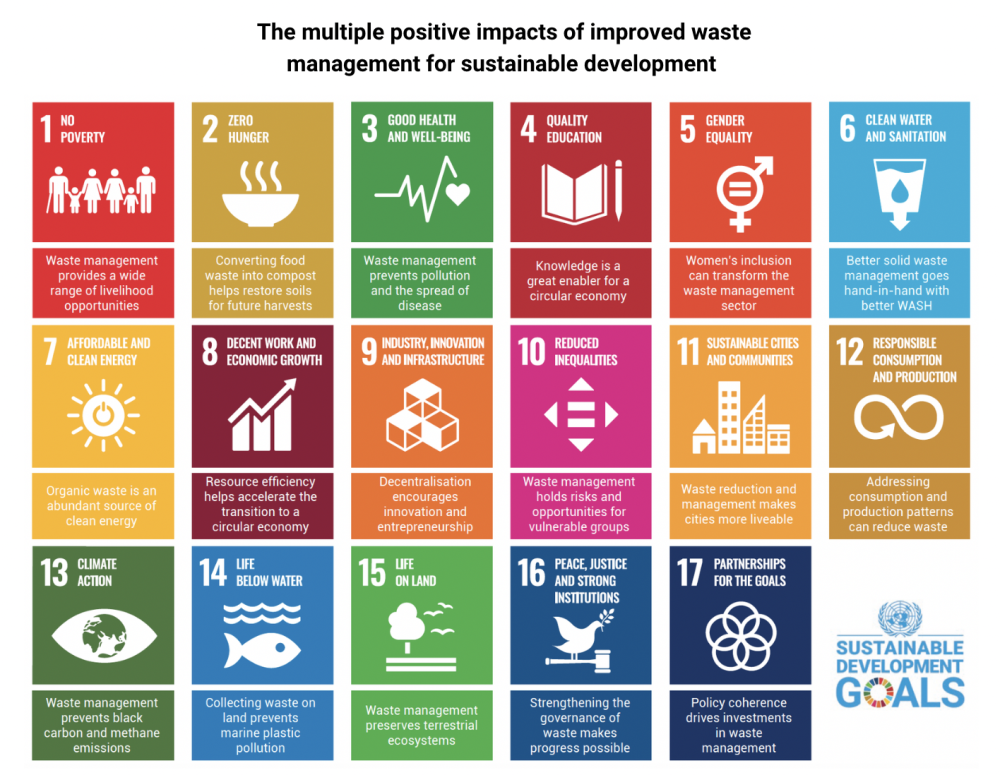
In 2015, all United Nations Member States adopted the 2030 Agenda for Sustainable Development. It is a shared blueprint for peace and prosperity for people and the planet. At its core are 17 interlinked Sustainable Development Goals (SDGs), which aim to end poverty and inequality while safeguarding the environment. Achieving these goals requires tackling the triple planetary crisis of climate change, biodiversity loss, and pollution—challenges that are deeply linked to the ways we produce, consume, and manage waste.
Linear and unsustainable patterns of resource use continue to generate vast amounts of waste. The mismanagement of waste contaminates land, water and air, causing severe harm to ecosystems and human health, particularly for vulnerable and low-income communities. Waste pollution contributes to disease, greenhouse gas emissions, and the depletion of natural resources that underpin sustainable development.
Transitioning toward zero waste also promotes social equity and justice, ensuring that those most affected by waste pollution, especially women and informal workers, benefit from cleaner environments and new economic opportunities. For many developing countries, this shift represents an opportunity to build inclusive, resource-efficient systems that generate green jobs and strengthen local economies.
Ultimately, zero waste is not only an environmental objective but a cornerstone of sustainable development. Integrating zero waste principles into national and local policies can advance progress across all SDGs. It is fostering healthier communities, resilient economies, and a more sustainable future for all.
More resources:
Towards Zero Waste: A Catalyst for delivering the Sustainable Development Goals