
• Overview
  • Agenda and Speakers

Venue: Hosted Boardroom, Nile Room

Date: Thursday, June 18

Time: 13:10 – 14:45 (GMT+2)

Format: In-person 


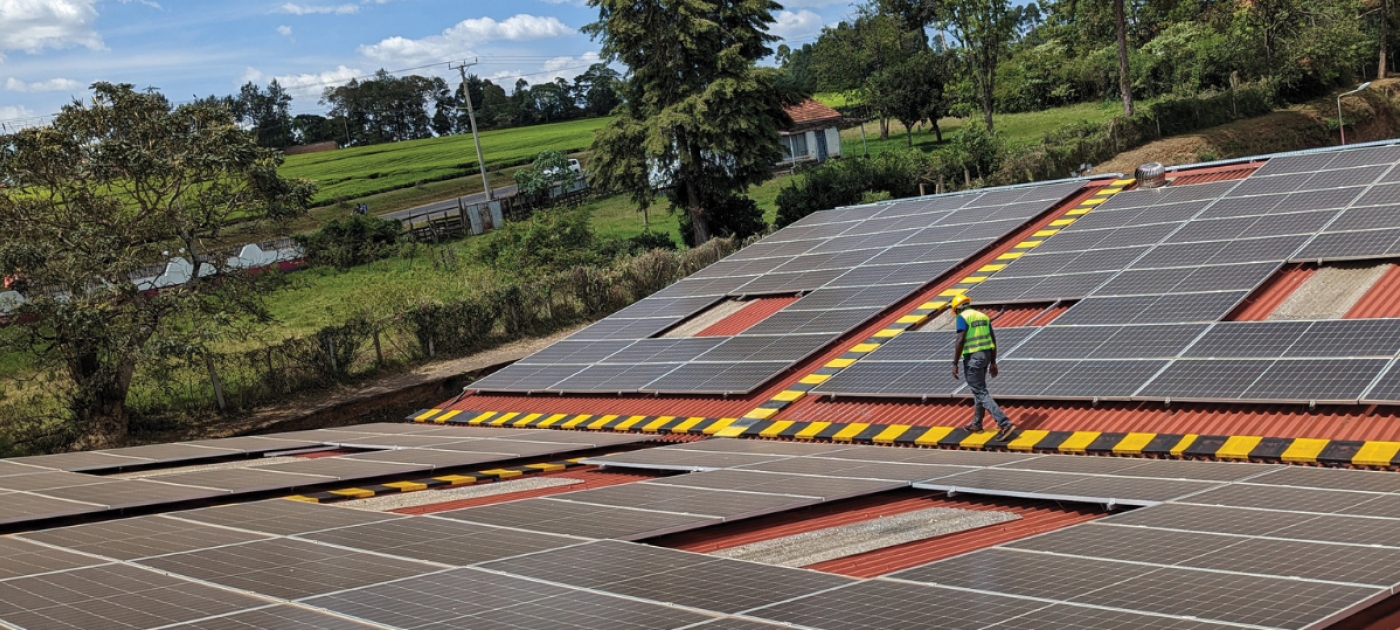
Reliable, affordable, and clean power remains a critical gap for commercial and industrial enterprises across Sub-Saharan Africa. Clean captive installation are on-site renewable energy systems for self-consumption and offer a proven solution against diesel run generator. 

Since 2021, the Clean Captive Installations for Industrial Clients in Sub-Saharan Africa (CICSA) initiative has successfully trialed innovative business models, and Phase II now aims to scale adoption across the region. 

A major opportunity is coming soon.  CICSA will launch its second Call for Proposals designed to crowd in private investment and scale clean captive solutions across Sub-Saharan Africa. Attendees will learn about eligibility, priorities, and engagement pathways—directly from the UNEP and Frankfurt School teams behind the initiative. 

Interested in applying? If you are a project developer, financier, corporate energy buyer, or innovator working on clean captive energy in Sub-Saharan Africa, complete our short interest form to receive the Call for Proposals as soon as it opens.


About CICSA

CICSA is led by UNEP and implemented by the Frankfurt School – UNEP Collaborating Centre for Climate & Sustainable Energy Finance. The initiative is supported by the German Federal Ministry for the Environment, Nature Conservation and Nuclear Safety (BMUKN) as part of the International Climate Initiative (IKI) of the Federal Government of Germany.

13:10 – 13:15 – Welcome & Opening Remarks

Moderator: Rhoda Wachira, Programme Management Officer, Africa Office, UNEP 🌍

Overview of session objectives and expected outcomes.

13:15 – 13:30 – High‑Level Opening Address & Official Launch of CICSA II

Official launch of CICSA Phase II including the Call for Proposals (CfP) to support clean captive energy solutions across C&I sectors in Sub‑Saharan Africa, highlighting national leadership, enabling policies, and strategic partnerships for scale and investment.

Speakers:

  • Noma Qase, Programme Director, Sarem, Department of Electricity & Energy, South Africa 🇿🇦
  • Tanja Wehrheit, Consul General of Germany in South Africa 🇩🇪

13:30 – 13:50 – CICSA: From Phase I to Phase II – Results, Scale and Opportunity

Phase I results (pilots, investment mobilised, emissions saved) and the Pretoria Statement on strong regional demand for scale‑up. Phase II ambition and delivery model. Launch of the Call for Proposals (CfP): eligibility, priorities, and engagement pathways.

Speakers:

  • Carolina Merighi, Programme Management, Climate Change Division, UNEP 🌍
  • Yamini Jain, Project Manager, Frankfurt School 🇩🇪

13:50 – 14:20 – Panel: Unlocking Scale for Clean Captive Installations

What it will take to move from pilot projects to large‑scale deployment, including how to better align policy frameworks, financing mechanisms, and industrial demand. The discussion will also highlight opportunities for private sector and development partners, alongside lessons from early movers to inform scalable and replicable models.

Moderator: Rhoda Wachira, UNEP 🇰🇪

Panellists:

  • Sara Elhag, Head of the Energy Division, African Union Commission (AUC) 🌍
  • Mr Siyabonga Zondi, Project Manager: Renewable Energy, Department of Electricity & Energy, South Africa 🇿🇦
  • Lulu Molemong, Associate Principal, Power & Renewables Finance, Nedbank 🇿🇦
  • James Dry, Senior Transactor, Sola Group 🇿🇦

14:20 – 14:40 – Open Dialogue and Q&A with Audience

Led by the moderator.

14:40 – 14:45 – Closing Remarks

Speaker: Tanja Wehrheit, Consul General of Germany in South Africa 🇩🇪


What to Expect

  • Understand how CICSA’s Call for Proposals will crowd in investment to scale C&I clean energy.
  • Discuss what policy frameworks will unlock and sustain investment in captive energy solutions.
  • Experience firsthand outcomes and lessons from CICSA Phase I pilots.
  • Engage directly with the teams behind the Initiative and connect with other innovators and entrepreneurs driving the future of sustainable energy systems in Africa.