The Clean Captive Installations for Industrial Clients in Sub-Sahara Africa (CICSA) initiative enables businesses across Sub-Saharan Africa to replace costly, polluting diesel generators with reliable, on-site renewable energy. CICSA bridges companies, financiers, and governments to make clean captive energy the new industrial standard.
The challenge is urgent. Across Sub-Saharan Africa, unreliable and costly electricity continues to limit industrial growth and competitiveness. Despite rapid expansion in the commercial and industrial sectors, most businesses remain heavily reliant on expensive diesel generation. Nearly 730 million people worldwide lacked electricity in 2024 – with Sub-Saharan Africa representing almost 80% of the global electricity access gap (IEA, 2024). The need for scalable, sustainable energy has never been more urgent.
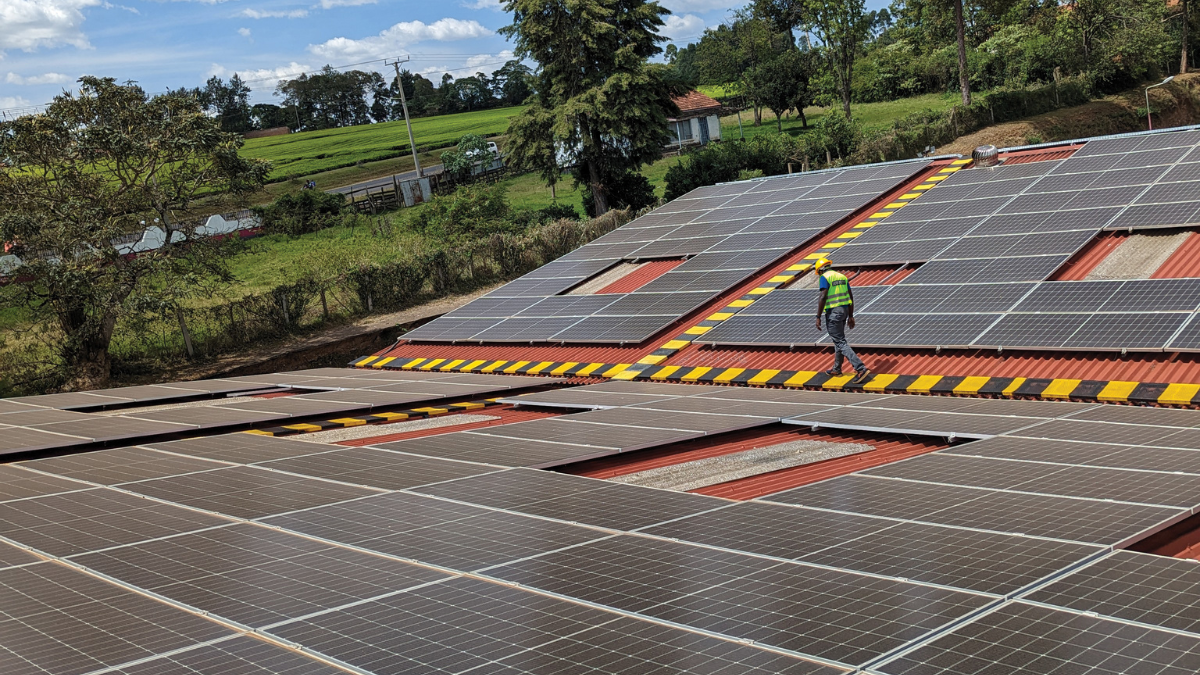
The solution is clean captive energy: generating your own power on-site with renewable solutions such as solar PV. This enables companies to produce electricity for their own operations, improving energy security while reducing operating costs and emissions. Key benefits include reliable power with no blackouts disrupting production, lower costs as renewables are cheaper than diesel, and cleaner operations with reduced emissions and stronger sustainability.
-
Scope of work
Our mission is to make clean captive energy the standard, not the exception, for Sub-Saharan African industries. We work across three areas to achieve this. First, as a project accelerator, we provide technical assistance and grant funding to help businesses develop clean captive projects, demonstrate commercial viability, and enable innovative financing models to scale investment. Second, through policy and capacity building, we support policy dialogue and regulatory engagement while strengthening local capacity among public sector stakeholders to contribute to low-carbon industrial development pathways. Third, as a knowledge hub, we promote awareness of clean captive opportunities and benefits, and share lessons learned, best practices, and market insights to help others replicate and scale successful models.
-
Governance
CICSA is led by the United Nations Environment Programme (UNEP), the United Nations’ leading global authority on the environment, driving transformational change on the triple planetary crisis of climate change, nature and biodiversity loss, and pollution and waste. The implementing partner is the Frankfurt School – UNEP Collaborating Centre for Climate & Sustainable Energy Finance, a strategic cooperation since 2009 that combines research, teaching, training and consulting services to promote investment in climate mitigation and adaptation. CICSA is supported by the German Federal Ministry for the Environment, Nature Conservation and Nuclear Safety (BMUKN) as part of the International Climate Initiative (IKI) of the Federal Government of Germany. A steering committee provides strategic oversight.
-
Call for proposals
CICSA is launching a new Phase II Open Call for Proposals, now open to all regions across Sub-Saharan Africa. While the official call is not yet open, interested applicants are encouraged to register in advance to receive the latest news and a direct notification as soon as the call launches.