• Overview
  • Documents
  • Organizers
  • Further Resources

What if wastewater could help detect the next disease outbreak before it spreads, or reveal hidden threats to our ecosytems, rivers and oceans?

The United Nations Environment Programme (UNEP) and the United Nations University Institute for Water, Environment and Health (UNU-INWEH), through the Wastewater Surveillance Initiative for Africa, is organising a three-day workshop bringing together government representatives, public health authorities, environmental agencies, researchers, transport hub operators and international partners from across Africa, as well as experts from Latin America, Europe and Asia.

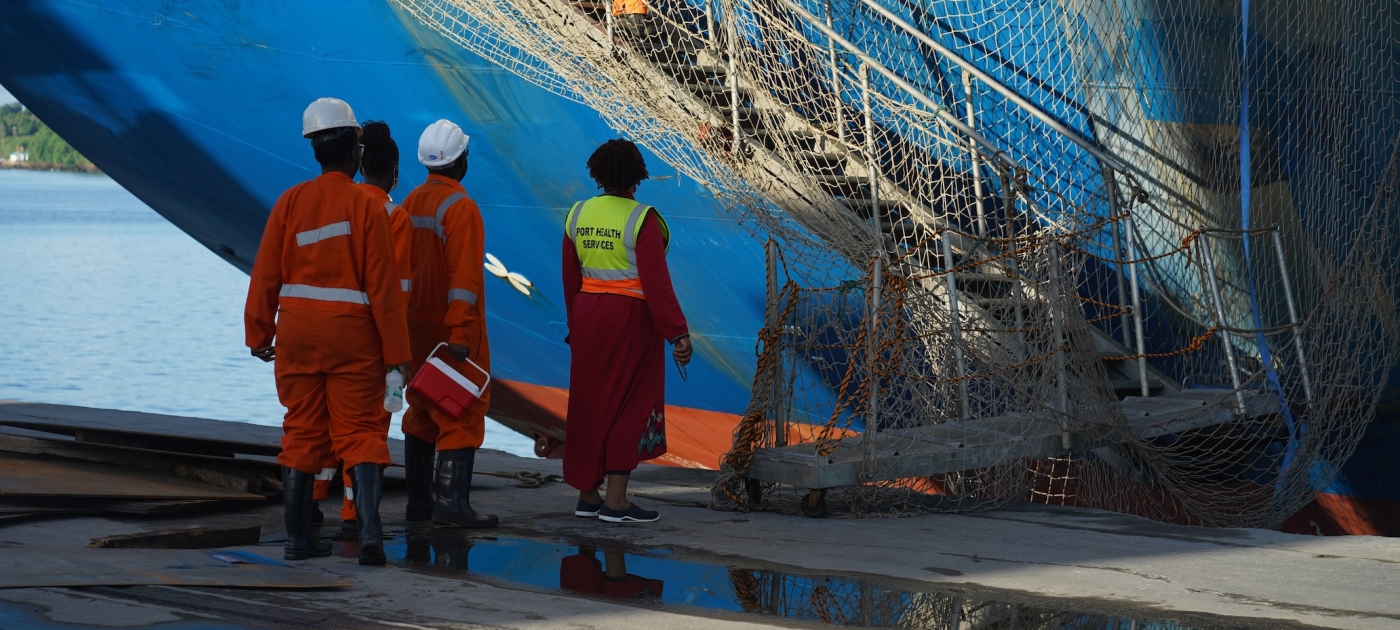
Through real-world case studies, interactive discussions and practical knowledge exchange, participants will explore how wastewater and environmental surveillance (WES) at airports, seaports and surrounding urban areas can strengthen early warning systems, improve pandemic preparedness, monitor antimicrobial resistance and pollution, protect ecosystems, and support integrated source-to-sea management.

Supported by the European Union Health Emergency Preparedness and Response Authority (HERA), the event will showcase innovative approaches, share lessons learned from across Africa and beyond, and help countries identify practical pathways to establish or strengthen WES programmes. Participants will also contribute to the development of UNEP's Compendium of Lessons Learned on Wastewater and Environmental Surveillance at Airports and Ports in Africa, helping shape a valuable regional resource for future implementation.



United Nations Environment Programme

The United Nations Environment Programme (UNEP) is the leading global environmental authority that sets the global environmental agenda, promotes the coherent implementation of the environmental dimension of sustainable development within the United Nations system, and serves as an authoritative advocate for the global environment.

Global Wastewater Initiative

The Global Wastewater Initiative (GWWI) is a multi-stakeholder partnership launched by UNEP in 2013. Its purpose is to address wastewater-related issues, prompt coordinated action and encourage new investments for sustainable wastewater management. The GWWI intends to bring about a paradigm shift in the way wastewater is seen, from waste to a resource, and prevent further pollution and degradation of our aquatic environment. 

Join the partnership: click here to apply!  Follow the LinkedIn page.

United Nations University Institute for Water, Environment and Health (UNU-INWEH)  

UNU-INWEH is the UN’s think tank on water, dedicated to providing knowledge-based solutions to global water challenges. Established in 1996 and hosted by the Government of Canada, UNU-INWEH works at the intersection of science, policy, and capacity development to support countries in achieving water-related Sustainable Development Goals. Through research, training, and strategic partnerships, the institute focuses on advancing integrated water management, strengthening water governance, and promoting evidence-based approaches to address pressing issues such as water security, climate change impacts, and pollution. 

World Health Organization 

The World Health Organization is a specialized agency of the United Nations which coordinates responses to international public health issues and emergencies. It is headquartered in Geneva, Switzerland, and has 6 regional offices and 150 field offices worldwide. 

With financial support from: 

EU DG HERA 

The Health Emergency Preparedness and Response Authority’s (HERA) mission is to prevent, detect, and rapidly respond to health emergencies. HERA was launched as a new European Commission Directorate-General on 16 September 2021, and carries out the Commission’s policies related to health preparedness and crisis response and ensuring the resilience of healthcare systems across Europe.