
UNEP’s International Methane Emissions Observatory (IMEO) engages methane-emitting industries to reduce emissions through transformative partnerships and data-driven solutions.
These efforts include the establishment of frameworks for measuring, reporting and verifying methane emissions and mitigation efforts—powered by the accountability made possible by transparent and credible data.
Currently, IMEO engages industrial actors via UNEP’s Oil and Gas Methane Partnership 2.0 (OGMP 2.0) and the Steel Methane Programme (SMP). These programs offer clear pathways for companies to transition from generic emission estimates to precise, verified data that enables them to achieve ambitious methane emission reductions.
-
The Oil and Gas Methane Partnership 2.0
The Oil and Gas Methane Partnership 2.0 (OGMP 2.0) is the UNEP’s flagship oil and gas reporting and mitigation programme. OGMP 2.0 provides a global standard for measurement-based methane emissions reporting for the oil and gas industry that improves the accuracy and transparency of methane emissions reporting. This is key to prioritising methane mitigation actions in the sector. If you can’t measure it, you can’t fix it.
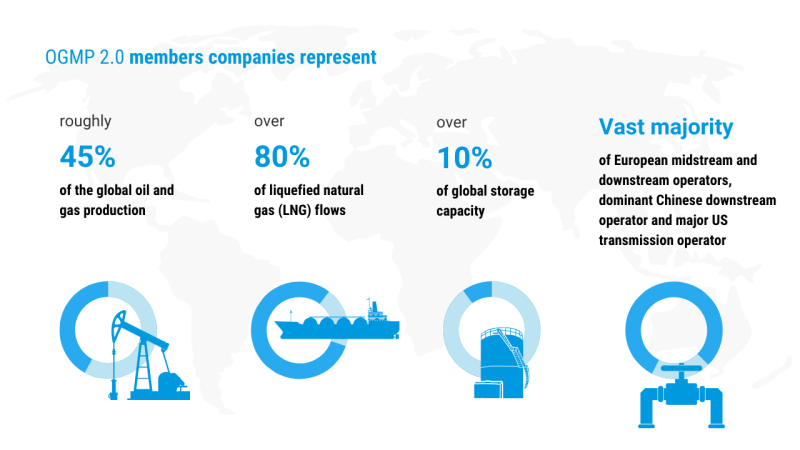
OGMP 2.0’s data is one of the key components of IMEO’s solution to the methane data problem. IMEO collects, integrates and reconciles methane data to generate a public data set of methane emissions levels and sources.
OGMP, launched in 2014 by the Climate and Clean Air Coalition, was ratcheted up in scope and ambition in November 2020 to become OGMP 2.0. OGMP 2.0 is a more ambitious and comprehensive reporting framework that fosters reporting of methane emissions and directly connects it to strategic mitigation actions. This comprehensive approach allows stakeholders to track and compare progress and performance across companies.
Find out more about OGMP 2.0 and how to join here.
Learn more
-
Steel Methane Programme
Through the Steel Methane Programme (SMP), IMEO aims to make methane emissions from coal measurable, transparent and actionable across the steel supply chain.
The furnaces that blast iron ore to make most of the world’s steel use metallurgical coal, also known as met coal, as a fuel and chemical reductant. Mining and processing met coal releases methane, increasing the climate impact of blast furnace steel by roughly a quarter. These emissions could be substantially mitigated with proven, cost-effective technology.
With the demand for steel set to persist, and as an integral part of the transition towards low carbon steel, mitigating methane emissions is critical to limit the steel industry’s climate impact under any decarbonisation scenario. This requires urgent improvements in data, transparency and integration into decarbonisation planning.
SMP combines science, data and industry engagement to make methane emissions in steel more visible and actionable.
IMEO’s met coal science studies apply a mix of satellite, airborne and ground-based atmospheric measurements to improve our understanding of methane emissions from coal mines. Through this science, IMEO is building a robust evidence base to strengthen measurement methodologies and industry reporting.
SMP increases transparency through its Coal Methane Database, hosted on IMEO’s Eye on Methane data platform. The database compiles integrated, mine-level emission estimates that draw on scientific research, satellites and inventory data. This provides mining companies, steel producers and policymakers with transparency to inform engagement and drive methane reductions.
Through an industry partnership, SMP will enable coal producers to demonstrate leadership on measurement-based reporting and methane mitigation. In addition, Measurement, Reporting and Verification (MRV) guidance will provide a science-based framework for actors across the global coal and steel value chains to credibly demonstrate measurement and mitigation progress.
Investors seek greater methane transparency across steel value chain
Expectations from investors are also rising, as methane transparency is seen as critical for managing climate and business risks. Institutional investors representing nearly US$10 trillion AUM issued a position statement calling for stronger methane management across the steel value chain. The statement encourages participation in IMEO’s Steel Methane Programme as a means for the industry to improve methane transparency and target solutions.
Read the position paper here.
Contact: UNEP-smp@un.org
Learn more
Explore the Coal Methane Database on IMEO’s Eye on Methane data platform
SMP Technical Guidance Document: Ventilation Air Methane
SMP Technical Guidance Document: Drained Coal Mine Methane