
On February 12 the Government of Paraguay officially launched the planetGOLD Paraguay project, a US$ 28 million initiative funded by the Global Environment Facility. The project aims to reduce mercury use while promoting responsible practices in artisanal and small-scale gold mining, with a focus on protecting human health and the environment. Implemented by the United Nations Environment Programme, the initiative is led nationally by the Ministry of Environment and Sustainable Development in partnership with Investigación para el Desarrollo (ID).
Mercury is a highly toxic substance with well-documented impacts on human health and ecosystems. In Paraguay, reducing its use in artisanal gold mining presents an important opportunity to strengthen environmental protection, safeguard community health, and support coexistence of mining with activities such as yerba mate production.
“By promoting cleaner technologies and advancing formalization, the project will provide tangible benefits for families involved in artisanal gold mining,” said Federico Schroeder, Head of the Chemical Substances Department at the Ministry of Environment and Sustainable Development and Focal Point for the Minamata Convention. ‘’This initiative will enable Paraguay to fulfill its commitments under the Minamata Convention on Mercury in a concrete and effective manner’’.
Over the next five years, the project will support a comprehensive transformation of the artisanal and small-scale gold mining sector through strengthened regulatory frameworks, the adoption of mercury-free technologies, improved access to finance, and the integration of responsible gold value chains. These efforts will be accompanied by awareness-raising and communication activities to promote safer, cleaner and more profitable mining practices.
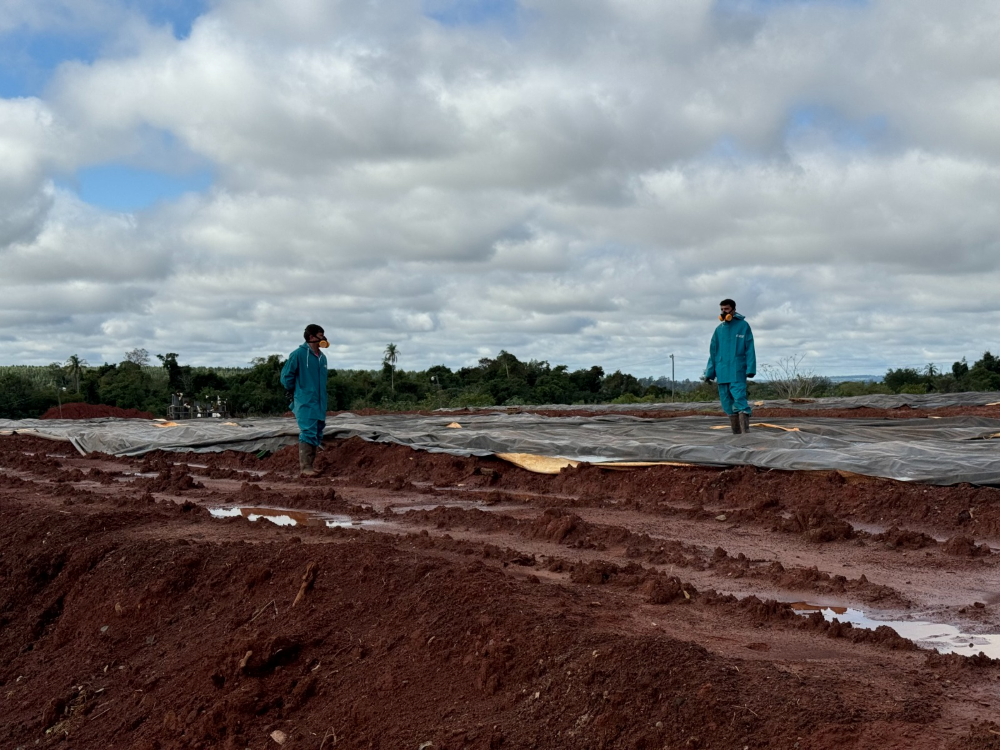
Artisanal and small-scale gold mining in Paraguay is concentrated primarily in the municipality of Paso Yobái, in the department of Guairá, where the activity has been a key source of income since the 1990s. Around 1,000 people are involved across the gold value chain, largely operating within an informal context.
Through targeted interventions across 64,000 hectares, planetGOLD Paraguay is expected to progressively reduce mercury use by an estimated half a ton. More than 28,500 people – including 13,100 women – will benefit directly from improved livelihoods, reduced health risks and a cleaner environment, contributing to more inclusive and sustainable local development.
With this launch, Paraguay joins a growing group of nine countries in Latin America implementing the planetGOLD programme, strengthening a coordinated regional response to transform the artisanal and small-scale gold mining sector. Through regional and global knowledge-sharing platforms, the project will contribute to South-South cooperation, exchanging lessons learned, innovative solutions, and good practices.
‘’Countries globally are demonstrating that cleaner, more responsible gold mining is possible, it is an important step toward a more sustainable minerals value chain’’ said Ludovic Bernaudat, Portfolio Manager, GEF Chemicals and Green Chemistry Unit, UNEP. ‘’Through international cooperation, planetGOLD creates a space for shared learning, innovation, and practical solutions that respond to the realities of artisanal miners’’.