Guatemala is developing its first regulation on air quality standards and comprehensive air quality management, with technical support from the United Nations Environment Programme (UNEP). The draft regulation was presented to relevant national authorities ahead of the sixth International Day of Clean Air for blue skies, observed annually on 7 September.
Global context
Air pollution is the second leading cause of death worldwide, responsible for more than 8.1 million premature deaths every year, with children and the elderly among the most vulnerable. Figures show that 99 per cent of the global population breathes air that does not meet World Health Organization (WHO) guidelines. The burden falls mainly on low- and middle-income countries – which account for 89 per cent of these deaths – where vulnerable communities face greater exposure with less protection.
Air Quality Governance
Embedding air quality standards in legislation is a foundation for good national air quality governance, say experts. Ambient air quality standards, when legally framed and institutionally embedded, create the bedrock of a robust air quality governance system.
The right to breathe clean air is also a vital component of the right to a clean, healthy and sustainable environment. The establishment of air quality legislation is a key step towards the implementation of this right.
The Montevideo Environmental Law Programme supports countries to strengthen environmental rule of law, providing technical legal support to countries like Guatemala to improve ambient air quality legislation.
Action in Guatemala
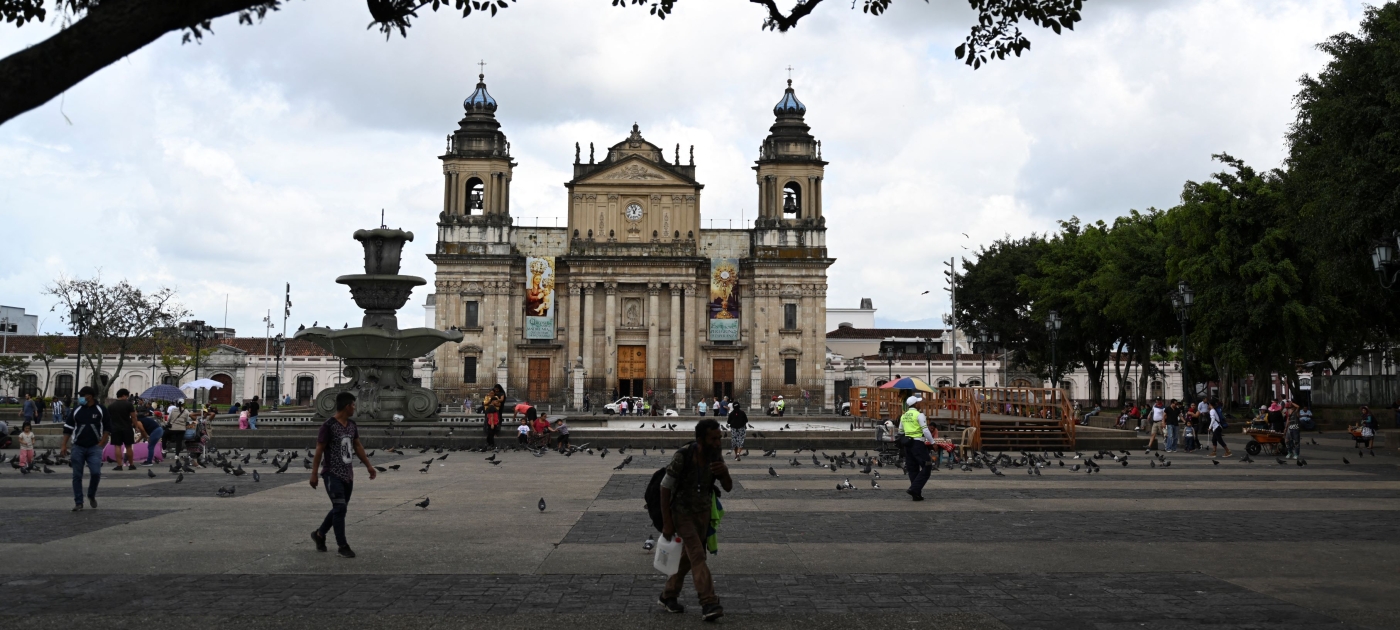
In August 2025, the Ministry of Environment and Natural Resources (MARN) held a working meeting in Guatemala City to discuss a draft regulation on air quality standards. This was done in collaboration with the Ministry of Public Health and Social Assistance (MSPAS) and other stakeholders and with technical support from UNEP. Participants included representatives from MARN, MSPAS, the National Institute of Seismology, Volcanology, Meteorology and Hydrology (INSIVUMEH), the National Coordination for Disaster Reduction (CONRED), the Office of the Attorney General (PGN), and technical and legal teams from various institutions.
The draft regulation includes the establishment of air quality standards, a monitoring network, the development of emissions inventories, and other elements to help curb air pollution. During the meeting, participants gave feedback to strengthen the text, outlined and adopted the roadmap for the regulation’s development, considered updates for further regulations addressing emissions from both stationary sources and vehicles, and visited air quality monitoring stations and MARN’s air quality laboratory.
UNEP support
Prior to the working meeting, UNEP visited Guatemala in June 2025 to assist MARN and MSPAS in reviewing Guatemala’s air quality regulatory framework. UNEP’s Guide on Ambient Air Quality Legislation provides guidance to lawmakers on developing and strengthening robust ambient air quality legislation. This is in line with UNEP’s mandate to support countries in strengthening environmental management, with the support of the Montevideo Programme.
During this visit, UNEP presented a legal analysis of existing legislation, and with MARN and MSPAS analyzed the draft regulation on air quality standards. Further, regional practices on regulating mobile emissions sources were shared, highlighting the need for Guatemala to establish emissions standards for new and used vehicles, as well as air quality monitoring protocols supported by official data.
Next steps
MARN will continue inter-institutional consultations on the draft regulation and will advance the development of complementary regulations for mobile and stationary emissions sources, with UNEP’s technical support. The ministry also plans to complete the installation of up to seven air quality monitoring stations, which will form Guatemala’s first monitoring network providing official and accurate data to inform decision-making.
“For the first time, we have instruments that will allow us to precisely measure air pollution levels, and this regulation will help us move toward more effective control,” said Edwin Josué Castellanos López, Guatemala’s Vice Minister for Natural Resources and Climate Change.
“Countries need appropriate regulations and the technical capacity to implement air quality measures,” said Jordi Pon, UNEP’s Regional Coordinator for the Chemicals and Pollution Action Programme. “To this end, UNEP supports countries in developing legislation and in facilitating technical exchange and training on international good practices.”
On 7 September, the world marks the International Day of Clean Air for blue skies. The day promotes action to reduce air pollution, which causes 8.1 million premature deaths every year.