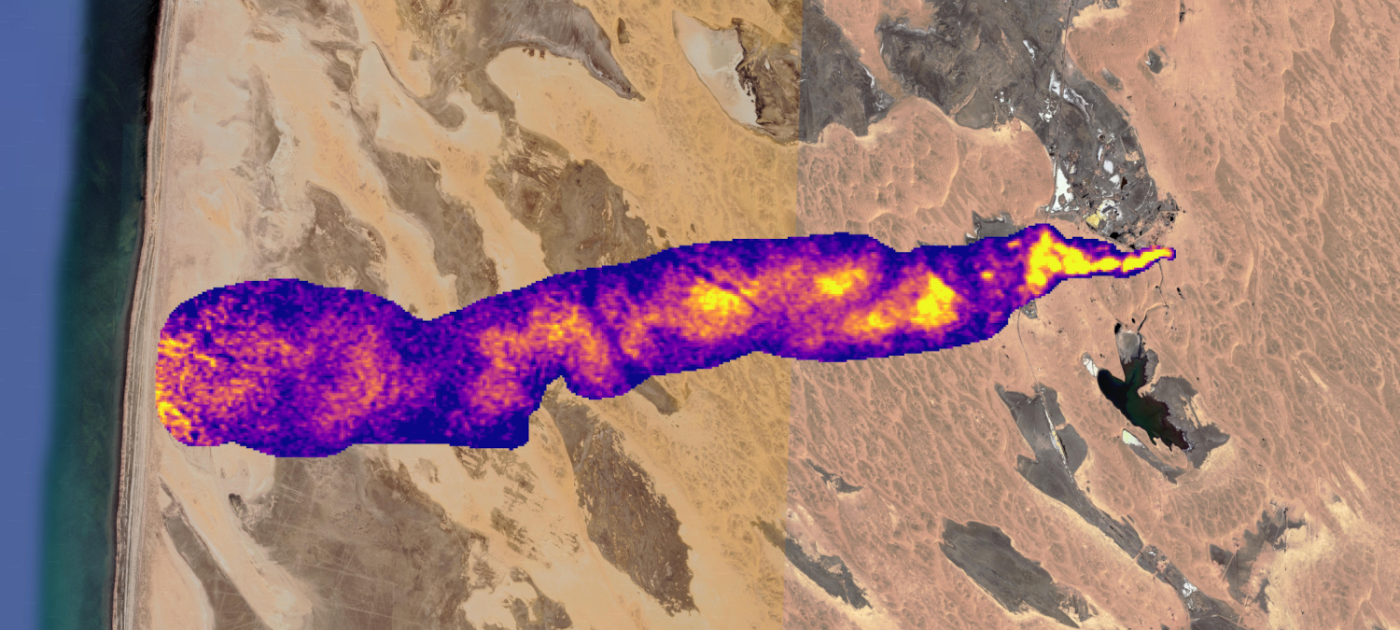
A landfill in Chile. An oil well in Turkmenistan. A coal mine in China.
These are among the world’s biggest sources of planet-warming methane, identified in a new analysis by the United Nations Environment Programme’s (UNEP’s) International Methane Emissions Observatory (IMEO).
Scientists have long understood which industries emit the most methane but satellites have transformed monitoring, enabling experts to pinpoint specific sources and target solutions to address them. Through its Methane Alert and Response System (MARS), IMEO draws on 35 satellite instruments to detect super-emitters, human-caused methane sources so large they can be seen from space.
MARS is the only open satellite-based system that detects super-emitters and is linked directly to a global mechanism that engages countries to reduce them. Through MARS, IMEO directly notifies governments and companies so they can reduce emissions of this powerful greenhouse gas.
Now, IMEO is publishing new data that brings unprecedented transparency to the global effort to cut methane: a list of the world’s top 50 methane sources and MARS response rates by country.
Methane is 80 times more powerful than carbon dioxide but has a much shorter lifespan, breaking down in the atmosphere after about a decade. That means cutting methane emissions acts like a climate emergency brake, slowing global warming as the world transitions to a clean energy future.
"The world now has a roadmap of where methane action can target the biggest climate wins — and a view of who is seizing this opportunity,” said Ruth Zugman do Coutto, Deputy Director of UNEP’s Climate Change Division.
Satellite data enables action
Since launching three years ago, MARS has enabled 41 cases of methane reductions across 11 countries. Together, these sources are estimated to have released 1,200,000 tonnes of methane, an amount that has the same climate impact as the annual emissions of 24 million gasoline-powered cars. Eliminating these emissions is delivering concrete climate gains.
This growing number of mitigation cases shows that open data is a powerful tool for methane progress. By making the biggest sources public, IMEO is scaling methane transparency to accelerate action. When a source is clearly and publicly identified, it becomes easier to act on and harder to ignore.
While satellites are especially useful for identifying super-emitters, they can’t detect the smaller emission sources that make up the majority of the world’s human-caused methane.
"These sources are just the tip of the iceberg of the world’s methane emissions,” said MARS Programme Manager Meghan Demeter. “Satellites shine a light on the big mitigation opportunities, where governments and companies could act first for rapid impact. But real, system-wide progress on methane depends on comprehensive action, including better measurements and reporting.”
While solutions for some large methane sources — such as landfills and coal mines — may require longer lead times, this data is still essential for understanding where emissions are occurring and shaping long-term mitigation strategies. At the same time, it helps direct immediate action in sectors like oil and gas, where proven, cost-effective measures can deliver rapid emission reductions now.
Opportunity — and accountability — are now visible
In addition to the list of the world’s biggest methane sources, IMEO is publishing country-level response rates to MARS alerts in the oil and gas sector.
This metric reveals how governments are leveraging satellite data for methane action and where more progress is needed.
Previously, IMEO shared MARS’s global response rate. But this masked pockets of progress, with some countries even achieving 100 per cent response rates, as well as areas in need of greater engagement or support. The new country-level response rates offer a more nuanced view.
But what does “response” actually mean?
“A response isn’t just acknowledging an email,” Demeter said. “It demands fact-finding on the ground that in many cases enables action.”
Responding to a MARS alert requires countries and companies to investigate the cause of the emissions and share information about the event, such as whether operators have taken mitigation measures. Higher MARS response rates are associated with more mitigation action.
Building capacity for response
Low response rates do not necessarily signal indifference. For example, some countries have only a few super-emitters—making a 100 per cent response rate more feasible than for countries with far more emission sources.
In addition, satellites’ ability to observe emissions is limited over high latitudes, bodies of water or densely forested areas. This means certain countries may have methane sources that are not able to be detected and notified through MARS.
Many countries’ response rates indicate room for progress. In some countries, low response rates point to technical barriers. Elsewhere, they signal a need to prioritize methane action.
IMEO is working to address technical and institutional gaps through workshops that build knowledge and capacity, as well as partnerships with organizations including the International Energy Agency on guidance for responding to MARS alerts.
Demeter said IMEO is publishing this information to empower governments and companies to meet their climate goals.
"These lists aren't static,” she said. “They’re a starting point. We want countries to be able to target efforts to reduce emissions and see their progress reflected.”
Subscribe to Eye on Methane // Global data updates here.