
The environment plays a key role in the development, transmission and spread of antimicrobial resistance (AMR). Therefore, the response must be based on a One Health approach, recognizing that humans, animals, plants and environment are interconnected and indivisible, at the global, regional and local levels, from all sectors, stakeholders and institutions. Prevention is at the core of the action needed to halt the emergence of AMR and environment is a key part of the solution.
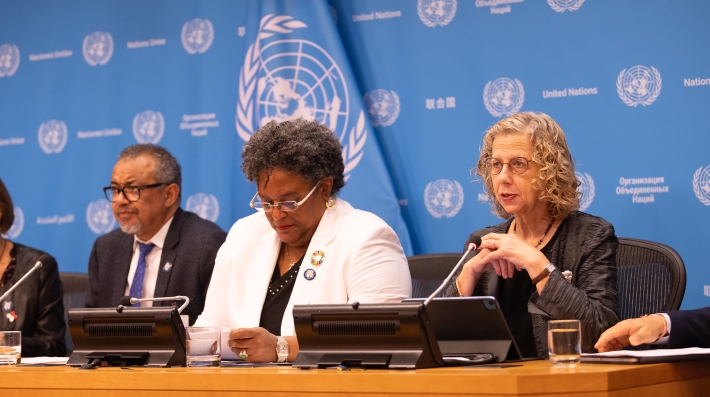
“AMR challenges cannot be understood or addressed separately from the triple planetary crisis – the crisis of climate change, the crisis of nature and biodiversity loss, and the crisis of pollution and waste, all of which are driven by unsustainable consumption and production patterns,” said UNEP Executive Director Inger Andersen.
Regulatory action
The Second Global Regulatory Authorities Summit on Antimicrobial Resistance (AMR) was convened virtually on 14–15 January 2026 by the Quadripartite organizations (FAO, UNEP, WHO and WOAH). The Summit concluded with a shared understanding that antimicrobial labelling can serve as a practical and high-impact regulatory tool to support appropriate use and disposal of antimicrobials within national systems and the One Health approach. Read more.
Measuring progress
Countries have agreed to have a National Antimicrobial Resistance Action Plan (NAP) aligned with the Global Action Plan, and to implement relevant policies and plans to prevent, control and monitor AMR. An annual Tracking AMR Country Self-assessment Survey (TrACSS) jointly administered by Food and Agriculture Organization (FAO), United Nations Environment Programme (UNEP), World Health Organization (WHO) and World Organization for Animal Health (WOAH) monitors country progress in the implementation of their NAP. View the results of the current and previous amrcountryprogress.org
Financing action
The AMR Multi-Partner Trust Fund (AMR MPTF) supports countries in the implementation of their NAP through a One Health approach. It provides catalytic funding, coordinated policy advice, technical assistance, and capacity-building programmes.
It is imperative to tackle the environmental dimensions of AMR to maintain progress towards the Sustainable Development Goals (SDGs).
Engaging Youth
The inaugural meeting of the Quadripartite Working Group on Youth Engagement for AMR was held in October 2023. The members are from 14 different countries and representing 14 youth-serving or youth-led organizations.
A focus for the Working Group is mobilizing youth to advocate for increased funding and commitment to combat AMR. The members launched a global consultation among young people, which resulted in a Youth Manifesto for the UN General Assembly High-level Meeting on AMR in 2024, which was a powerful call to action by global leaders.
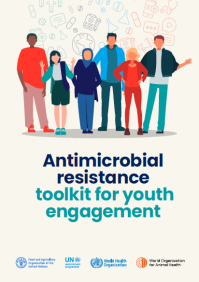
The AMR toolkit for youth engagement was launched online on 4 December 2024. The toolkit provides a set of 11 comprehensive resources, a resource pack and inspiring case studies of successful youth engagement in AMR initiatives. The toolkit equips young leaders with the knowledge and strategies to develop impactful awareness campaigns, drive advocacy and promote behaviour change.