



#
UNEP Event
Gender at the Nexus of Pollution, Social and Climate Action: Lessons from UNIDO and UNEP
5 June 2026
Samarkand , Uzbekistan
- Overview
The side event took place on Friday 5 June 2026, from 13h30 to 14h30 in the Zircon room as part of the Eigth Global Environment Facility (GEF) Assembly in Samarkand, Uzbekistan.
Theme: Leaving No One Behind: Civil Society, Women, and Indigenous Peoples
The event featured two complementary case studies, UNEP’s work in the cosmetics sector and UNIDO’s work in the energy sector, brought together under a shared umbrella of advancing gender equality, empowering communities (particularly women, youth, and civil society), strengthening safer and more inclusive supply chains, and unlocking new opportunities for strategic partnerships and investment.
UNIDO segment
Countries play a pivotal role in shaping national priorities, aligning projects with development strategies, and ensuring that gender equality is embedded across climate and energy portfolios. Their decisions influence how gender considerations are integrated into NDCs, energy strategies, policies, regulations, action plans, and climate resilience plans. The session underscores that gender responsive approaches are essential not only for equity but also for increasing the impact, sustainability, effectiveness, and scalability of GEF investments. National leadership is therefore central to mainstreaming gender dimensions across policy, programming, and implementation.
UNEP segment
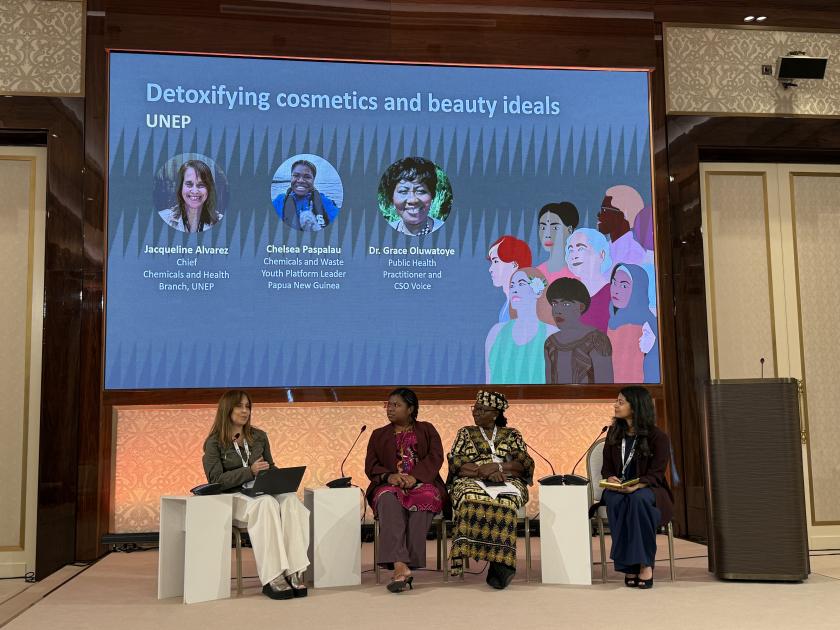
UNEP’s segment spotlighted the urgent need to address mercury in skin lightening products (SLPs) as a multidimensional issue—impacting public health, environment, and human rights and social norms. The session elevated local and global voices working to reduce the demand for harmful products and challenge the beauty norms that drive their use.
Mercury in skin lightening products poses serious health and environmental risks, especially to women and children, yet their continued use is driven by harmful beauty standards and deep-rooted social perceptions linking lighter skin to status and opportunity and perpetuating racial discrimination. Issues that align with broader UN efforts to promote health equity, cultural diversity, and racial inclusivity.
Speakers
- Apoorva Arya, Chief Executive Officer, Circular Innovation Lab, Circular Innovation Lab
- Jacqueline Alvarez, Chief, Chemicals and Health Branch, United Nations Environment Programme.
- Mohammed Kabir Jeddah, Technical Assistant to the Operational Focal Point /GEF-Desk Officer, Federal Ministry of Environment, Nigeria
- Chelsea Paspalau, Chemicals and Waste Youth Platform Leader, Papua New Guinea
- Anil Sookdeo, Senior Environmental Specialist, GEF Secretariat
- Georgia Iordanescu, Chief, Sustainable Energy and Just Transitions Unit, UNIDO
- Daria Shumilova, Cleantech Innovation and Communications Expert, UNIDO
- Verona Collantes-Lebale, Senior Gender Specialist, Global Environment Facility



The overall goal of the UNEP Global Mercury Partnership is to protect human health and the environment from the releases of mercury.