



Resources
Showing 76 - 100 of 495
495 results found

Through this second issue of the year, learn more about recent, current and future activities, as we move forward in addressing the latest decisions of the fifth Conference of the Parties to the Minamata Convention and implementing the ongoing GEF projects on mercury containing projects.

The Secretariat of the Minamata Convention on Mercury, in collaboration with the United Nations System Staff College (UNSSC) and with financial support from the European Union, launches Minamata Tools, a set of interactive training modules designed to explain the Convention and assist in the fight against mercury pollution.

Artisanal and small-scale gold mining (ASGM) is crucial to the livelihoods of close to 20 million people in over 80 countries, including 4-5 million women, mainly in rural areas with limited alternative economic prospects, particularly in developing countries.

The overarching goal of this handbook is to establish a common knowledge base on the impacts of mercury use in the artisanal mining sector on human health and the environment among all the stakeholders involved in or connected with artisanal gold mining.
The FDA’s Skin Facts! Initiative alerts consumers of potentially harmful over-the-counter (OTC) skin products containing hydroquinone or mercury. These products are sometimes called skin lightening products and are not FDA approved for over-the-counter sale.

The Global Mercury Partnership organised a webinar on 21 March 2024.The non-ferrous sector is a large anthropogenic source of mercury emissions estimated to account for more than 300 tonnes per year - around 10-15 percent - of global mercury emissions to the atmosphere, the third largest source.
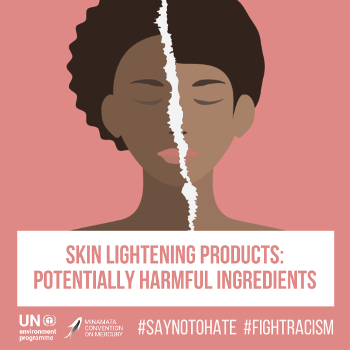
People of all genders use skin-lightening products (SLPs) formulated to fade freckles, blemishes, age spots and treat acne; however, many use these products to intentionally lighten their skin color.

[ French ] Les amalgames dentaires communément appelés plombage contiennent du mercure, un composé très toxique pour les hommes et pour l'environnement. Les organismes au niveau global (OMS et le Fonds pour l'environnement UN Environment Program) préconisent sa réduction voire son élimination. Découvrez pourquoi à travers cette vidéo.

[ French ]

The Overarching Framework of the UNEP Global Mercury Partnership outlines that one of the functions and responsibilities of the Partnership Advisory Group is to report on activities undertaken within the Partnership.

Check out this infographic to learn more about how toxic mercury impacts biodiversity and human health all around the world.
From human-made sources, this highly hazardous chemical accumulates in many ecosystems, such as tropical forests, mangroves, oceans and the Arctic, leading to detrimental impacts on biodiversity.

The publication explores "opportunities for generating co-benefits through coherent implementation of the Minamata Convention and Kunming-Montreal Global Biodiversity Framework".

The first edition of the year starts with a few words from Rodges Ankrah, Co-Chair of the Partnership Advisory Group, presenting how 2024 brings opportunities for the partnership as well as welcoming Bianca Dlamini, the new Co-Chair. Follow highlights, recent and upcoming events, interesting resources, and new partners.

The Global Mercury Partnership and its two areas of work on mercury in products and waste management, in cooperation with the World Health Organization, organized an online webinar on 18 December 2023.

Learn what is in beauty products by exploring the Beautywell database and its Knowledge Hub webpage.

The New York City Department of Health Health topic webpage on mercury in soaps and creams lists some skin-lightening creams and medicated soaps that have been found to contain high levels of mercury.

The California Department of Public Health webpage presents information (also in Spanish) and lists of resources on mercury in skin creams, including a list of skincare products tested containing mercury.

This webpage from the European Chemicals Agency lists substances which are banned from use in any cosmetic products marketed for sale or use in the European Union.

[ English / Spanish / Hmong / Somali ]

[ English / Spanish / Hmong / Somali ]

[ English / Spanish / Hmong / Somali ]

The project Eliminating Mercury Skin Lightening Products (SLPs) was developed to reduce the risk of exposure to mercury added products through activities targeted at better regulation, reducing production, trade and distribution, capacity-building, awareness-raising

Skin bleaching in Africa is not a new beauty phenomenon. The practice has its roots in the transatlantic slave trade and continued during the European colonization of African nations. Skin bleaching and the use of hazardous and potent substances have been linked to a range of adverse effects, from skin diseases to serious systemic problems such as diabetes, hypertension and renal diseases.


Reinforcing the health sector’s commitment to the implementation of the Minamata Convention on Mercury: The showcase of GEF-UNEP-WHO projects on mercury-added products
Showing 76 - 100 of 495



The overall goal of the UNEP Global Mercury Partnership is to protect human health and the environment from the releases of mercury.