

News
Type: Climate change
Showing 26 - 50 of 50
50 results found

The overall objectives of the 3-day working session were two-fold 1) for key actors to share information on plans related to a national Blended Finance Mechanism for solar irrigation systems, solar dryers and agroforestry in Uganda; 2) to agree on how to collaborate and consolidate technical resources and proposals for impact, where the NDC Action Project can both convene and lead multi-stakeholder efforts.
The three days were structured as follows:

The Uganda Banana Industrial Research and Development Centre (BIRDC) has won a funding from the Adaptation Fund-UNDP Innovation Small Grant Aggregator Platform (ISGAP) under Adaptation Fund Climate Innovation Accelerator to lead a consortium comprising of the Agriculture and Climate Risk Enterprise Ltd. (ACRE) Africa and Agro Consortium Uganda Limited (AIC). The aim is to implement a project on “Innovative Hybrid Index Insurance Solution to Mitigate Climate Risks for Smallholder Banana Farmers in Uganda”.

Ulaanbaatar, 18 April 2023
To obtain valuable feedback from relevant parties, a stakeholder consultation was held on the Concept Note prepared by the Trade Development Bank of Mongolia's Climate 30+ Initiative: Green Recovery Program for Mongolian Corporates, with a focus on investment in energy efficiency measure in the industrial sector.

In March 2023, the NDC Action project team travelled to Bangladesh to attend the first Project Steering Committee (PSC) meeting and a field trip organized by the technical partner Bangladesh Rural Advancement Committee (BRAC).

1. Why did Bangladesh choose to be a partner country in the NDC Action Project? What do you hope to achieve?

Amman,12 March 2023 – The National Agricultural Research Center (NARC) conducted, in collaboration with the Ministry of Environment, a technical training on climate change adaptation, as part of the NDC Action Project’s efforts to strengthen the capacity of national stakeholders.
The two-day capacity-building training was held on 12 and 13 March at the Royal Scientific Society (RSS), the National Technical Institution of the NDC action Project, with support from the United Nations Environment programme (UNEP) and the UNEP Copenhagen Climate Center.

A joint meeting was held, under the auspices of the The NDC Action Project, to discuss a concept note for climate resilient agriculture, specifically the implementation of a solar-powered drip irrigation system for arable farming.
The group consisted of various stakeholders, including donor organizations, development partners, international and local financial institutions, sectoral experts, researchers, and community representatives.

Amman, January 29, 2023 - The Ministry of Environment, the Royal Scientific Society (RSS), with the support of the UN Environment programme and the UNEP Copenhagen Climate Center under the NDC-Action Project organized the first technical training entitled” obligations under UNFCCC and Paris agreement” in Amman from 29-31 January.


A new roadmap on how to finance Colombia’s contributions to the Paris Agreement has been developed with support from the UNEP Copenhagen Climate Centre
The Government and private sector in Colombia now have a better idea of how the country’s Nationally Determined Contribution (NDCs) to the Paris Agreement can be financed.
A new roadmap, outlining ways to finance the urgently needed climate action was presented this month. It was developed with direct support from the NDC Action project, managed by the UNEP Copenhagen Climate Centre.

Capacitaciones del Programa País de Carbono Neutralidad
Cerca de 1000 personas se han capacitado para apoyar la descabonización del país
Cerca de 1000 personas se han capacitado para apoyar la descarbonización del país gracias a capacitaciones gratuitas desarrolladas por la Dirección Nacional de Cambio Climático (DCC) del del Ministerio de Ambiente y Energía (MINAE) con el apoyo del Proyecto NDC Action y la Alianza Empresarial para el Desarrollo (AED), en el marco del Programa País de Carbono Neutralidad (PPCN).

Greenhouse gas (GHG) emissions – the atmospheric gases responsible for causing global warming and climatic change – are critical to understanding and addressing the climate crisis.

The evidence is irrefutable: unless we act immediately to reduce greenhouse gas emissions, we will not be able to stave off the worst consequences of climate change.
The world is already 1.2°C warmer than pre-industrial times and every fraction of a degree counts. Research shows that with 2°C of global warming we will have more intense droughts and more devastating floods, more wildfires and more storms.

As the UN Climate Change Conference of the Parties (COP26) came to a close, news agencies and bloggers ploughed through the Glasgow Climate Pact to make sense of the commitments made to reducing greenhouse gas emissions.

It was, in the end, an agreement of compromise.
Whilst the Glasgow Climate Pact agreed at the UN Climate Change Conference of the Parties (COP26) on Saturday firms up the global commitment to accelerate action on climate this decade, it left many wondering if this deal is enough to limit global warming to 1.5°C over pre-industrial levels.

To ensure a stable climate and make real on the commitment of the Paris Agreement UNEP has identified six sectors with the potential to reduce emissions enough to keep the world below the 1.5°C mark.
It is possible to cut 30 gigatonnes greenhouse gas emissions annually by 2030. There is a lot that can be done. Solutions exist as highlighted below.

Carbon is found in all of Earth’s ecosystems. It is packed into the trees and soils of forests, lies dense and deep in tropical peatlands and frozen tundra, maintains the fertility and resilience of farms, rangelands, and fisheries around the globe.

In 2020, the UN system generated about 1.5 million tonnes CO2eq greenhouse gas (GHG) emissions, with per capita emissions of 5 tonnes CO2eq. The sources of the emissions were 32 per cent air travel, 12 per cent other travel (rail, road, sea, etc.) and 55 per cent facilities. Ninety-nine per cent of these emissions were offset. These figures are a 25 per cent reduction from 2019 – reflecting the sudden and dramatic adaptations in operations that the UN made in 2020 due to the global COVID-19 pandemic.

- Estimated adaptation costs in developing countries are five to ten times greater than current public adaptation finance flows
- Fewer than one third of 66 countries funded COVID-19 recovery measures to address climate risks
- Over 2,600 projects focus on adaptation

- Prepared with RMI, the comprehensive guide prescribes proven strategies to achieve sustainable urban cooling, with scores of case studies
- Overheated cities face disproportionate climate costs due to ‘heat island effect’; average city could warm as much as 4°C by 2100
Glasgow, 3 November 2021 – The UN Environment Programme (UNEP) today published detailed guidance to help the world’s cities address warming, which is occurring at twice the global average rate in urban areas.

On Tuesday 12th October the High Level Event of the NDC Action Project in Mongolia was held virtually.
The event was opened by Mr. Batbayar Tserendorj, Vice Minister, Ministry of Environment and Tourism (MoET), Government of Mongolia, H.E. Mr. Jörn Rosenberg, Ambassador of Germany to Mongolia, and Ms. Isabelle Louis, Deputy Regional Director, UNEP Asia and the Pacific Office.
Mrs. Narangaravuu Altangerel, Climate Change Department, Ministry of Environment and Tourism (MoET) set the theme for the event.

UNFCCC released the updated NDC Synthesis Report on 17th September 2021 ahead of COP26 in November. The report includes an update on all 191 Parties to the Paris Agreement from the previous report back in February 2021.
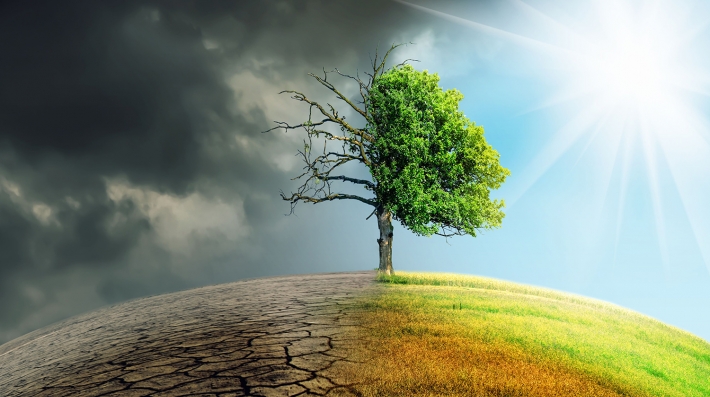
For generations, people have combed the sponge-like cloud forests around the city of Xalapa, Mexico for edible mushrooms. But a combination of deforestation and climate-change-related drought have devastated mushroom crops, an important source of income in a region beset by poverty.

This week, scientists and representatives from 195 countries are gathered at the 54th Session of the Intergovernmental Panel on Climate Change (IPCC) to review the world’s most comprehensive assessment of our climate - the Sixth Assessment Report.

1.300 personas fueron capacitadas en Carbono Neutralidad y temas asociados tras ciclo de talleres virtuales
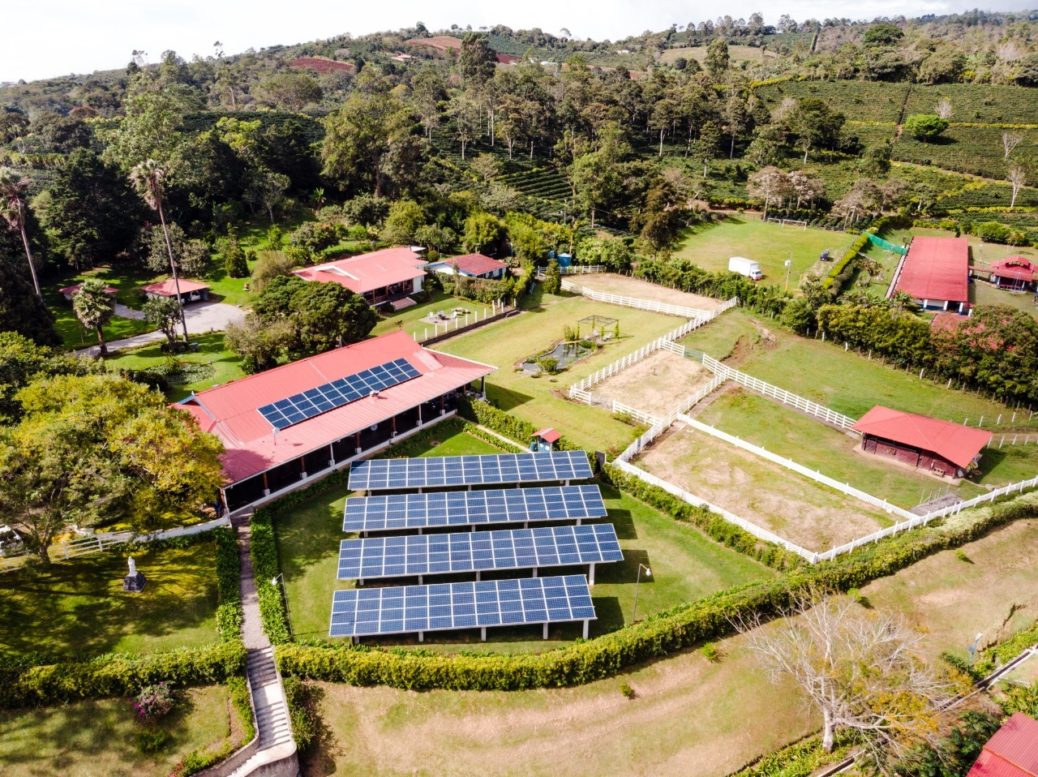 Source: https://cambioclimatico.go.cr/1300-personas-capacitaciones-carbono-neutralidad-talleres-virtuales/&…;

Smallholder farmers in Ghana, who rely primarily on rainfed agriculture, are highly vulnerable to the impacts of climate change. In semi-arid northern Ghana, 90% of the population depends on rain-fed agriculture for their livelihoods. The predicted increase in temperature due to climate change could cause a decrease in the length of the wet season, an increase in rainfall intensity (i.e. increased risk of flooding), an increase in the number of dry days per month, and more frequent heatwaves.
Showing 26 - 50 of 50