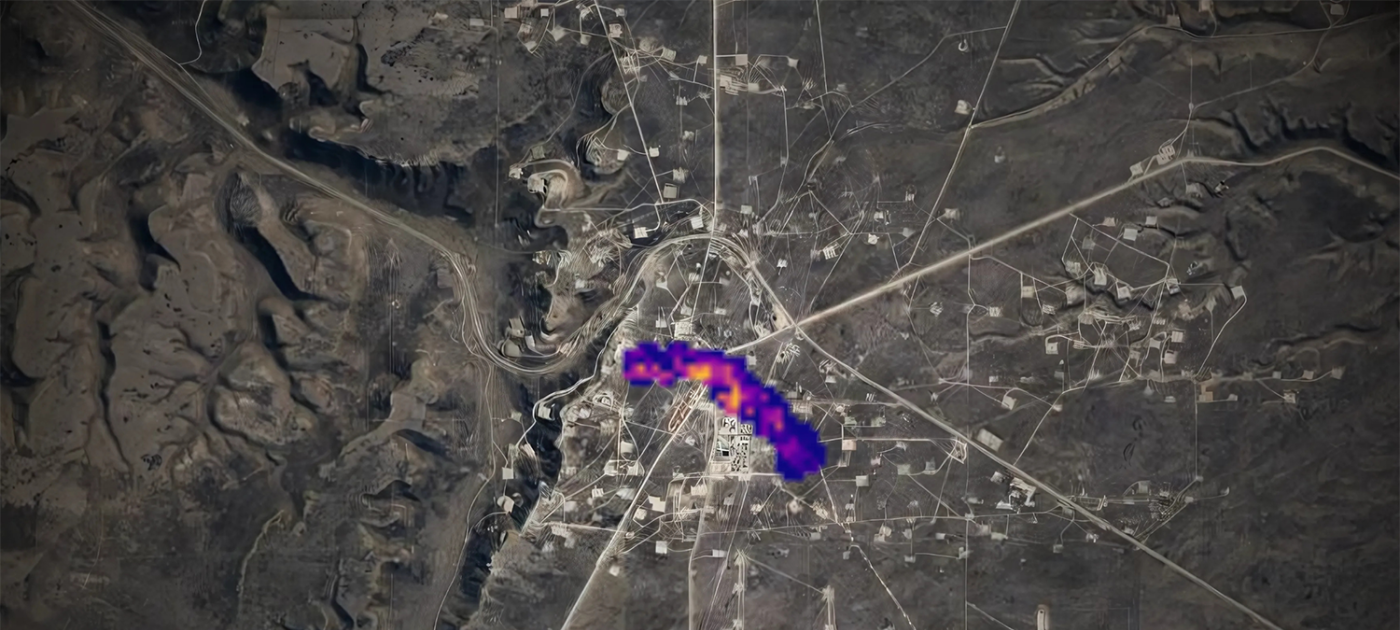
Last November, Juan José Rivera received an unexpected email. Invisible, planet-warming methane was leaking from an oil well in the southern Argentine province of Chubut, it said.
“At first, it seemed odd,” said Rivera, who is Chubut’s Secretary of Environment and Sustainable Development Control. “As I read more carefully, I found many details about the emission, including coordinates and even the name of the possible operator.”
The satellite-based alert came from the United Nations Environment Programme’s (UNEP’s) Methane Alert and Response System, or MARS. The message reported the leak was releasing an estimated 4.2 tonnes of methane per hour. Rivera acted quickly, informing the operator of the detection. The operator replied, confirming that, after investigating the event, they’d taken mitigation action. Within a matter of weeks, MARS satellite images confirmed the leak had been stopped.
Rivera’s quick actions are part of a recent uptick in responses to MARS alerts. Last year, UNEP's International Methane Emissions Observatory (IMEO), which manages MARS, reported that only one in 100 recipients replied to IMEO’s notifications. Now, that rate has increased to 10 per cent.
While there is an urgent need for improvement, this rising response rate indicates that MARS is catalyzing concrete mitigation action across the globe, says Ruth Coutto, Deputy Director of UNEP’s Climate Change Division.
From Argentina to Kazakhstan to Oman, these cases demonstrate how actionable data can lead to methane reductions. And they point to the significant climate gains that are possible if more governments and companies take advantage of this tool, says Coutto.
“It is very encouraging to see companies and countries start to pull on this powerful climate lever — methane emissions,” she says. “MARS was designed to unlock methane cuts and momentum is building. We are here and we are ready for more countries and companies to step forward and be a part of this progress.”
MARS delivers measurable progress
Eighty times more powerful than carbon dioxide, methane is a potent but short-lived greenhouse gas that only lasts around a decade in the atmosphere. That means reducing methane emissions can deliver quick climate relief, slowing the rate of global warming and buying precious time as the world decarbonizes.
Methane emissions must be reduced by at least 30 per cent this decade to align with the Paris Agreement commitments of limiting global warming to 1.5°C above pre-industrial levels. This is the target set by the 160 countries backing the Global Methane Pledge, for which UNEP’s IMEO serves as a core implementing partner alongside the UNEP-convened Climate and Clean Air Coalition.
But methane emissions remain stubbornly high. MARS can help transform these pledges into progress, says Coutto. It’s the only system that combines data from over a dozen satellites and delivers free alerts to governments and companies on major methane emissions.
Using MARS data, UNEP sends notifications to a growing network of government-nominated focal points. IMEO considers a response received if recipients reply with detailed information on the emissions event that triggered the alert.

According to Rivera, the MARS focal point in Chubut, these alerts are crucial for helping the provincial government monitor major emissions from the oil and gas industry, especially since Chubut currently lacks its own methane measuring tools.
After Rivera forwarded the MARS alert, the operator traced the leaking gas to an oil well, which came as a surprise since the underlying rock wasn’t known to be a gas reservoir. The operator installed new equipment to capture the excess gas and prevent future leaks. On 8 January, 2025 IMEO confirmed that the repairs worked: satellites no longer detected emissions at the site.
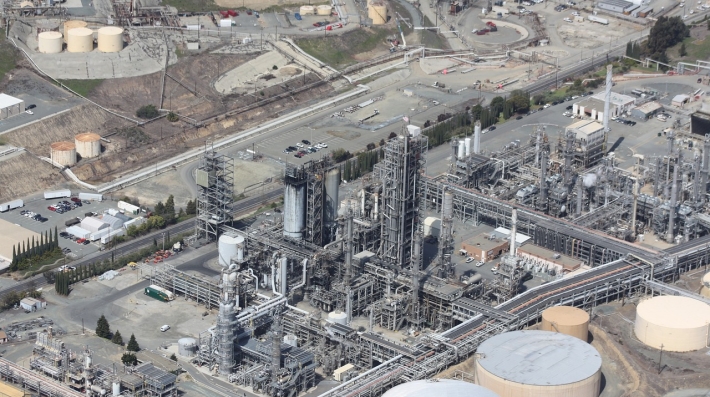
Over the time that IMEO observed the leak, its near-term climate impact matched the annual emissions of 25,000 cars.
“Given the efforts made by each actor and the outcome achieved, the overall feeling is one of satisfaction,” Rivera said. “We all understood the importance of controlling these emissions and acted accordingly, each fulfilling our role and contributing to reducing the global impact of climate change.”
In Argentina, several provinces are acting on these notifications, some even achieving a 100 per cent response rate. Several provincial governments, including Chubut, have requested UNEP’s support to develop regulations that will require companies to measure and report their methane emissions. Those are expected to build on standards developed by UNEP’s Oil and Gas Methane Partnership 2.0 (OGMP 2.0), a compact designed to ensure credible data enables transparency and mitigation across the oil and gas sector.
Private sector partnerships accelerate action
When facility operators are member companies of OGMP 2.0, IMEO sends MARS alerts straight to them, in addition to the government focal point. This direct line of communication can accelerate climate action, often leading to faster response times than alerts sent through government contacts.
That was the case in Kazakhstan, where MARS detected a vast methane plume spewing from an oil field near the Caspian Sea. Analysts estimated the field was emitting around 6.9 tonnes of methane per hour — roughly equal to the near-term climate impact of 130 cars driven for a year. Since the oil field was connected to an OGMP 2.0 member, IMEO sent them a notification in February.
The leak was traced to a worn section of pipeline, which was replaced. On 7 April, satellite images confirmed that the repair was successful.
Mitigation comes in many forms
These recent cases demonstrate the diversity of mitigation, says Coutto. Sometimes, methane emissions can be stopped by replacing a damaged section of pipeline or installing new equipment. Other times, operators have delivered warnings or adopted new protocols to prevent emissions from happening again.
In Turkmenistan, for example, an operator forgot to light a flare, a process that is typically used to burn excess natural gas. That led to methane seeping into the atmosphere for 48 hours unchecked until all the excess gas dissipated. The emissions ceased on their own. But Turkmengaz, Turkmenistan’s national oil and gas company, reported that a MARS notification prompted them to issue a warning to the flare operator, stressing the importance of properly lighting flares in the future.
In Oman, one OGMP 2.0 member company took a novel approach to prevent future leaks. There, a MARS alert helped operators identify where an intermittent maintenance process was allowing methane to escape into the atmosphere. They developed a poster with guidelines on how to avoid emissions during this process, shared it with relevant teams and held info sessions to ensure everyone knew what to do.
The poster cites global warming and reputational damage as possible consequences of unchecked emissions — a sign experts say of industry change.
Explore the data
MARS data is available for everyone to explore, not just government and company decision makers. IMEO’s Eye on Methane data platform now offers monthly email updates that provide summaries of the latest data releases.
Subscribe here: https://methanedata.unep.org/updates